Best Bottom Paint for Boats: Top Antifouling Picks for 2026
Answer: For reliable protection against barnacles, slime, and algae, choose an antifouling bottom paint that matches your boat type, water salinity, and how often you launch. This guide highlights five top options best for fiberglass, wood, and steel hulls, across salt and freshwater. Suitable buyers include frequent sailors, powerboat operators, and workboats needing simple reapplication each season. Below is a quick comparison, followed by detailed product sections and practical buying tips.
| Product | Best For | Key Benefit |
|---|---|---|
| TotalBoat Underdog (Black) Gallon | Sailboats and power boats in saltwater | Economical, copper biocide, simple season-long protection |
| TotalBoat JD Select Ablative (Black) Quart | Fiberglass, wood, steel in mixed waters | Self-polishing, low odor, easy cleanup |
| TotalBoat JD Select Ablative (Black) Gallon | Long-season protection for larger boats | Low buildup, burnishable finish, easy reapplication |
| Interlux BottomKote NT | Fiberglass boats seeking mainstream option | Simple single-season antifouling paint |
| TotalBoat Spartan (Black) Quart | High fouling conditions, racing prep | High copper content for maximum protection, scalable finish |
TotalBoat Underdog Marine Antifouling Bottom Paint
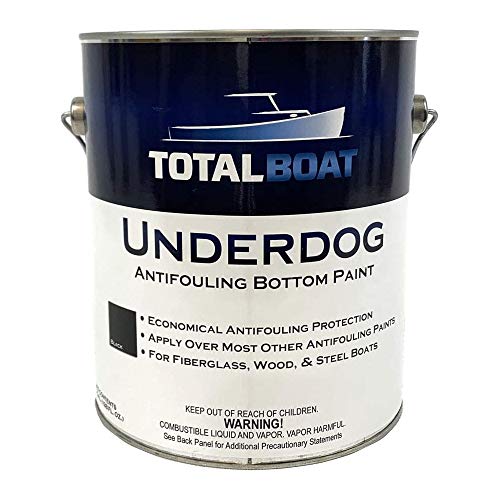
Product type: Antifouling bottom paint for fiberglass, wood, and steel hulls. This is an economical, single-season coating designed to release fresh biocide as water flows beneath the hull. Best for boats used frequently in saltwater conditions, including sailboats, power boats, and work vessels. It provides a durable finish that withstands trailering and beaching better than some traditional ablative paints. Use on properly prepared hulls to avoid buildup next season.
Who it’s best for: Frequent saltwater users requiring simple, affordable seasonal protection. Why selected: The copper biocide helps prevent barnacles and mussels from clinging to the hull, and the coating wears away gradually to minimize buildup. Caution: Because it’s an ablative coating, plan for annual reapplication and ensure proper hull preparation to maintain performance.
Note: It’s compatible with fiberglass, wood, steel, and iron boat bottoms when prepared correctly, making it a versatile option for mixed fleets.
TotalBoat JD Select Ablative Antifouling (Black) Quart

This is an antifouling paint for boats in both salt and fresh water. It uses an ablative, self-polishing film that wears away as the boat moves, reducing paint buildup and making next-season prep easier. It’s a low-odor, low-VOC, water-based formula with easy soap-and-water cleanup. No maximum dry time before launching is required, which simplifies marina operations.
Who it’s best for: Owners seeking a low-toxicity, environmentally friendlier option without sacrificing season-long antifouling. Why selected: The blend provides effective protection with reduced sanding for the next season. Caution: Suitable for mixed water uses, but performance depends on hull maintenance and careful surface preparation.
TotalBoat JD Select Ablative Antifouling (Black) Gallon

Product type: Ablative antifouling coating for fiberglass, wood, and steel in salt and freshwater. Features a self-polishing finish that minimizes paint buildup and can be burnished for a smoother surface, enhancing speed and fuel efficiency. It’s low-odor and low-VOC with easy cleanup, suitable for marinas and boatyards with environmental restrictions. No maximum dry time before launch is specified.
Who it’s best for: Larger vessels or frequent-use boats needing a longer season without frequent re-coats. Why selected: The gallon size supports longer projects and multiple-season applications for larger hulls. Caution: As with ablatives, performance relies on proper surface prep and regular maintenance to avoid gaps in protection.
Interlux YBB379G BottomKote NT (Black) Gal.

Product type: Bottom paint specifically formulated for fiberglass boats. The listing emphasizes it as a traditional fiberglass bottom coating with straightforward application. It is intended to offer antifouling protection in a standard marine environment and is designed for surfaces prepared to accept antifoulant paints.
Who it’s best for: Boat owners seeking a straightforward, familiar option on fiberglass hulls. Why selected: It provides a known, standard antifouling solution with predictable performance. Caution: The listing provides limited detail on long-season performance or environmental attributes; plan for regular maintenance in higher fouling waters.
TotalBoat Spartan Bottom Paint (Black) Quart

Product type: Multi-season antifouling bottom paint with high cuprous oxide content for maximum protection against barnacles and slime in various water types. It offers a smooth, abrasion-resistant finish that can be burnished for a racing-grade look and speed. The ablative formula reduces paint buildup and allows reactivation after haul-outs with light scuffing.
Who it’s best for: Sailboats and powerboats operating in high-fouling environments or aiming for peak hull performance. Why selected: The high copper content provides robust antifouling protection, while the finish supports speed and fuel efficiency. Caution: Ablative paints require periodic reactivation and proper surface prep to maintain effectiveness after long storage or haul-outs.
Buying Guide: Key Considerations For Bottom Paint
What hull material and water type matter?
Choose antifouling paint that lists compatibility with your hull material (fiberglass, wood, steel) and water type (salt, freshwater, or mixed). Ablative coatings wear away with use, reducing buildup, while hard, non-ablative finishes stay thicker over time but may require more sanding later.
How long will you be in the water between applications?
Single-season paints are common for boats with annual haul-outs. If you operate in heavy fouling zones or plan long seasons, consider ablative formulas that renew antifouling properties during use and are easier to freshen when you repaint.
Environmental and marina considerations
Low-VOC and water-based options reduce fumes and environmental impact, which is important in marinas with restrictions. Check local regulations to ensure compliance with footprint and cleanup requirements.
Application, cleanup, and re-coating
Most listed products offer straightforward cleanup with soap and water and minimal odor. Consider how quickly you can launch after application and whether your marina requires no maximum dry time before launch.
Performance expectations and maintenance
Higher copper content generally delivers stronger protection against barnacles in high-fouling waters, but it may be better suited for boats that are frequently in the water. Ablative paints reduce buildup but need light maintenance before re-launch.
FAQ
- What is antifouling paint? A coating that prevents marine organisms from attaching to a hull, improving performance and fuel economy.
- Do ablative paints require more maintenance? They may require reactivation or reapplication after long storage or haul-outs, but they reduce paint buildup over time.
- Is low-VOC paint less effective? Not necessarily; low-VOC formulations are designed to balance environmental compliance with performance.
- Can I mix different brands? It’s generally best to apply compatible products as directed by the manufacturer to avoid adhesion issues.
- How soon can I launch after painting? Follow the specific product’s guidance; many require no maximum dry time before launch, but surface preparation remains critical.
- Which option is best for a sailboat in saltwater? Options with strong antifouling protection, durable finish, and ease of maintenance—such as TotalBoat Underdog or Spartan—are commonly recommended for frequent use in saltwater.