Best Boat Trailer Hitch Extension Options for Safer Towing and Extra Clearance
Searching for a reliable boat trailer hitch extension? This guide highlights five top options that maximize clearance, reduce bumper contact, and fit standard 2-inch receivers. Each pick targets common towing needs—whether you haul a small boat, kayak, or other water gear. Best for boat enthusiasts who need extra reach without sacrificing stability, these extensions are selected for compatibility, load capacity, and practical use in real-world scenarios.
Summary table of chosen products:
| Product | Receiver Fit | Extended Length | Approximate Capacity | Best For |
|---|---|---|---|---|
| OPENROAD Trailer Hitch Extension | 2-inch | 12 inches | 5000 lbs GTW / 500 lbs TW | General towing, anti-rattle comfort |
| ECOTRIC Truck Bed Hitch Extender | 2-inch | 4 feet (48 in) | 400 lbs | Long-bed reach, ladders and large loads |
| MAXXHAUL 50833 Extender | 2-inch | 7 inches | 3500 lbs GTW | Trailering with added clearance |
| TYT 18″ Trailer Hitch Extension | 2-inch | 18 inches | 3500 lbs GTW / 350 lbs TW | Extra clearance for trailers & racks |
| VKU 18 Inch Hitch Extender | 2-inch | 18 inches | 3500 lbs | Anti-rattle, long reach |
OPENROAD Trailer Hitch Extension

- 2-inch receiver compatibility for broad vehicle fit
- 12-inch extension to avoid bumper or tailgate contact
- 5000 lbs gross trailer weight and 500 lbs tongue weight capacity
- Includes 5/8″ hitch pin and anti-rattle pad for quieter towing
Best for: Those who need a moderate extension with high weight capacity for boat trailers and frequent towing. Choose this if you want a balance of extended reach, quiet operation, and robust load tolerance. A potential limitation is the 12-inch length may be less suitable for very long tongues or tall hitch-mounted accessories.
ECOTRIC Truck Bed Hitch Extender

- 2-inch receiver base with a foldable design for versatile use
- Extends loading length by about 4 feet
- Rated for 400 lbs distributed weight; black powder-coated finish
- Suitable for ladders, canoes, kayaks, lumber, and other long loads
Best for: Buyers needing a dramatic extension for short-bed trucks or SUVs when hauling long gear. Better for occasional heavy-duty loads rather than constant high-tow situations. A limitation is the 400 lb weight rating, which is lower than some other options, so it’s best for light-to-moderate loads.
MAXXHAUL 50833 2×2 Inch Extender
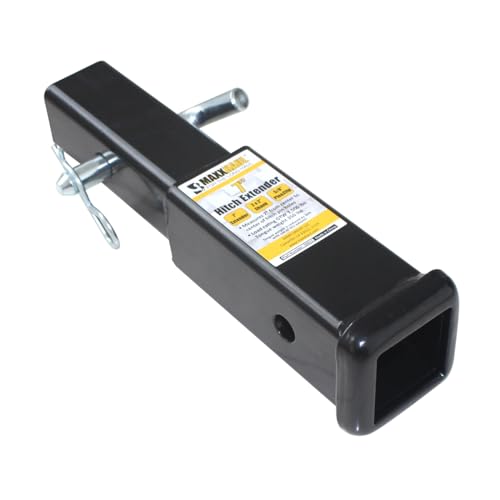
- 7-inch extension for added trailer clearance
- 2 x 2 inch receiver square tube
- Supports up to 3500 lbs GTW
- Includes 5/8-inch hitch pin and clips for secure attachment
Best for: Users seeking extra reach with a compact profile and reliable 3500 lb capacity. Choose this if you want noticeable clearance without stepping up to a very long extension. Limitation: the 3500 lb GTW limit may constrain heavier boat trailers or high-load configurations.
TYT 18″ Trailer Hitch Extension
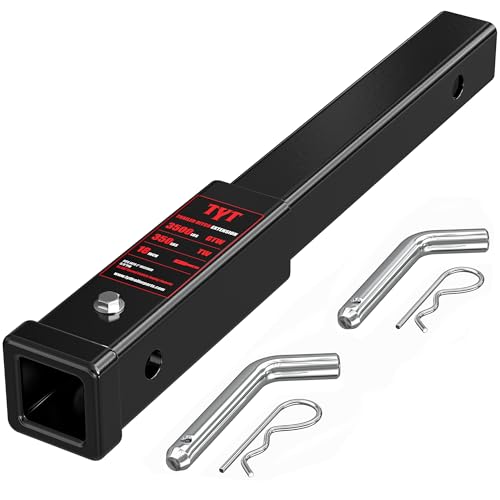
- Universal 2-inch receiver compatibility
- 18-inch extended reach for high clearance needs
- 3500 lbs GTW and 350 lbs tongue weight
- Includes a 2-pack of 5/8″ advanced hitch pins
Best for: Towing scenarios requiring substantial reach, such as tall bumper-to-trailer configurations or bike racks alongside a boat trailer. Better for light-to-moderate loads; consider a sturdier option for heavier boat setups. Caution: the extended length may increase lever effect, so secure attachment is crucial.
VKU 18 Inch Hitch Extender

- 18-inch extension with 2-inch x 2-inch shank
- Heavy-duty anti-rattle stabilizer and U-bolt tightening
- Suitable for standard 2-inch receivers and boat trailers
- Black finish helps resist corrosion
Best for: Users who want a long, quiet extension with a built-in anti-rattle feature. Choose this for long-distance towing where minimizing noise and movement matters. Limitation: longer extensions can introduce more leverage; ensure the hitch and vehicle are prepared for the increased moment.
Buying Guide
What should you consider when choosing a boat trailer hitch extension?
- Receiver size and compatibility: Most hitch extensions target standard 2-inch receivers. Confirm your vehicle’s hitch size before purchasing.
- Extended length: Longer extensions provide more clearance but increase leverage. Match length to your trailer’s bumper height and road geometry.
- Weight capacity: Check Gross Trailer Weight (GTW) and Tongue Weight (TW) ratings. Do not exceed the extension’s limits with your boat and gear.
- Anti-rattle and stability: If noise or wobble is a concern, prioritize models with anti-rattle pads or stabilizers and secure pins.
- Durability and weather resistance: Powder-coated or stainless components resist rust in marine environments.
- Ease of installation: Look for included pins, clips, and simple assembly to minimize setup time.
- Access and clearance needs: Consider how your tailgate, bumper, and propeller or hull will interact with the extension during turning and backing.
Frequently Asked Questions
- Q: Can I use a hitch extension for any trailer? A: Yes, as long as the extension matches your receiver size and stays within the weight limits.
- Q: Do hitch extensions reduce towing stability? A: They can, especially with longer extensions; choose one with proper anti-rattle features and within rated capacities.
- Q: Is a longer extension better for boat trailers? A: Not necessarily better; it depends on bumper clearance and hitch geometry. Longer extensions increase leverage and may amplify sway.
- Q: Should I use locking pins? A: Locking pins are recommended for security and to prevent accidental detachment, particularly on road vibrational conditions.
- Q: Do I need a hitch tightener with an extension? A: A tightener helps reduce movement and noise and is often recommended for a tighter fit.
- Q: How do I choose between 7-inch and 18-inch extensions? A: Choose based on how much clearance you need and the trailer length. Shorter extensions offer less leverage; longer ones increase clearance but may affect handling.