Best Boat Trailer Electrical Connectors for Safe,Reliable Towing
Finding the right boat trailer electrical connectors helps ensure all lights and signals work properly on the road and at the dock. This guide highlights five dependable options that fit standard 4- and 5-pin systems, plus a practical buying guide to match connectors with your trailer type. Ideal buyers include boat owners upgrading trailer wiring, RV travelers with utility trailers, and DIY enthusiasts performing quick replacements. The table below compares core specs to help you decide faster.
Product Comparison at a Glance
| Product | Pin Type | Length / Lead | Best For | Notes |
|---|---|---|---|---|
| MECMO 4-Way Flat Trailer End Connector (25 Inch) | 4-Pin | 25 in | Marine boat trailers; horse, motorcycle, ATV trailers | Dust cover; color-coded wires |
| WIUYNTLZ 32″ 4-Way Flat Trailer Connector | 4-Pin | 32 in | Longer reach trailers; boat and RV setups | Waterproof silicone, sealed cover |
| Oyviny 5 Way Flat Trailer Wiring Harness | 5-Pin | 22 in | Marine trailers with additional lighting needs | Dust cover; color-coded wires |
| ELFFILLA 4-Way Flat Trailer Connector | 4-Pin | 25 in | Broad trailer compatibility; quick upgrades | Water-dust proof; sealed cover |
| MECMO 4 Way Trailer End Connector (5 Feet) | 4-Pin | 5 ft | Longer run trailers; heavy-duty setups | Color-coded; rugged cable jacket |
MECMO 4-Way Flat Trailer End Connector 25 Inch

This 4-pin trailer end plug fits industry-standard sockets and is suitable for marine boat trailers, horse trailers, motorcycles, ATVs, and other cargo trailers. It comes with color-coded wires to identify taillights, brake lights, and turn signals, improving installation accuracy. Best for: quick replacement on standard trailers where a compact, ready-to-splice connector is needed. Limitation: may require splicing into existing harness if your setup uses a different wire routing.
WIUYNTLZ 32″ 4-Way Flat Trailer Connector
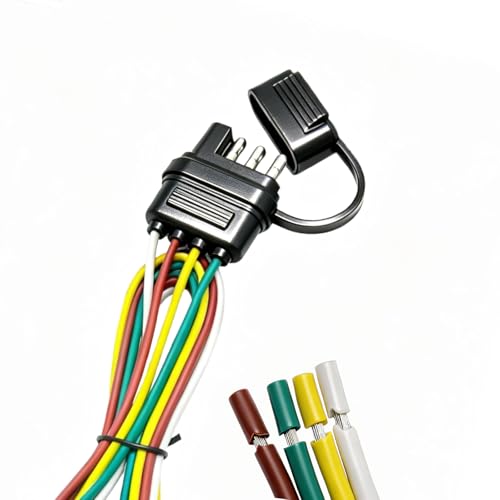
This 32-inch length provides extra reach for trailers with extended wiring runs. It uses upgraded silicone wiring that remains flexible across extreme temperatures and is fully waterproof, enhancing durability in outdoor conditions. Best for: longer trailer runs where weatherproofing and flexibility matter. Limitation: longer lead length may be overkill for short car-to-trailer connections.
Oyviny 5 Way Flat Trailer Wiring Harness

With a 22-inch lead, this 5-pin trailer plug is suitable for marine trailers with hydraulic or surge brakes, offering color-coded wiring and corrosion-resistant terminals. Best for: trailers needing additional signal capacity beyond a 4-pin system. Limitation: 5-pin compatibility may not be necessary for simpler lighting setups.
ELFFILLA 4-Way Flat Trailer Connector
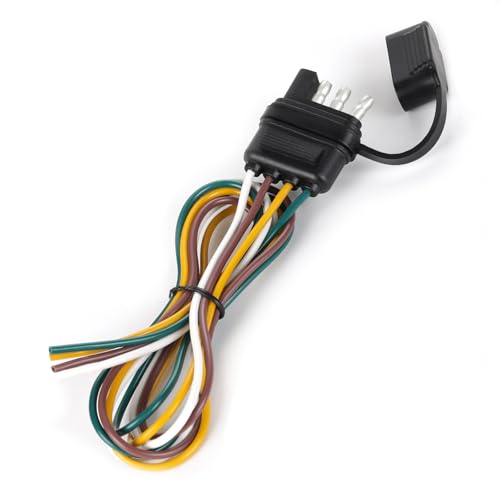
Designed for trailer-side connectivity with standard 4-way sockets, this connector uses color-coded wiring for taillights, brakes, and turn signals. It’s easy to replace with blunt-cut wires and four snap locks, simplifying upgrades. Best for: quick, secure upgrades on a broad range of trailers. Limitation: may not include a dust cover in all listings unless specified.
MECMO 4 Way Trailer End Connector Wire (5 Feet)

This 5-foot jacketed cable supports four-prong trailer lighting with color-coded, blunt-cut wires. It’s a robust option for longer wiring runs and provides a direct replacement for many standard layouts. Best for: heavy-duty installations where a longer lead helps reach the tow vehicle. Limitation: longer cable may require more routing and protection from abrasion.
MECMO RV 7 Pin Trailer Plug

Although primarily a 7-pin system, this MECMO option is included to illustrate the range of connectors within the MECMO family. It is positioned for RV and boat trailers requiring additional power and signaling beyond 4-pin setups. Best for: RV or boat trailers needing supplemental circuits. Limitation: not a 4-pin replacement; verify your tow vehicle receptacle compatibility before purchasing.
Buying Guide: How to Choose the Right Boat Trailer Electrical Connectors
Key considerations help match a connector to your trailer and tow vehicle. The following practical questions guide selection:
- What pin configuration do I need? Decide between 4-pin (taillights, brake lights, signals) and 5-pin or 7-pin for extra functionality like reverse lights or auxiliary power.
- What is the trailer length and wiring route? Longer leads (20–32 inches or more) are helpful for distant plug connections but require protection from wear.
- Is weather sealing important? If exposure is high, choose connectors with waterproof seals or dust covers to resist moisture and corrosion.
- What materials ensure durability? Silicone-insulated wires and tinned copper conductors generally offer better aging resistance and conductivity.
- Do I need color-coded wiring? Color coding reduces installation errors by clearly identifying functions for taillights, brakes, and signals.
- Can I upgrade gradually? Some 4-pin to 5-pin configurations are straightforward; consider a modular harness if you plan future upgrades.
Frequently Asked Questions
- What is the difference between 4-pin and 5-pin trailer connectors?
– 4-pin handles basic taillights and turn signals, while 5-pin adds extra functions such as brake or reverse lighting on compatible trailers. - Are waterproof trailer connectors worth it for coastal use?
– Yes, waterproof or sealed connectors reduce corrosion and improve reliability in saltwater or wet environments. - Can I splice a new connector into an existing trailer harness?
– Many systems are designed for direct splicing with blunt-cut wires and snap locks, but always ensure proper wiring color correspondence. - Should I replace both the vehicle-side and trailer-side connectors?
– Replacing both sides can ensure consistent performance, especially if the trailer is older or the vehicle harness is worn. - How do I know if my trailer needs a 7-pin connector?
– Trailers with electric brakes, reverse lights, or auxiliary power often use 7-pin or larger connectors; check your trailer and vehicle manuals. - Is a longer lead length beneficial for all trailers?
– Longer leads help for extended routes but require secure mounting to prevent wear; for short runs, a shorter lead minimizes clutter.