Best Boat Safety Kit With Flares for Emergencies on the Water
The right boat safety kit with flares helps you meet USCG requirements and stay prepared in emergencies on the water. This guide highlights five top options, ideal for different boaters from anglers to kayakers. Each pick is explained with who it’s best for, why it was selected, and one clear caution. A concise buying table at the top summarizes key details to compare at a glance.
| Product | Best For | Why Picked |
|---|---|---|
| Sirius Signal SB-3L Boating Safety Kit | Families and casual boaters | All-in-one with C-1004 electronic signal and waterproof flashlight |
| TEKTITE SOSeFLARE 5 | Serious boaters needing a durable electronic distress signal | Long battery life, Morse-code SOS, and flag |
| ACR ResQFlare E-Flare Safety Kit | Compact, Coast Guard-compliant night signaling | Extended 20+ hour operation and 360° visibility |
| Sirius Signal MK-1001 | Comprehensive signal and first aid on board | Visual, audible, and first aid elements in one kit |
| Sirius Signal C-1003 SOS LED Distress Signal | Daily use with LED-based daytime signaling | Long-lasting, Coast Guard-approved electronic flare |
Sirius Signal SB-3L Boating Safety Kit

The SB-3L is an all-in-one safety kit designed for kayaks, small boats, and paddle crafts. It includes a C-1004 electronic visual distress signal that complies with USCG spec SOS and infrared signaling, plus a rugged IP68 waterproof flashlight that floats and runs on a long-lasting CR123 battery. This kit is best for families and casual boaters who want a single, easy-to-use solution that covers visual signaling and basic illumination in one package. Caution: electronic signals require batteries; check battery status before trips.
TEKTITE SOSeFLARE 5
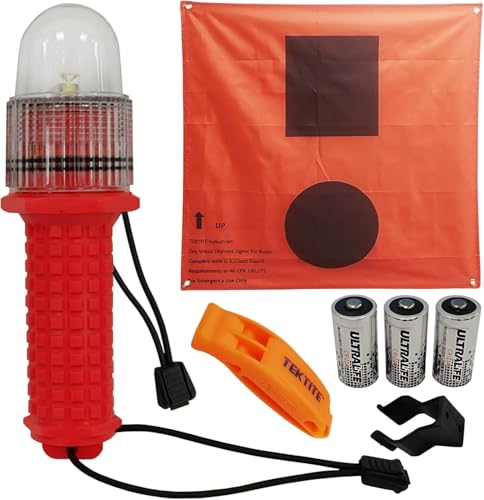
The TEKTITE SOSeFLARE 5 Electronic Distress Signal Kit is a USCG and SOLAS-compliant alternative to traditional flares. It flashes S-O-S in Morse code, includes an audible whistle, and ships with a distress flag for day and night visibility. It features long battery life (30+ hours) with user-replaceable CR123 batteries and can float upright in water. This option is better for boaters who want a legal, non-pyrotechnic flare replacement with clear day/night signaling. Caution: replacement batteries must be kept on hand to ensure readiness.
ACR ResQFlare E-Flare Safety Kit

The ResQFlare E-Flare Safety Kit is a compact electronic flare system that meets USCG Nighttime Visual Distress Signal standards. It combines a high-visibility 360° light with a durable, IP67-rated waterproof design and a lightweight form factor. It’s ideal for boaters who want a long-lasting, non-pyrotechnic flare that doubles as a primary signaling device and lightweight emergency kit. Caution: limited to electronic signaling; ensure you have a backup signaling method for battery issues.
Sirius Signal MK-1001 Boating Safety Kit

The MK-1001 is an all-in-one safety system combining visual distress signals, audible signals, and essential first aid elements. This USCG-approved kit includes the C-1003 SOS electronic flare and an orange daytime distress flag to exceed typical signaling requirements. It also features a high-decibel marine horn and whistle to cover multiple Coast Guard audible distress standards. Best for boaters who want a comprehensive signaling package in one purchase. Caution: heavier than some compact kits, which may affect storage on small craft.
Sirius Signal C-1003 SOS LED Distress Signal
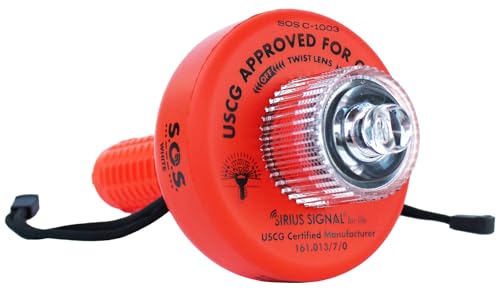
The C-1003 SOS LED Distress Signal is a Coast Guard-approved electronic flare designed for day and night signaling, including a daytime flag and whistle. It provides long-lasting signaling with an SOS pattern visible for up to 60 hours, significantly exceeding some regulatory requirements. This kit is best for daily-use boats that want a dependable, battery-powered distress signal with straightforward operation. Caution: relies on battery health; periodic checks are essential.
Buying Guide: Key Considerations For A Boat Safety Kit With Flares
- Coast Guard compliance: Verify that the kit includes signals meeting USCG requirements for nighttime, daytime, and audible distress signals.
- Signal type: Choose between electronic LED flares, audible alarms, and physical flares based on boat type, typical conditions, and storage availability.
- Power and battery life: Assess battery life, replaceability, and storage requirements. Longer life reduces risk during extended trips.
- Durability and weather resistance: Look for IP ratings (IP67/IP68) and water-floating designs to handle wet conditions and accidental submersion.
- Portability and storage: Consider kit size, weight, and how easily it fits in your boat’s storage compartments.
- Versatility: Some kits pair signaling with first aid, illumination, or survival tools. Match to your typical on-water activities.
- Maintenance requirements: Check whether batteries or components require periodic replacement and how to test functionality safely.
- Legal requirements by region: Ensure the kit aligns with your boating area’s coast-guard and maritime regulations.
FAQ
- What is the difference between electronic distress signals and pyrotechnic flares? Electronic signals are reusable and safer, while pyrotechnic flares burn brightly but require replacement after use.
- Do these kits meet USCG requirements? Most listed options are USCG-approved or designed to complement USCG signaling requirements. Always verify the current standards before purchase.
- How long do electronic distress signals last? Battery-powered signals vary; many units offer 20–60 hours of operation depending on mode and battery health.
- Can I use these signals during daytime? Yes; many include daytime distress flags or reflectors to aid visibility in daylight.
- What should I store with signaling devices? Pack a spare set of batteries, a waterproof storage bag, and a basic first aid kit for multi-scenario readiness.
- How should I test a kit safely? Follow the manufacturer’s testing guidance, typically involving a non-operational test or controlled, safe practice signals in a secure area.