Best Boat Polisher and Buffer Tools for a Glossy Finish on Watercraft
Looking for the best boat polishers and buffers to restore and maintain a glossy, protected finish on your boat? This guide highlights five top options that balance power, maneuverability, and ease of use. It targets different buyers: DIY boat owners wanting corded versatility, beginners needing forgiving performance, and professionals needing longer runtimes. Below is a quick buying summary and a detailed look at each model to help you pick the right tool for your boat and your workload.
Summary of chosen products
- Best overall for versatility: LDHTHOPI Buffer Polisher (corded, high power, multiple grips)
- Best for ergonomic use: AOBEN Car Buffer Polisher (6-inch, dual-action, multiple grips)
- Best cordless option for portability: Niusken Cordless Car Buffer Polisher (2 batteries, LED display)
- Best value for car and boat detailing: AVID POWER Car Buffer Polisher (6-speed, dual handles)
- Best for beginners and kits: Avhrit Cordless Car Buffer Polisher Kit (two batteries, multiple attachments)
LDHTHOPI Buffer Polisher

The LDHTHOPI polisher runs on a robust 1600W motor, delivering strong and durable performance for heavy tasks like removing oxidation, scratches, and stains from boat gel coats. It offers 7 variable speeds from 1000 to 3500 RPM, enabling delicate waxing at low speed and aggressive polishing at high speed. It ships with multiple grip options—direct, D-handle, or side handle—to maximize comfort during long sessions. Best for boat owners who need serious removal capability without switching tools often. A caution: higher speeds generate more heat, so monitor heat buildup during extended use.
AOBEN Car Buffer Polisher
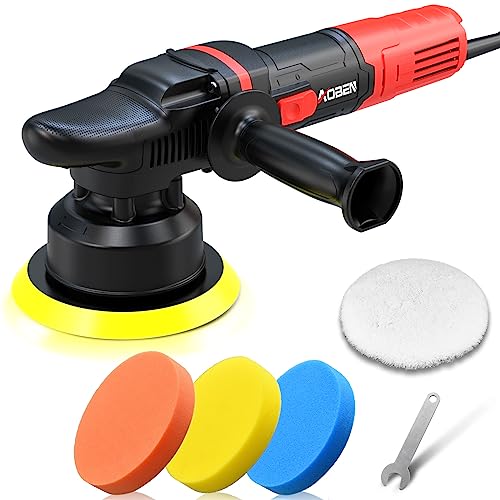
The AOBEN 6-inch dual-action polisher uses six adjustable speeds from 1000 to 4500 RPM. It is designed with an ergonomic build, featuring a side handle and extendable top handle, which helps reduce fatigue over long sessions on a boat hull or deck. It includes three different foam discs and a synthetic wool disc for wax removal and polishing, expanding its versatility beyond simple buffing. Best for detailers who want a balanced, all-around tool with a comfortable grip. Limitation: the machine may slow or stop under excessive pressure at the lowest speeds—restart at a higher setting if needed.
Niusken Cordless Car Buffer Polisher

This cordless buffer uses two 21V 2000mAh batteries and six speed levels (2800–5800 RPM). Its 8mm dual-action orbit ensures a swirl-free finish while avoiding cord clutter. Real-time LED display shows speed and battery status. It’s ideal for beginners and mobile detailers who need easy transport and the flexibility to work anywhere—dock, boat, or trailer. Note: prolonged high-speed use can trigger an auto-shutoff to cool down. Best for small boats or tight spaces where a corded tool is impractical.
AVID POWER Car Buffer Polisher

AVID POWER pairs a 1200W motor with six variable speeds (1600–3500 RPM) for a professional-looking finish on cars and boats. The dual-handle design (detachable D-handle and side handle) supports various working positions to reduce fatigue. It claims a stable output with constant power and speed, helping you maintain consistent results across sessions. Best for detailers who want reliability and straightforward performance. Caution: higher speeds require careful handling to avoid swirl marks on delicate finishes.
Avhrit Cordless Car Buffer Polisher Kit

The Avhrit cordless kit includes two 21V batteries, six variable speeds, and extra attachments for versatile boat and car detailing, including waxing, polishing, and scratch removal. The 8 mm dual-action orbit ensures a swirl-free finish with smoother operation. Best for beginners who want a complete kit and portability for on-rig or on-water touch-ups. Limitation: battery runtime depends on speed and workload; plan for battery swaps during larger jobs.
Buying Guide
What to consider when choosing a boat polisher or buffer:
- Power source: Corded models deliver constant power and are ideal for longer jobs on hulls, while cordless options offer portability for hard-to-reach areas and quick touch-ups.
- Pad diameter and action: 6-inch or 7-inch pads are common for boats. Dual-action (random orbital) polishers reduce swirl marks, making them suitable for fiberglass gel coats.
- Speed range: A broader RPM range lets you wax at low speeds and polish or remove oxidation at higher speeds. Look for at least 1000–3500 RPM in corded tools or 2800–5800 RPM in cordless models for flexibility.
- Ergonomics: Detachable and side handles help reduce fatigue during long sessions, especially on vertical surfaces like hull sides.
- Attachments: Starter kits with multiple pads and a backing plate save time; confirm compatibility with your chosen pads.
- Cooling and safety: Heat buildup is common; choose tools with good ventilation or overheating protection to protect paint and the tool.
Frequently Asked Questions
- What kind of polisher is best for boats? A dual-action (random orbital) polisher with a 6–7 inch pad is generally best for boats to minimize swirls on gel coats.
- Can I use car polish on a boat? Yes, but ensure the product is suitable for marine finishes and follow the manufacturer’s instructions for marine use.
- Do I need high RPM for boat polishing? High RPM is useful for removing heavy oxidation, but start with lower speeds for waxing and finish with light passes to avoid damaging the finish.
- Are cordless polishers powerful enough for boats? Modern cordless polishers with two batteries and strong motors can handle typical boat detailing tasks, but ensure you have spare batteries for longer sessions.
- How do I avoid swirls on fiberglass? Use a high-quality foam pad, work in small sections, maintain a light touch, and keep the pad flat on the surface to prevent creating swirl marks.
- What safety steps are important? Wear eye protection, keep cords away from water, follow the heat management tips, and read the tool’s manual for usage guidelines.