Best Boat Lift Pulleys and Blocks for Lifting and Hauling
If you’re shopping for boat lift pulleys and blocks, you want durable hardware that makes hoisting easier and safer. This guide highlights five sturdy options suited for different tasks—from dockside crab pots to yarding and general lifting. Best for heavy-duty marine use, best for indoor/outdoor rope work, and best value picks are covered. Each product section explains who it’s best for and why it’s a solid choice within its category.
| Product | Best For | Key Benefit |
|---|---|---|
| Zonon Yarding Block (3 Ton) | Boat owners and mooring setups | Balanced size with grease nipple for maintenance |
| Rocaris M100 Lifting Pulley | Rope systems and indoor/outdoor use | Stainless steel, 360° rotation, high load |
| Zonon Yarding Block (4.5 Ton) | Heavy-duty lifting and winching | Higher ton capacity with larger sheave |
| YATOINTO Rope Hoist Pulley System (4400LBS) | Garage/workshop lifting | 8:1 lift ratio, metal bearing wheels |
| FEIMIRE Crab Pot Puller Davit System | Dock pots and traps | 800 lb capacity, corrosion-resistant |
Zonon Yarding Block with Shackle and Pin — 3 Ton

Best for moderate-duty marine setups, this Zonon block is designed to handle up to 3 tons. It includes a shackle and pin and features a grease nipple for simple maintenance. The compact 8 x 4.9 x 3.1 inch frame fits standard rigging while supporting a 3/8 inch cable. This makes it suitable for small to mid-size boat lifting tasks and yarding operations where reliability matters more than maximum capacity.
Who it’s best for: boaters doing dockside lifts or yarding tasks that require steady performance without oversized hardware. Limitations: best used within its rated tonnage; avoid overloading beyond 3 tons.
Rocaris M100 Lifting Single Pulley

Built from high-quality stainless steel, this Rocaris M100 single pulley offers corrosion resistance and ruggedness. It features a 360-degree rotation to prevent rope knotting and accommodates heavy loads of up to 3300 lbs. Its indoor-outdoor versatility makes it a strong pick for rope systems on vessels, in warehouses, or on home lifts where durability is essential.
Who it’s best for: users needing a robust, rust-resistant pulley with easy rope management. Limitations: stainless construction adds weight; installation space should accommodate its size.
Zonon Yarding Block with Shackle and Pin — 4.5 Ton

This higher-capacity Zonon model is designed for heavier yarding and lifting tasks. With a 4.5-ton rating, it uses a sturdy steel body with a shackle and pin. Its larger 5-inch or similar sheave accommodates bigger cables, making it a better choice when you routinely lift heavier loads on boats or dock setups.
Who it’s best for: users who regularly lift near the 4–5 ton range and need a bigger sheave for faster, smoother operation. Limitations: heavier unit; requires more space and stronger mounting.
YATOINTO Rope Hoist Pulley System — 4400LBS

This YATOINTO setup brings an upgraded rope and metal-bearing pulleys to a heavy-duty 4400 lb capacity. It includes a 65 ft rope, a 1″ x 8 ft lifting sling, and a zinc-plated housing. The 8:1 lifting power reduces effort for larger hoists, making it well-suited for garages, warehouses, or building projects where heavy objects are moved regularly.
Who it’s best for: professionals needing maximum lift with ease and a durable sling/shackle kit. Limitations: weight and length of rope may require proper storage and handling.
FEIMIRE Crab Pot Puller System
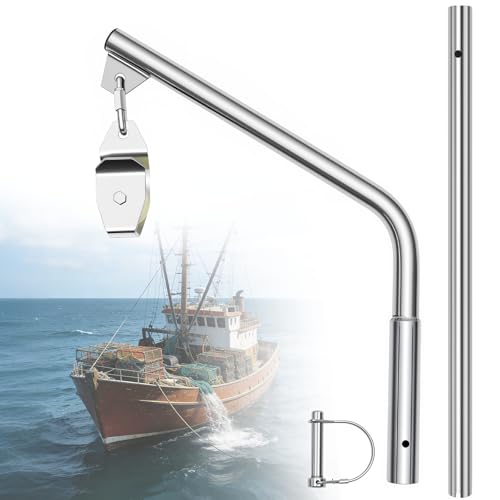
FEIMIRE’s crab pot puller davit uses 304 stainless steel and delivers up to 800 lbs of lifting capacity. Its design emphasizes corrosion resistance and robust hardware for coastal use. A 7-inch open-face pulley block provides smooth, low-friction lifting for crab pots and similar gear on docks or vessels.
Who it’s best for: boaters and dock operators needing reliable pot retrieval with marine-grade stainless steel. Limitations: 800 lb cap may be insufficient for larger pots or heavy commercial uses.
Buying Guide: Key Purchase Considerations
What capacity do you need? Choose a block that comfortably exceeds your typical lift load to avoid overload and wear. Consider the environment: stainless steel and corrosion resistance are critical for saltwater settings.
How many sheaves and how they rotate matter. A single, 360-degree rotating pulley helps prevent rope tangling and improves handling in tight spaces.
Is the mounting hardware included? Some blocks ship with shackles, pins, or lifts slings; others require separate purchases. Confirm compatibility with your existing rigging and boat frame.
What rope diameter does the unit support? Ensure the cable or rope you plan to use fits the sheave size to avoid friction and rope wear. Some models specify up to 1/2 inch or 3/8 inch diameters.
Maintenance considerations: grease nipples and accessible bearings extend life by reducing friction and corrosion. Regular inspection of pins, shackles, and bolts is advised.
FAQ
- What is the typical use for a yarding block on a boat? It’s used to redirect or multiply force in lifting lines, enabling controlled raising or positioning of gear, anchors, or small loads.
- Which material is best for saltwater environments? 304 stainless steel or coated steel blocks resist rust and corrosion better in marine conditions.
- How do I know capacity is enough? Choose a block rated higher than your heaviest expected load plus a safety margin (often 1.25–2x).
- Are shackle kits included? Some come with shackles/pins; others require separate accessories. Check product specs before purchase.
- Can I use these with standard rope or steel cable? Most are compatible with common rigging ropes; check the maximum recommended rope diameter for the specific model.
- What maintenance is recommended? Regularly grease pivot points, inspect bearings, and verify connection hardware for signs of wear or corrosion.