Best Boat Engine Compartment Blower Recommendations for 2026
Answering the search for reliable boat engine compartment blowers, this guide highlights top 5 options that balance airflow, quiet operation, and marine durability. Best for small engine rooms and bilges, these blowers help vent fumes, moisture, and heat efficiently. The selection favors models with ISO 8846, CE, and RoHS certifications and long warranties for peace of mind. The brief buying table shows key specs to compare at a glance.
| Product | Air Flow | Power Draw | Blades | Warranty |
|---|---|---|---|---|
| SEAFLO SFIB1-270-02 | 270 CFM | 6.0 A | 6 | 4 Years |
| SEAFLO SFIB1-130-01 | 130 CFM | 2.5 A | 4 | 4 Years |
| SEAFLO SFIB1-235-04 | 235 CFM | 4.0 A | 5 | 4 Years |
| Attwood 1733-4 | High airflow | — | 5 | — |
| Better Boat 3″ Inline | 130 CFM | 2.5 A | 4 | — |
SEAFLO 4” In-Line Marine Bilge Air Blower, 270 CFM

Model SFIB1-270-02 operates at 12V DC with an airflow of 270 CFM and a max draw of 6.0A. This 4-inch intake design uses a 6-blade fan for strong ventilation while maintaining quiet operation under 45 dB. It carries ISO 8846, CE, and RoHS certifications and includes a 4-year warranty, making it suitable for larger bilges or engine compartments where robust airflow is essential. Best for larger engine bays or sailboats where high-volume ventilation is required.
Best for: boaters needing powerful, quiet ventilation in mid-to-large compartments. Better for: spaces where higher airflow justifies the power draw. Choose this if: you require strong bilge ventilation with long-term warranty coverage. Caution: higher current draw requires a reliable 12V supply and proper fuse protection.
SEAFLO 3″ In-Line Marine Bilge Air Blower, 130 CFM

Model SFIB1-130-01 provides 130 CFM at 12V with a 2.5A draw and a 3-inch intake. This compact blower is ideal for tight bilge spaces, heads, or galleys where airflow is needed without excessive battery drain. It carries ISO 8846, CE, and RoHS certifications and a 4-year warranty. Its smaller footprint makes installation easier in restricted compartments.
Best for: small to medium bilges and confined engine rooms. Better for: budget-conscious installations requiring reliable, low-power ventilation. Choose this if: you need efficient airflow in compact spaces. Caution: not ideal for large compartments that demand high CFM output.
SEAFLO 4″ In-Line Bilge Blower, 235 CFM

Model SFIB1-235-04 delivers 235 CFM at 12V with a 4.0A max draw and a 4-inch intake. It uses a 5-blade design for high airflow and is rated with an ultra-quiet operation under 45 dB. Certifications include ISO 8846, CE, and RoHS, and it’s backed by a 4-year warranty. This option balances strong airflow with moderate power consumption, suitable for mid-size compartments and areas needing faster air exchange.
Best for: mid-sized bilges and galley areas needing robust ventilation. Better for: users who want higher airflow without slamming the battery. Choose this if: you prioritize faster moisture and fume removal. Caution: ensure electrical capacity supports 4A draw under continued use.
Attwood 1749-4 Turbo 4000 In-Line Blower
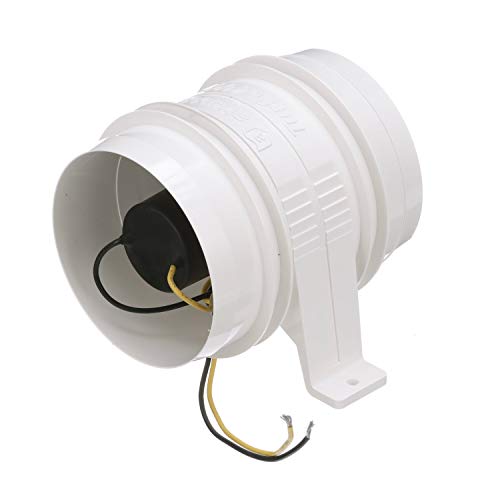
Turbo 4000 Series II is designed for 4-inch interior diameter vent hose and is water resistant. This model emphasizes aerospace-inspired axial flow for high performance in engine compartments, galleys, and heads where robust airflow is needed. It’s a compact option with a focus on delivering significant air movement in demanding marine environments. It is noted for reliability in wet, high-moisture spaces.
Best for: installations requiring strong airflow in 4-inch ducts with water resistance. Better for: users who value advanced airflow technology for engine spaces. Choose this if: you need high lift and sustained performance in tough marine conditions. Caution: explicit airflow figures are not stated in the listing; consider layout and ducting for optimal results.
Better Boat 3 Inch Inline Blower, 130 CFM

This 3-inch inline blower provides 130 CFM at 12V with a 2.5A draw. It targets engine compartments, bilges, galley, and heads in a compact footprint. It’s marketed as marine-grade with corrosion resistance and a sealed housing to fend off water and debris. The model emphasizes quiet operation and battery-friendly performance for regular ventilation tasks. It’s a solid choice where space is at a premium and airflow needs are moderate.
Best for: small spaces where installation ease matters and moderate airflow suffices. Better for: boaters who need a compact, budget-friendly option. Choose this if: you prioritize corrosion resistance and a sealed housing. Caution: airflow is lower than larger 4-inch models, so plan for spacing and ventilation needs accordingly.
Hon&Guan 3 Inch Boat Blower, 130 CFM

This 3-inch marine blower delivers up to 130 CFM at 10,000 RPM with a durable PBT housing and IP44 waterproof rating. The seven-blade design is aimed at smoother airflow and reduced turbulence, suitable for engine compartments and bilges in harsher marine environments. It combines compact size with strong airflow for tight installations. It’s a fit for mixed-use spaces where space efficiency matters and airflow demands are moderate to high.
Best for: space-limited areas needing solid airflow. Better for: users who want a high-blade design for efficiency. Choose this if: you require marine-grade durability and splash protection. Caution: ensure power supply and mounting fit the higher RPM profile and vibration characteristics.
Buying Guide: How to Choose the Right Boat Engine Compartment Blower
- Airflow needs by space: Measure compartment volume and target air changes per hour. Larger bilges benefit from higher CFM; smaller engine rooms can use lower CFM models.
- Power availability: Check 12V electrical supply, fuse ratings, and battery capacity. Higher CFM generally means higher current draw.
- Noise tolerance: If sleeping areas or cabins are nearby, prioritize units with less than 45 dB noise.
- Durability for marine use: Look for IP/rating, corrosion-resistant housing, and sealed motors to withstand salt spray and humidity.
- Installation footprint: Confirm intake diameter and duct compatibility (3″ vs 4″). Ensure mounting options fit your space constraints.
- Warranty and support: Longer warranties indicate confidence in reliability; verify what is covered and for how long.
- Maintenance considerations: Some models offer easier access for cleaning and filter replacement if applicable.
FAQ
- What size blower should I use for a small engine compartment? A 3″ to 4″ inline blower with 130–235 CFM typically covers compact spaces without overloading the battery.
- Do marine blowers require special certifications? Yes. Look for ISO 8846, CE, and RoHS certifications to ensure suitability for aboard use.
- Is a quieter blower always better? Quieter models reduce onboard noise, especially near sleeping areas, but may trade off maximum airflow.
- Can I install a blower near electronics? Yes, but ensure adequate clearance and heat dissipation to avoid interference or overheating.
- What maintenance is needed? Periodically inspect for debris, clean intake screens, and check wiring connections and fuse integrity.
- How important is warranty on a marine blower? A longer warranty helps protect against corrosion-related or mechanical failures in challenging marine environments.