Best Boat Cut Off Switches for Safe Battery Isolation
In short, choose a reliable boat cut-off switch that safely disconnects the battery to prevent parasitic drain and reduce fire risk. This guide highlights top options for different needs, from marine-specific battery isolators to universal kill switch lanyards. Best for: boat owners who want ensured power shutoff when vessels are idle; anglers needing quick on/off control; and sailors seeking compact, durable safety devices for tight panels.
| Product | Type | Voltage Range | Best For | Notes |
|---|---|---|---|---|
| Nilight 90015A Battery Switch | Battery Disconnect Switch | 12-48V DC | Vessels needing solid isolation and high current capacity | Waterproof, 275A continuous, 1250A momentary |
| TXRXIZ Universal Boat Kill Switch | Kill Switch Lanyard | 12V DC | Emergency shutoff with multiple key compatibility | 7-key universal fittings; PU rope; ABS clip |
| Five Oceans FO1518 Emergency Cut-Off | Emergency Kill Switch | 12V DC | Jet skis, ATVs, and trailers needing visible, extendable lanyard | Red coil lanyard; buoy for visibility |
| Joinfworld Top Post Battery Disconnect | Top Post Disconnect | 12-48V DC | Simple, space-saving negative-side installation | Includes tapered post and copper clamp |
| Seachoice Battery Select Switch | Dual Battery Select/Isolator | 12-50V DC | Two-or-more battery systems requiring parallel operation | UL listed, ignition protected |
Nilight – 90015A Battery Switch

The Nilight 90015A is a heavy-duty DC battery disconnect switch designed for 12-48V systems. It features an ABS housing with a rear cover to insulate terminals and prevent shorts. It is rated for 275A continuous at 12V, with higher intermittent and momentary ratings, making it suitable for boats with higher engine or systems loads. Best for boat owners who want a robust isolator that can stand alone or be locked with other switches. Caution: ensure the mounting area can accommodate its size and verify compatibility with your battery terminals and stud sizes before installation.
TXRXIZ Universal Boat Kill Switch
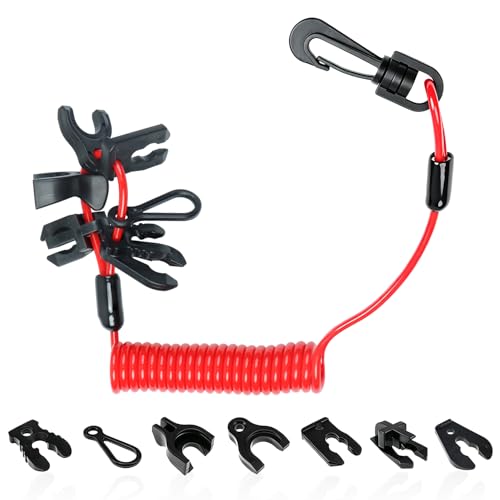
The TXRXIZ lanyard kit is designed for universal compatibility with several popular marine engines. It uses a PU rope and ABS clip and includes seven keys to fit most Mercury, Yamaha, Honda, and others. This kill switch helps ensure engine shutdown in emergencies, reducing the risk of runaway engines. Best for boaters needing a widely compatible safety lanyard. Limitation: not a battery isolator; it focuses on engine cutoff rather than electrical isolation of the battery.
Five Oceans FO1518 Emergency Cut-Off

The FO1518 is designed as a universal emergency cut-off with an extendable red lanyard and visible buoy. It supports dual circuitry, allowing wiring for either ignition kill or magneto kill depending on the setup. This makes it versatile for boats, jet skis, ATVs, and similar vehicles. Best for users who want a visible safety feature that can be wired into multiple circuits. Caution: it does not itself isolate the battery; plan to pair with a separate disconnect switch if battery isolation is needed.
Joinfworld Top Post Battery Disconnect

The Joinfworld top post disconnect is a compact solution designed for easy installation on top-post batteries. Rated for 12-48V DC and 250A continuous, with higher cranking ratings, it includes a negative clamp and tapered post for straightforward mounting. Best for installations where space is limited or a negative-side cut is preferred. Limitation: top-post designs may not suit all battery configurations; verify post type before purchase.
Joinfworld Side Post Battery Disconnect

This side-post disconnect mirrors the top-post variant with a space-saving profile. It operates in On/Off 2-position mode and uses M10 copper studs. It also includes copper conductive sheets for improved electrical conductivity. Best for boats with side-post batteries or when space around the battery is tight. Caution: ensure the side-post format matches your battery’s terminal layout to guarantee a secure connection.
Seachoice Battery Select Switch

The Seachoice Battery Select Switch is a dual-battery isolator allowing selection and operation in parallel for starting or charging. It is UL listed, ignition protected, and CE approved, offering robust safety for marine electrical systems. Best for boats with two or more batteries needing reliable switching between them. Limitation: designed for 50V max; ensure your system voltage fits within spec before installation.
Buying Guide: Key Purchase Considerations
What type do you need? If you want to completely cut power to the battery, a traditional battery disconnect switch (on/off) is essential. For engine safety in emergencies, a kill switch lanyard is a practical addition or alternative. If you have multiple batteries, a battery select switch supports parallel operation and safe switching between banks.
Voltage and current ratings matter. Match the switch to your system voltage (12-48V is common in marine gear) and choose a device with a current rating higher than your maximum load. In boats, corrosion resistance and waterproofing are important; look for ABS housing and splash-proof ratings where applicable.
Installation and mounting. Consider whether you prefer top-post, side-post, or negative-side mounting. Check terminal sizes (2×3/8″ or M10) and whether included clamps fit your battery terminals. Some units come with copper conductors for better conductivity; this can impact reliability in rough marine conditions.
Safety features and certifications. UL listing, ignition protection, and CE approvals indicate adherence to safety standards. A compact design that fits your dash or console reduces installation headaches and accidental activations.
Frequently Asked Questions
- Do I need a battery disconnect switch on a boat? Yes, to prevent parasitic drain and reduce fire risk when the vessel is idle.
- What’s the difference between a kill switch lanyard and a battery disconnect switch? A kill switch lanyard stops the engine, while a battery disconnect switch isolates the electrical system by disconnecting the battery.
- Can I install these switches myself? Many can be installed by a confident DIYer, but verify wiring diagrams and ensure proper sealing against water and corrosion.
- What voltage ratings should I look for? Most marine systems use 12-48V DC; choose a switch rated within or above your system voltage.
- Is a dual-battery switch necessary? If you have separate starting and house batteries, a dual battery switch enables controlled operation and charging of both banks.
- Are these switches waterproof? Some are designed for marine use with waterproof housings or seals; verify IP rating or splash resistance for your application.