Best Boat Batteries for Trolling Motors: Top 5 12V Picks
Answering your search for reliable trolling motor power, these 12V battery options are best for boaters seeking long life, lightweight design, and dependable performance on the water. Ideal for anglers, day-trippers, and small craft pilots, each battery type is chosen for specific boating needs—from lightweight AGM for easy handling to high-cycle LiFePO4 for sustained, maintenance-free power.
| Product | Type | Best For | Why It Stands Out |
|---|---|---|---|
| Newport 12V50Ah Deep Cycle AGM | AGM Lead-Acid | Lightweight boats, easy handling | Lightest among options; sealed and leak-proof |
| SUPER EMPOWER 12V 100Ah LiFePO4 | LiFePO4 | Long-term power, off-grid setups | High cycle life; drop-in replacement for lead-acid |
| GRENERPOWER 12V 100Ah LiFePO4 | LiFePO4 | Extended boating sessions | Large cycle life; compact and lightweight |
| DC HOUSE 12V 100Ah LiFePO4 | LiFePO4 | Smart monitoring and cold-temperature use | Bluetooth monitoring; low-temp protection |
| Litime 12V 100Ah LiFePO4 | LiFePO4 | Marine and RV hybrids | Bluetooth, long cycles, robust protections |
Newport 12V50Ah Deep Cycle AGM Battery

The Newport 12V50Ah Deep Cycle AGM is a lightweight, sealed marine battery designed for trolling motors. It weighs 32 lbs, making it easier to transport and install on smaller craft. The sealed AGM lead-acid construction provides leak-proof reliability, reducing maintenance concerns on open water. Best for boaters who prioritize easy handling and a clean, maintenance-friendly power source. A limitation is that AGM batteries typically offer fewer cycle cycles than LiFePO4 options, which can affect long-term cost-per-cycle for heavy daily use.
SUPER EMPOWER 12V 100Ah LiFePO4 Battery

Designed for deep-cycle energy storage, this 12V 100Ah LiFePO4 battery delivers long-term power for RVs, boats, trolling motors, and off-grid systems. It includes an integrated BMS to protect against overcharge, over-discharge, overcurrent, short circuit, and temperature variations. It is not intended for engine starting. Best for boaters who need a robust, maintenance-free solution with thousands of cycles. Best for steady power with high depth-of-discharge, but a limitation is higher upfront cost compared to AGM options.
GRENERPOWER 12V 100Ah LiFePO4 Battery
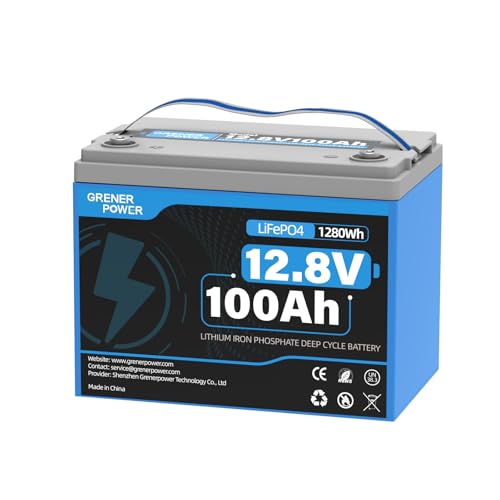
The GrenerPower 12V 100Ah LiFePO4 battery uses Grade A+ cells and a 100A BMS, offering up to 15,000 cycles at 60% DOD. It is a direct drop-in replacement for Group 24 battery boxes, simplifying installation in many boats. Best for anglers and weekend boaters who want a long-lasting power source with simple upgrades. A note: designed primarily for energy storage, not starting engines, so it’s best paired with trolling motors and auxiliary power rather than as a primary engine battery.
DC HOUSE 12V 100Ah LiFePO4 Battery

This DC HOUSE LiFePO4 battery features low-temperature cut-off, Bluetooth app monitoring, and a long lifespan with up to 15,000 cycles. It supports 10-year service life and includes a built-in 100A BMS for protection during charge and discharge. Best for tech-savvy boaters who want remote battery monitoring. Better for cold-weather boating due to its protective features, though Bluetooth setup requires a smartphone and may add a setup step for some users.
BUKNUWO 12.8V 100Ah LiFePO4 Battery

The BUKNUWO 12.8V 100Ah LiFePO4 battery offers a high energy density with up to 15000 cycles at 60% DOD and a top-tier 100A BMS. It weighs about 22 pounds and supports series and parallel expansion for larger energy systems. Best for long-term, heavy-duty trolling motor use with expandability. A limitation is its 12.8V rating; ensure compatibility with your trolling motor’s voltage and charging system before pairing with higher-voltage packs.
Buying Guide
What type of battery fits my trolling motor use?
- AGM (lead-acid) batteries are affordable, lighter than some flooded options, and maintenance-free. They are great for casual anglers who want a straightforward setup and lighter handling.
- LiFePO4 batteries offer longer life, higher cycle counts, and lower weight. They excel for frequent use, extended trips, and systems that benefit from lightweight packs and modulated charging. They require attention to BMS features and charging compatibility.
How do I choose capacity and weight?
- Capacity should align with run-time needs at the trolling motor’s draw. Higher amp-hour (Ah) ratings extend run-time but increase weight. For 30-70 lb thrust trolling motors, 100Ah LiFePO4 packs are common; 50Ah AGM packs are often sufficient for shorter trips.
- Weight impacts handling and installation. LiFePO4 usually offers better weight-to-energy ratio than AGM.
What about safety and maintenance?
- LiFePO4 provides robust thermal and short-circuit protections through integrated BMS and generally requires less maintenance than lead-acid options.
- AGM is sealed and leak-proof, reducing spill risks, but performance degrades with deep discharges more quickly than LiFePO4.
How important is cold-weather performance?
- Low-temperature protection can prevent charging issues and extend life. Some LiFePO4 models include low-temp cut-off and remote monitoring to help manage cold-weather boating.
- Make sure your charger and battery are compatible with low-temperature operation to avoid charging problems.
Compatibility and installation tips
- Check voltage compatibility between the trolling motor and battery pack. Some 12.8V or 12V packs require specific regulators or adapters for best performance.
- Confirm your battery box or rack can accommodate the battery’s dimensions and weight. LiFePO4 packs are often compact and easier to fit, but verify fitment before purchase.
FAQ
- What is the best battery type for trolling motors? LiFePO4 batteries generally offer longer life and lighter weight, but AGM can be a solid, budget-friendly option for casual use.
- Can I use any LiFePO4 battery with a trolling motor? Most trolling motors operate on 12V or 12.8V systems; ensure your battery’s voltage, BMS features, and charger are compatible with your motor’s requirements.
- Do LiFePO4 batteries require special chargers? Yes, use a charger compatible with LiFePO4 chemistry and the battery’s BMS recommendations for optimal performance.
- How many cycles can I expect from LiFePO4? Depending on the model and DOD, LiFePO4 can reach thousands of cycles; common figures range from 1500 to 15000 cycles at various depths of discharge.
- Is cold-weather performance a concern? Some LiFePO4 packs include low-temperature protection; ensure proper storage and charging conditions in freezing environments.
- Is weight a major factor? Yes. LiFePO4 packs are typically lighter for the same energy capacity, improving boat handling and installation flexibility.