Best Blue Sea Marine Fuse Panel Solutions for Boats
For boaters seeking reliable circuit protection, Blue Sea Systems fuse blocks and panels offer durable, corrosion‑resistant options designed for harsh marine environments. This guide highlights five top picks that balance capacity, protection, and ease of use. Each product is described with who it’s best for, why it stands out, and any practical limitations. Use the quick comparison table to decide which block fits your vessel’s power needs, and reference the buying guide for key considerations such as amperage ratings, enclosure type, and mounting requirements.
| Product | Best For | Key Benefit |
|---|---|---|
| ST Blade Fuse Block 12 Circuit with Ground (5026) | Higher-demand DC systems on mid‑sized vessels | Twelve circuits with integrated ground, 100 A max |
| ST Blade Fuse Block 6 Way (5025) | Medium power setups needing compact blocks | Six circuits with negative bus, 100 A max |
| ST Blade Fuse Block 6 Circuit with Cover (5028) | Compact installations on smaller boats | Six fused circuits, 100 A max |
| Fuse Block Safety SEA/AMG (7721) | Critical ignition‑protected applications | Sealed, ABYC/USCG insulation compliant |
| Panel Mount AGC/MDL Fuse Holder (5021) | Main power protection in exposed locations | Waterproof replacement for common fuse holders |
Blue Sea ST Blade 12‑Circuit Fuse Block

This block is best for boats with a higher DC load that still require organized circuit routing. It supports twelve ATO/ATC fused branches with a ground bus and an integrated negative return. The 100 A maximum capacity means it can handle multiple 15–30 A circuits without overheating, making it suitable for systems with pumps, fans, and electronics runoffs. The insulating cover adds protection against moisture, while the built‑in spare fuse storage simplifies maintenance. Choose this if you need robust labeling and a clear, protected layout for many circuits.
Best for: Boats with moderate to high electrical demand and a need for clear circuit separation. Better for: vessels that require a dedicated ground bus in the fuse block. Avoid this if: you have limited space or only a few circuits to manage.
Blue Sea ST Blade 6 Way Fuse Block (5025)
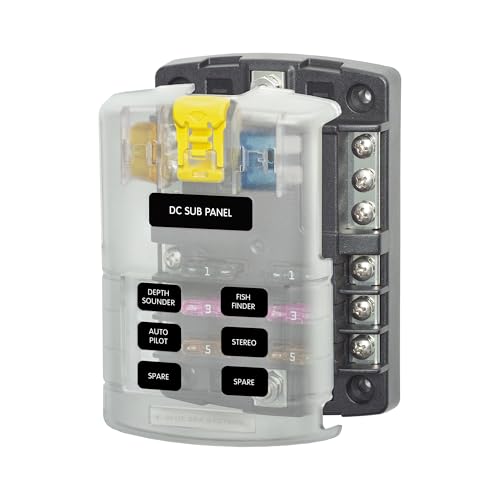
This option fits mid‑sized installations where a compact fuse block is preferred. Six fused circuits with a negative bus and a 100 A capacity support typical boat systems such as communication gear, lighting, and navigation accessories. The clear insulating cover with latch helps protect the fuses from the marine environment and allows straightforward access for fuse checks. Choose this if you want a smaller footprint without sacrificing circuit protection capacity.
Best for: smaller to mid‑sized boats needing a streamlined fuse panel. Better for: installations where space is at a premium. Avoid this if: you require more than six fused outputs in one block.
Blue Sea ST Blade 6 Circuit with Cover (5028)

Designed for everyday marine use, this six‑circuit block combines reliability with ease of wiring thanks to a simple cover and label recesses. It supports up to 30 A per circuit, maintaining a 100 A total rating, which is suitable for essential boat systems that must stay online in rough conditions. The insulation cover helps keep exposed fuses dry and corrosion‑free. Choose this if you want straightforward installation and reliable protection in a standard cockpit or cabin setup.
Best for: basic to moderate DC systems on small to mid‑sized boats. Better for: installations needing a quick‑to‑install, protected fuse block. Avoid this if: you anticipate needing more than six fused outlets in one block.
Blue Sea Fuse Block Safety SEA/AMG
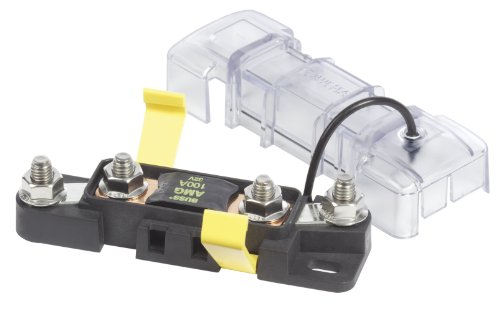
This model emphasizes ignition protection for installations aboard gasoline or diesel boats. The sealed cover shields fuses from salt spray and rain, and the insulating cover helps meet ABYC/USCG insulation requirements. It’s ideal for exposed locations such as near engine compartments or above‑deck panels where moisture is a constant concern. The main limitation is that its protection focus may come with fewer individual circuit options than multi‑block panels, so plan circuits accordingly.
Best for: ignition‑protected applications and harsh environments. Better for: above‑deck or engine‑compartment mounting. Avoid this if: you need a high‑density block with many circuits in a small space.
Blue Sea Panel Mount AGC/MDL Fuse Holder

This fuse holder is a practical replacement for Contra Waterproof Fuse Panels, designed for above‑deck use where water exposure is common. It’s easy to open and built to withstand salt spray and wash‑downs, making it well suited for outdoor helm stations or near the cockpit. The main caveat is that it provides the holder platform rather than a full fuse block, so pair it with compatible fuses and a separate distribution approach if you need multiple circuits.
Best for: exposed, water‑prone mounting locations requiring a robust holder. Better for: replacing standard fuse holders in protective panels. Avoid this if: you need a full circuit block in one compact unit.
Buying Guide: Key Considerations for Blue Sea Marine Fuse Panels
- Amperage and total capacity: Match the block’s total rating to your boat’s peak draw. Higher‑demand systems may require 12‑ or 6‑circuit blocks with a 100 A total cap or higher per block.
- Number of circuits: Count the essential circuits (lights, pumps, navigational gear) and plan future expandability. Consider whether a single multi‑circuit block or multiple smaller blocks fits your layout best.
- Enclosure and protection: Choose sealed or water‑resistant designs for above‑deck or engine areas. Insulating covers help meet ABYC/USCG standards and protect fuses from moisture.
- Grounding and bus configuration: Some models include integrated negative buses for neater wiring. A dedicated ground path can simplify maintenance and fault isolation.
- Installation environment: Engine rooms, cockpit lockers, and open decks demand different protection levels. Ignition protected options are preferred near fuel sources or ignition sources.
- Wiring compatibility: Ensure the block supports common blade fuses (ATO/ATC) and compatible wire sizes for your planned circuits. Look for blocks that allow easy spare fuse storage for quick maintenance.
- Maintenance and labeling: Clear recessed labeling and easy fuse access help with troubleshooting and routine checks. Consider models with spare fuse storage to minimize downtime.
Frequently Asked Questions
- What is the difference between ATO and ATC fuses?
- Do marine fuse blocks require waterproof covers?
- Can I mix different fuse sizes in one block?
- Is ignition protection important for in‑engine applications?
- How do I choose between a 6‑circuit and a 12‑circuit block?
- What maintenance practices improve fuse life?
ATO and ATC fuses are blade fuses used in marine electrical panels. They differ in shape and typical load ratings but are generally compatible with Blue Sea fuse blocks that support blade fuses.
Waterproof or water‑resistant covers help protect fuses from salt spray, rain, and wash‑downs, improving reliability in exposed locations.
Yes, most Blue Sea blocks support multiple fuse sizes per circuit as long as the per‑circuit rating and total block rating are not exceeded.
Yes. Ignition‑protected designs reduce risk near fuel sources and are recommended for engine compartments and fuel‑related areas.
Choose based on the number of circuits you need now and the potential for future expansion. A 12‑circuit block offers more room for growth, while a 6‑circuit block saves space and can simplify wiring.
Keep terminals clean and dry, replace blown fuses promptly, and ensure the insulating cover remains intact to protect against moisture.