Best Bilge Pump Float Switches for Boats
This guide helps buyers pick reliable bilge pump float switches that automate water management on boats. The top picks below suit different vessel sizes, maintenance preferences, and voltage systems. Best for compact sailboats or modest pontoons is the Rule 35A; for durable, accessible service on smaller craft, Huazu; for multi-volt systems on larger boats, Rule 40A; for value-packed back-ups on cruisers, Landhoow; and for robust, multi-volt reliability, Creatorele. A quick comparison table follows to help you decide at a glance.
| Product | Voltage | Best For | Key Benefit |
|---|---|---|---|
| Rule 35A Marine Rule-A-Matic Switch | 12V | Small to mid-size boats | Mercury-free, durable, easy installation |
| Huazu Automatic Bilge Pump Float Switch | 12V/24V/32V | Simple maintenance, versatile pumps | Long switching life, easy cleaning |
| Rule 40A Rule-A-Matic Plus | 12/24/32V | Compact boats needing rugged protection | Moisture-tight seals, integrated cover |
| Landhoow Automatic Bilge Pump Switch | 12V/24V/32V | Two-switch redundancy on larger vessels | Two-pack, long life, sealed welding |
| Creatorele Automatic Bilge Pump Float Switch | 12V/24V/32V | Multi-volt reliability for varied systems | Silver contacts, solid performance |
Rule 35A Marine Rule-A-Matic Switch
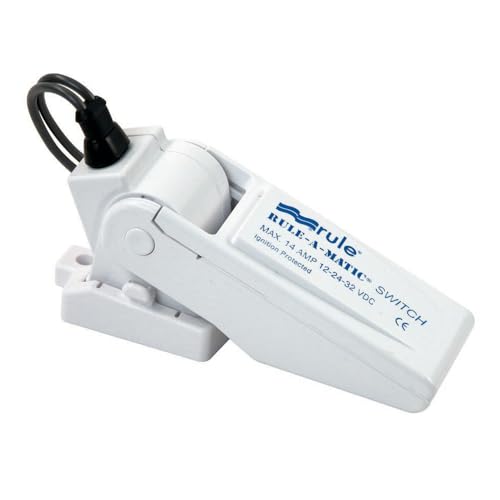
The Rule 35A provides automatic bilge activation when water levels rise, eliminating the need for manual checks. This mercury-free switch is designed for marine environments with corrosion-resistant components and a robust housing. It is ideal for small to mid-size boats that require reliable, straightforward installation.
- Best for boats prioritizing automatic operation with simple wiring.
- Better for those seeking a mercury-free, durable control switch.
Caution: Ensure proper wiring and compatibility with your bilge pump’s amperage to avoid overloading the switch.
Huazu Automatic Bilge Pump Float Switch

The Huazu float switch supports 12V, 24V, and 32V systems, making it versatile across vessels and pumps. Its ABS shell and reliable metal contacts support long life, with a design that allows removal from the base for cleaning. Activation occurs around 2 inches and stops around 3/4 inch, offering predictable cycling.
- Best for boats needing a versatile, maintenance-friendly option.
- Better for owners valuing easy cleaning and removal for service.
Caution: While durable, verify your pump’s current draw matches the switch ratings at your chosen voltage before installation.
Rule 40A Rule-A-Matic Plus

The Rule 40A offers a robust, moisture-tight seal in a compact form, with an integrated cover that protects against debris and jamming. It’s suitable for small to mid-sized boats needing extra protection from environmental exposure while maintaining reliable operation.
- Best for vessels in debris-prone or wet environments.
- Better for installations where a compact, protected switch is preferred.
Caution: The compact size may limit mounting options; plan placement to avoid interference with bilge components.
Landhoow 2 Pcs Automatic Bilge Pump Switch

The Landhoow package includes two switches, offering redundancy and flexibility for larger boats or multiple bilge zones. It supports automatic control across 12V, 24V, and 32V systems, with a long service life and ultrasonic welding for a sealed, leak-proof build. Water activation occurs at about 2 inches and stops at 3/4 inch.
- Best for boats needing backup or multi-location bilge control.
- Better for systems requiring two independent switches for fail-safety.
Caution: The dual-pack may require additional wiring effort; confirm the electrical load distribution fits your setup.
Creatorele Automatic Bilge Pump Float Switch
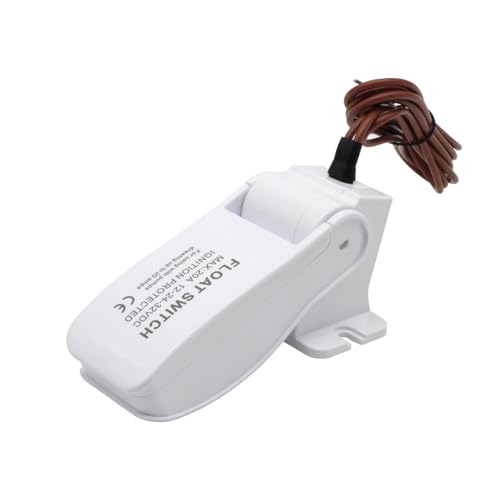
The Creatorele switch supports 12V, 24V, and 32V with a focus on reliability and multi-volt compatibility. It features large silver contacts for stable performance with various bilge pump systems and is designed for boats requiring robust switching across voltage levels.
- Best for versatile voltage setups across different boats.
- Better for owners who value stable contact performance in wet environments.
Caution: Verify contact ratings align with your pump’s current draw to avoid premature wear under heavy loads.
Buying Guide: Key Purchase Considerations
Voltage compatibility matters: choose a switch that matches your bilge pump’s operating voltage (12V, 24V, or 32V).
Current ratings are critical: ensure the switch can handle your pump’s amperage to prevent overheating or failure.
Sealing and construction affect longevity: muffled seals, moisture protection, and corrosion resistance extend life in harsh marine conditions.
Maintenance accessibility: prefer switches that can be easily cleaned or serviced without removing the entire bilge system.
Redundancy options: consider buying two switches or a dual-switch kit for critical vessels or multiple bilge compartments.
Installation complexity: read wiring diagrams and ensure you have space to mount the switch away from debris and moving parts.
FAQ
- What voltage should I choose for my bilge switch?
Answer: Match the switch to your bilge pump’s voltage (common options are 12V, 24V, or 32V). Multi-voltage models provide flexibility for different boats. - Why does a float switch use ultrasonic welding?
Answer: Ultrasonic welding creates a leak-proof seal, improving durability in wet environments. - Is redundancy useful for bilge switches?
Answer: Yes, two switches can cover multiple zones or serve as a backup in case one fails. - Can I install a bilge float switch myself?
Answer: Many models are designed for straightforward wiring, but verify your boat’s electrical system and follow the manufacturer’s instructions. - What maintenance is needed for these switches?
Answer: Periodic cleaning, inspection of seals, and checking electrical connections help prevent corrosion and ensure reliable operation. - What is the typical activation height for these switches?
Answer: Activation is commonly around 2 inches of water height, with deactivation around 3/4 inch, depending on the model.