Best Battery Chargers for Boat Trolling Motors: Top 5 Pickes for 2026
Answering the question “which battery charger is best for a trolling motor on a boat?” this guide highlights five top options that balance reliability, versatility, and marine suitability. These chargers are best for saltwater or freshwater boats, anglers who need dependable maintenance, and boaters who want simple, plug-in operation. Each option supports multiple battery types and includes safety features like temperature compensation or overcharge protection. The following picks offer clear advantages for different battery setups and boating styles, helping you choose the right charger for your trolling motor system.
The table below summarizes the five selected products, focusing on who they are best for and key strengths.
| Product | Best For | Why It Stands Out | Notes |
|---|---|---|---|
| NoCO Genius GEN5X2 (2-Bank, 10A) | Multi-battery boats | Two independently controlled banks; supports lead-acid and lithium; temperature compensation | Compact onboard option |
| Minn Kota 1823155 MK 315D | Traditional 3-bank systems | Digital control and temperature compensation for precise charging | 3 banks, classic marina-grade brand |
| Newport Trolling Motor Smart Battery Box Power Center | Portable power hubs | All-in-one hub with USB and DC ports; clean setup | Not a traditional charger, but integrates power management |
| NEXPEAK NC201 10-Amp | Onboard and remote charging | 10A 12V/24V along with temp compensation and desulfator features | Versatile 12V/24V support |
| FirstPower Pro 2 Bank 5X2 | Compact dual-bank setups | IP68 waterproof, independent bank modes, 5A per bank | All-weather marine compatibility |
NOCO Genius GEN5X2: 2-Bank, 10A Onboard Charger

The GEN5X2 provides two independent 5A banks for 12V batteries, making it ideal for boats with multiple battery needs. It’s 37% smaller and 43% more powerful than earlier NOCO generations, designed to endure harsh marine conditions. Each bank supports 12V lead-acid, AGM, and lithium batteries with selectable modes, including a specialized 12V Repair Mode. This unit is best for boaters who run dual battery banks for trolling motors and accessories and want precise, bank-by-bank control. A caution: installation should ensure proper ventilation and mounting away from water splash zones to prevent moisture exposure.
Best for: Boats with two battery banks and mixed battery chemistries.
Why chosen: Independent per-bank charging with temperature compensation, compact onboard design, and multi-mode support for different battery types.
Minn Kota MK 315D Digital On-Board Charger

The MK 315D is a 3-bank charger delivering up to 5 amps per bank, with digital control and automatic temperature compensation. It provides a fast, precise charge and clear LED indicators for each stage, which helps determine maintenance mode status or errors. This option is well-suited for boaters with three batteries (two trolling motor batteries plus a starting or house battery) who want easy-to-read feedback and a trusted marine brand. Limitations include its three-bank configuration which may be more than needed for smaller setups.
Best for: Boats with three battery needs needing precise, LED-clarified status indicators.
Why chosen: Digital control and temperature compensation deliver consistent charging across varied conditions.
Newport Trolling Motor Smart Battery Box Power Center
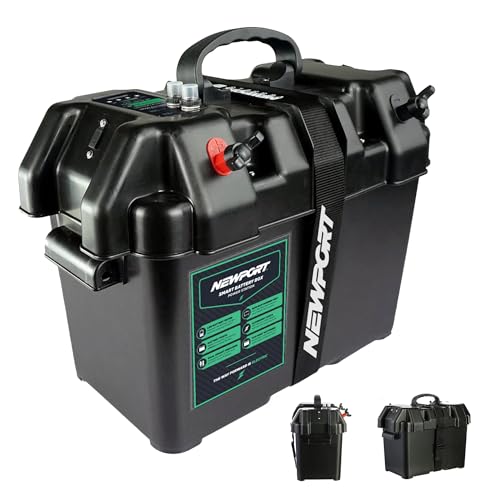
This is more than a charger; it’s a portable, all-in-one marine power hub designed to simplify wiring on kayaks, jon boats, and other small watercraft. It streamlines connections with external terminals, built-in USB and 12V DC ports, and a clean, organized layout. It’s best for anglers or recreational boaters who want a compact, integrated power center without complex wiring. A limitation to note is that it’s not a traditional multi-bank onboard charger, so it may pair best with additional charging solutions for full trolling-motor battery management.
Best for: Small boats and kayaks needing a centralized, portable power hub.
Why chosen: Clean, external-access connections and integrated USB/12V ports reduce wiring clutter on board.
NEXPEAK NC201 10-Amp Battery Charger

The NC201 is a 10-amp, 12V/24V charger with a 7-stage charging process and temperature compensation. It supports a wide range of battery types, including lead-acid variants and lithium batteries, and it includes a desulfator function. Best for boaters who operate mixed power systems or require fast charging across two voltage configurations. Limitation: the data notes that charging currents exceeding 15A can risk battery damage, so selection must match battery capacity and chemistry.
Best for: Boaters needing versatile 12V/24V charging with preventive maintenance features.
Why chosen: Combines fast charging with battery restoration features and temperature-aware charging.
FirstPower Pro 2 Bank 5X2, 10A

The 5X2 offers two banks rated at 5A each, designed for 12V lead-acid and lithium batteries. It features IP68 waterproof sealing for marine environments and allows independent mode selection per battery. This product is ideal for dual-bank layouts on boats that require reliable all-weather performance and straightforward operation. A caution: while robust, its effectiveness hinges on ensuring compatible battery types and correct mode selection for each bank.
Best for: Dual-bank setups on boats facing wet conditions and requiring reliable outdoor performance.
Why chosen: Weatherproof design, independent bank operation, and 24/7 onboard charging capability.
Buying Guide
Key considerations when choosing a trolling motor battery charger:
- Battery chemistry support: Ensure compatibility with lead-acid, AGM, gel, and LiFePO4 if you use lithium batteries.
- Bank count and amperage: Match the number of banks to your battery arrangement. Higher banks support more batteries; higher amperage charges faster but must suit battery capacity.
- Temperature compensation: Chargers with temperature sensing prevent overcharge in heat and undercharge in cold weather, protecting battery health.
- Waterproofing and ruggedness: Marine environments demand IP-rated or rugged housings to withstand splashes and salt exposure.
- Maintenance features: Desulfation, float charging, and automatic switch-over to maintenance mode extend battery life and readiness.
- Installation and wiring: Consider whether you want an onboard unit or a portable power center for flexibility on various vessels.
FAQ
- What is the difference between a 2-bank and a 3-bank charger? A 2-bank charger charges two separate batteries independently, while a 3-bank charger can handle three batteries, offering more flexibility for larger trolling-motor systems.
- Can I use a lithium battery with a charger designed for lead-acid? Yes, if the charger supports lithium modes or universal 12V/24V battery charging, but always verify compatibility with your specific lithium chemistry (such as LiFePO4).
- Why is temperature compensation important? It adjusts charging based on ambient temperature to prevent overcharging in heat and undercharging in cold, preserving battery life.
- Should I choose an onboard charger or a portable power center? Onboard chargers mount to the boat’s structure and stay wired in, suitable for frequent use; portable centers offer flexibility for smaller vessels or rental boats.
- What is a desulfator, and is it useful? A desulfator helps break down lead sulfate build-up in some lead-acid batteries, potentially extending life when used properly as part of a charger’s features.
- Is a higher amperage charger always better? Not necessarily. Higher amperage charges faster but can stress batteries if not matched to capacity or chemistry. Always follow manufacturer guidelines.