Best Battery Tray Solutions for Bass Boat Setups: Secure, Durable Mounts
When choosing a bass boat battery tray, look for heavy-duty construction, secure attachment, and corrosion resistance to handle marine environments. This guide highlights five solid options designed for Group 24, 27, and 29/31 batteries, with emphasis on security, ease of installation, and long-term durability. Best for anglers who need reliable, vibration-resistant mounts that keep batteries safe during rough waters and long tournam ents. The selection below targets boaters who want simple, tool-free installs or compliant, safety-focused mounts for marine use.
Summary table of selected products:
| Product | Battery Type | Best For | Key Benefit |
|---|---|---|---|
| Automotive, Marine, Boat, RV Battery Tray – Group 27 Series with Strap (A.A) | Group 27 | General Marine & RV use | High-impact polypropylene, included strap for security |
| Automotive, Marine, Boat, RV Battery Tray – Group 24 Series With Strap (A.A) | Group 24 | Compact spaces | Same rugged construction; snug fit with strap |
| Automotive, Marine, Boat, RV Battery Tray – Group 29/31 Series with Strap (A.A) | Group 29/31 | Larger batteries | Extreme-duty tray with secure strap |
| T-H Marine Battery Holder Tray with Stainless Steel Buckle | 31 Series (and compatible) | Rough water protection | Stainless steel buckle, corrosion-resistant |
| Attwood USCG-Approved Group 27 Series Adjustable Hold-Down Tray | Group 27 | Coast-guard compliant installs | ABYC E-10 and USCG compliant; adjustable height |
Automotive, Marine, Boat, RV Battery Tray – Group 27 Series with Strap

Best for: Boat owners with Group 27 batteries who need a rugged, strap-secured tray. This model uses high-impact polypropylene and includes a battery strap to limit movement. The design emphasizes a secure hold during rough water, making it a solid choice for saltwater or freshwater bass boats. Caution: verify the tray dimensions fit your battery terminals and mounting space before installation.
Automotive, Marine, Boat, RV Battery Tray – Group 24 Series With Strap

Best for: Anglers using Group 24 batteries in tighter compartments where space is limited. The tray shares the extreme-duty polypropylene construction and includes a securing strap to minimize movement. Selection note: ensure your battery’s height fits the strap clearance to avoid interference with lids or covers.
Automotive, Marine, Boat, RV Battery Tray – Group 29/31 Series with Strap
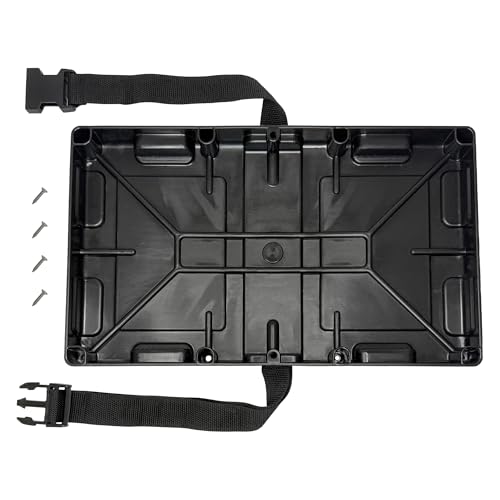
Best for: Bass boats that use larger Group 29 or 31 batteries and require robust retention. The tray is described as extreme-duty with a strap to limit battery movement. Limitation: larger batteries may require more mounting space and a stronger mounting surface to achieve full security in heavy chop.
T-H Marine Battery Holder Tray with Stainless Steel Buckle for 31 Series

Best for: Marine enthusiasts seeking corrosion resistance and easy installation. The stainless steel buckle keeps batteries firmly in place, even in rough conditions, and the tray is designed for straightforward mounting. Caution: verify compatibility with your battery size and the installation space, especially if you have a compact console area.
Attwood USCG-Approved Group 27 Series Adjustable Hold-Down Tray

Best for: Boats requiring Coast Guard compliance and adjustable fit for Group 27 batteries. This tray features an adjustable-height crossbar and retaining bolts for secure mounting, aligning with ABYC E-10 and USCG requirements. Limitation: compatibility depends on screw mounting points and crossbar clearance, so measure before installation.
Buying Guide: How To Choose The Right Bass Boat Battery Tray
- Battery compatibility: Confirm the tray supports your battery group (24, 27, 29/31). Check dimensions (length, width, height) and terminal placement to avoid clearance issues.
- Security features: Look for straps, buckles, or adjustable hold-downs. In rough water, secure retention minimizes movement and reduces cable wear.
- Material and durability: Polypropylene trays resist gas, oil, acid, and moisture. Corrosion-resistant hardware (stainless steel) lasts longer in saltwater environments.
- Ease of installation: Tool-free or minimal-tools installation saves time and reduces installation errors. Ensure you have enough mounting surface space on your boat’s battery compartment.
- Compliance and safety: For boats requiring codes, choose trays that meet ABYC and USCG standards. Adjustable height can accommodate different battery heights and configurations.
- Maintenance considerations: Choose trays with simple access for battery maintenance, cable checks, and strap replacements when needed.
- Space and layout: For compact compartments, prioritize slim profiles or dual-holder trays that can secure two batteries without crowding.
FAQ
- What battery tray is best for rough water? Choose trays with strong retention systems (straps or stainless buckles) and corrosion-resistant materials, like the T-H Marine option or models with heavy-duty straps.
- Do these trays fit both standard and oversized batteries? Most trays specify compatible battery group sizes (24, 27, 29/31). Verify dimensions and strap clearance for your exact model.
- Are USCG-approved trays required? Not for all boats, but for select classifications, compliant trays help meet regulatory standards and safety requirements.
- Can I install a dual-battery tray in a small console? Yes, but ensure the mounting surface, strap length, and clearance for venting and cables fit without obstruction.
- How long does installation take? Tool-free options can take about 5–15 minutes, while more complex mounts may require more time for alignment and screws.
- What maintenance is needed? Regularly inspect straps and buckles for wear, clean battery terminals, and ensure the tray remains firmly secured to the mounting base.