Best Antifouling Paint for Boats: Top Picks for a Clean Hull All Season
When choosing antifouling paint for boats, pick products that protect your hull efficiently, are suitable for your boat type, and minimize maintenance. This guide highlights five top options ideal for American boaters, including sailboats, powerboats, and work boats, across fiberglass, wood, steel, and aluminum hulls. Each selection targets common buyer needs: single-season protection, low odor or low VOCs, and ease of application or cleanup. The table below compares the most relevant picks at a glance, helping you decide which coat fits your boating lifestyle.
| Product | Best For | Key Benefit | Hull Types |
|---|---|---|---|
| TotalBoat Underdog Marine Antifouling Bottom Paint (Black, Gallon) | Sailors and frequent boaters | Economical single-season protection; durable finish | Fiberglass, Wood, Steel |
| TotalBoat JD Select Ablative Antifouling (Quart) | Saltwater and marina users | Self-polishing, low odor, easy cleanup | Fiberglass, Wood, Steel |
| TotalBoat JD Select Ablative Antifouling (Gallon, Blue) | Power and sail boats needing multi-season plan | Same benefits as quart, larger coverage | Fiberglass, Wood, Steel |
| Rust-Oleum 396967 Marine Antifouling (Quart, Black) | Fiberglass, wood, steel beginners | Recoat in 4 hours; low maintenance | Fiberglass, Wood, Steel |
| TotalBoat Krypton Copper Free Antifouling (Quart, White) | Aluminum boats and outdrives | Copper-free formula; bright colors | Fiberglass, Wood, Steel, Aluminum |
TotalBoat Underdog Marine Antifouling Bottom Paint (Black, Gallon)
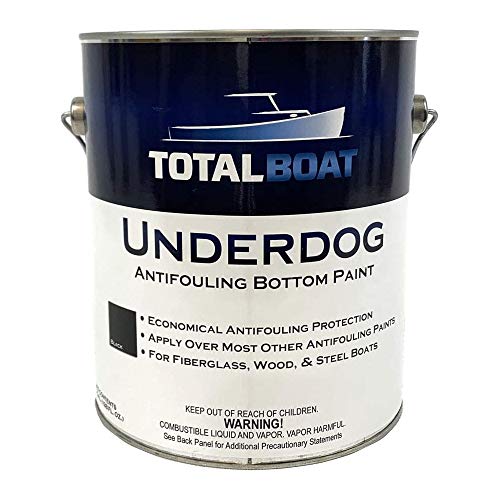
Best for boats that require economical, single-season protection, Underdog uses a copper biocide to deter barnacles and mussels. It is designed for properly prepared fiberglass, wood, steel, and iron hulls. The coating wears away over the season, reducing paint buildup and simplifying next-season prep. Helps boats that are frequently launched and recovered without heavy maintenance. Best for sailboats, power boats, fishing, and work boats in saltwater conditions. A potential limitation is shorter protection duration compared with multi-season ablative options in some environments.
TotalBoat JD Select Ablative Antifouling (Quart)

This ablative bottom paint uses a self-polishing film that wears away as the boat moves, minimizing buildup and reducing sanding next season. It’s a low-odor, low-VOC water-based formula suited for marinas and boatyards with environmental restrictions. It provides a full-season antifouling effect on fiberglass, wood, and steel, with easy cleanup using soap and water. It’s best for boats that stay in water long enough to benefit from continual biocide release; consider multi-season needs when choosing a larger container.
TotalBoat JD Select Ablative Antifouling (Gallon, Black)

Choose this if you need a larger supply of the same ablative formulation that reduces bottom paint buildup and improves smoothness for speed and fuel efficiency. It shares the same low odor and easy cleanup as the quart version, making it a practical option for frequent relaunches. Best for fiberglass, wood, and steel boats in various water types. A limitation is that users must ensure proper surface preparation to maximize protection.
TotalBoat Krypton Copper Free Antifouling (Quart, White)

The copper-free formula avoids galvanic concerns on aluminum boats, outdrives, and trim tabs while providing solid protection against barnacles, weeds, algae, and slime. It supports use on fiberglass, wood, steel, iron, and aluminum below the waterline. This option is ideal for owners seeking bright color durability without copper biocide. Choose this if you operate aluminum vessels or seek a copper-free solution; it may require careful surface prep for best results in harsher waters.
Rust-Oleum 396967 Marine Antifouling (Quart, Black)

Rust-Oleum’s option is designed for fiberglass, wood, or steel surfaces, releasing copper gradually to prevent fouling. It offers a relatively quick recoat window and launch readiness, making it a practical entry-level choice for boaters who want straightforward, predictable performance. Best for users who value easy touch-ups, with the caveat that long-term durability may vary by water type and boat usage. Consider this if you want a simple, approachable coating.
Buying Guide
What should I consider when choosing antifouling paint?
- Boat use and water type: Frequent launch/retrieval and saltwater use favor ablative or copper-based paints for ongoing protection.
- Hull material: Fiberglass, wood, steel, and aluminum have different prep and compatibility needs; copper-free formulas help prevent galvanic issues on aluminum and trim tabs.
- Application and cleanup: Low-VOC and water-based formulas simplify marina compliance and cleanup.
- Durability vs. maintenance: Ablative paints wear away, reducing buildup but requiring reapplication; non-ablative options provide longer-lasting film but may demand more prep over multiple seasons.
- Environmental and safety considerations: Choose low-odor or low-VOC options if you’re in marinas with restrictions or sensitive facilities.
FAQ
- Q: How often should I repaint the hull with ablative antifouling paint?
- A: Repainting frequency depends on water conditions and boat use; ablative paints wear away gradually, often aligning with annual maintenance cycles.
- Q: Is copper-based antifouling paint safe for aluminum hulls?
- A: Copper can cause galvanic concerns on aluminum; copper-free formulas are recommended for aluminum boats and outdrives.
- Q: Can I apply antifouling paint over existing coatings?
- A: Most products require proper surface preparation and may not bond well to unclean or incompatible coatings; always follow label instructions.
- Q: Are low-VOC antifouling paints as effective as traditional ones?
- A: Many low-VOC options are designed to deliver comparable protection while reducing fumes and environmental impact; performance depends on surface prep and usage patterns.
- Q: What is the difference between ablative and non-ablative antifouling paints?
- A: Ablative paints wear away during movement, reducing buildup; non-ablative paints stay thicker longer but may require more sanding.