Best Anti Fouling Bottom Paint Options for Boats in Fresh or Salt Water
Answer: This guide highlights top anti fouling bottom paints that help keep barnacles, weeds, and slime off your hull for a full season. It focuses on ablative, low-odor formulas suitable for fiberglass, wood, and steel boats in both saltwater and freshwater. Ideal buyers include recreational sailors, weekend power-boaters, and commercial operators who want easy maintenance and reliable performance without harsh fumes. Below, you’ll find five well-suited picks, with clear notes on usage, benefits, and any limitations to consider.
| Product | Best For | Material Compatibility | Coating Type |
|---|---|---|---|
| TotalBoat JD Select Ablative (Gallon, Black) | Power and sailboats needing long-season protection | Fiberglass, Wood, Steel | Ablative/Hybrid |
| TotalBoat Underdog (Gallon, Black) | Frequent-use boats in varied water | Fiberglass, Wood, Steel | Ablative |
| TotalBoat JD Select Ablative (Quart, Black) | Compact or spare-coat projects | Fiberglass, Wood, Steel | Ablative/Hybrid |
| TotalBoat JD Select Ablative (Blue, Gallon) | Color options for easy hull inspection | Fiberglass, Wood, Steel | Ablative/Hybrid |
| Rust-Oleum Marine Bottom Antifouling (Quart, Black) | Budget-conscious or light-use boats | Fiberglass, Wood, Steel | Cu-based/slow copper-release |
TotalBoat JD Select Ablative Antifouling (Gallon, Black)
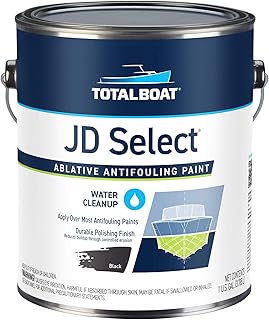
This anti fouling paint uses a unique hybrid film to prevent barnacles, weeds, and slime on fiberglass, wood, and steel hulls in salt or fresh water. It is an ablative coating that wears away gradually with movement, reducing long-term paint buildup and easing next-season prep. The formula is low odor with low VOCs and cleans up with soap and water, making it marina-friendly and easier to apply in restricted environments. Best for boats needing durable, single-season protection and smoother hull performance for better speed and fuel efficiency.
Best for: power and sailboats that spend time in varying water conditions and want a long-season, lower-maintenance coating.
Limitation: Some environments may require reapplication within a season if usage is extremely high or bottom contact is frequent.
TotalBoat Underdog Antifouling (Gallon, Black)

This economical option aims for single-season protection with copper biocide to deter barnacles and mussels. It’s designed for boats that see frequent use in saltwater and is suitable for sailboats, powerboats, and work or fishing vessels. The coating releases fresh biocide as water flows under the hull, providing ongoing protection while needing less frequent maintenance than traditional paints. Best for: boats that spend a lot of time in the water and require a cost-effective solution.
Limitation: Designed for one-season protection; long seasons may require reapplication or top-ups to maintain performance.
TotalBoat JD Select Ablative (Quart, Black)

This quart-size variant mirrors the gallon options with the same hybrid, ablative formula designed to slow bottom-build and simplify next-season maintenance. It’s well-suited for smaller boats or touch-up jobs where a full gallon isn’t necessary. Best for: light-touch upgrades, seasonal sailors, or boats in marinas with environmental restrictions due to low VOC content.
Limitation: Less total coverage per can, so consider quantity for larger hulls or multiple coats.
TotalBoat JD Select Ablative Antifouling (Blue, Gallon)

This blue variant provides the same hybrid ablative protection as the black options, offering color-based hull inspection benefits. It targets boats needing durable, season-long protection with easy clean-up and low odor. Best for: aesthetically managing hull checks while maintaining performance in mixed-water use.
Limitation: Color may influence heat absorption and kick-back during warm-water conditions; verify color stability for your climate.
Rust-Oleum 396967 Marine Bottom Antifouling (Quart, Black)

This option is positioned as a budget-friendly antifouling paint for boats with basic, steady usage. It employs a slow-release copper approach to reduce fouling on fiberglass, wood, or steel hulls. It can be recoated in about four hours and allows launch within 16 hours, covering up to 110 square feet per quart. Best for: casual boaters or seasonal users who want a straightforward, low-cost hull protection method.
Limitation: Copper-based formulations may require more frequent maintenance under heavy-use or harsh marine environments, and coverage is modest per quart.
Buying Guide: Key Considerations For Anti Fouling Bottom Paints
- Coating type and season length: Ablative (self-polishing) paints wear away with water movement and typically reduce buildup, enabling easier re-coating. Hybrid blends aim to combine durability with easier sanding.
- Water type and usage: Saltwater boats with frequent exposure may benefit from more resilient formulas, while freshwater, light-use vessels can often rely on economical or single-season paints.
- Material compatibility: Ensure the paint is approved for fiberglass, wood, and steel to avoid adhesion issues. Most options here support all three, but verify prep requirements.
- VOC and odor: Low-VOC and low-odor options are preferable for marinas or boatyards with environmental restrictions. They also reduce fumes during application.
- Recoat and launch times: Some products allow rapid recoat or quick launch windows; plan scheduling around these times for marina compliance and weather.
- Color and inspection: Darker colors can help in visual hull inspections for algae growth, while lighter colors may reflect heat. Some buyers prefer color options for easier maintenance checks.
- Coverage and cost: Consider total hull area and seasonal needs. Ablative paints may require less sanding over time but can demand more frequent top-ups in high-use vessels.
FAQ
- What is ablative antifouling paint?
It wears away gradually as the boat moves, reducing paint buildup and easing future re-coats. - Is low-VOC paint safer for marinas?
Yes, low-VOC formulas reduce fumes during application and cleanup in restricted environments. - How often should I repaint?
Depending on usage and water conditions, single-season paints may require reapplication after a full season; ablatives often offer self-polishing benefits for ongoing protection. - Can I use antifouling paint on wooden hulls?
Most listed products are formulated for fiberglass, wood, and steel; always follow prep instructions for wood to avoid blistering or adhesion issues. - Do these paints require special tools?
Application typically uses brushes, rollers, or spray equipment as recommended by the manufacturer; cleanup is usually with soap and water for water-based formulas. - When can I launch after painting?
Launch times vary by product; some offer no maximum dry time, while others specify hours to wait before launching. Always consult the product label for exact guidance.