Best Anti Fatigue Boat Mats for Long Days on the Water
When choosing anti-fatigue boat mats, aim for marine-grade materials, strong adhesive backing, and non-slip performance. This guide highlights five top mats that reduce fatigue at the helm and on deck, helping boaters stay comfortable during extended outings. Best for long stints at the wheel, standing on decks, or walking from bow to stern—the right mat can improve support, reduce joint strain, and enhance grip in wet conditions.
| Product | Key Benefit |
|---|---|
| SeaDek 20mm Dual Density Boat Helm Pad | Premium marine comfort at the helm with easy adhesive installation |
| Nalwort 36″ L x 14″ W EVA Foam Helm Pad | Solid balance of thickness, grip, and marine-grade durability |
| Nalwort 40″ L x 15.7″ W EVA Foam Helm Pad | Longer footprint for larger helm areas with strong non-slip grip |
| DaisyInner 36″ x 14″ Helm Station Pad | 20 mm thick with adhesive backing for easy, quick installation |
| Stream Machine Water Sports Body Saver Mat | High vibration absorption for decks, garages, and kitchens |
SeaDek 20mm Dual Density Helm Pad
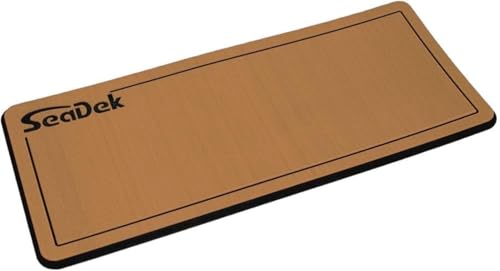
Best for boaters seeking premium comfort at the helm. This pad uses SeaDek’s high-density EVA foam to cushion feet and reduce fatigue during long days on the water. The 3M adhesive backing allows for secure, no-hardware installation, making it ideal for DIY deck upfits. The brushed texture provides reliable traction when wet and the closed-cell foam resists water absorption and fading in harsh marine conditions. Caution: apply only to clean, dry, non-porous surfaces for optimal adhesion.
Nalwort 40″ L x 15.7″ W EVA Helmet Pad

Best for larger helm areas needing substantial support. The 20mm thick pad combines a 17mm EVA base with a 3mm textured top layer for grip. Engineered for marine use, it resists saltwater, UV, and moisture, reducing foot fatigue while maintaining deck safety. The peel-and-stick design simplifies installation on smooth, non-porous decks. Limitation: not recommended for porous surfaces, as the adhesive bond may weaken with exposure to air.
Nalwort 36″ L x 14″ W EVA Foam Helm Pad
Best for mid-length helm layouts requiring both cushioning and grip. This 20mm pad with a 17mm base and 3mm top layer provides fatigue relief and solid footing, while the marine-grade EVA composition resists salt, UV, and moisture. Easy peel-and-stick installation suits smooth, non-porous decks. Caution: not ideal for porous decks where adhesion can degrade over time.
Stream Machine Water Sports Body Saver Mat

Best for vibration and impact absorption on deck, garage floors, or even kitchen areas aboard a boat. This mat absorbs up to 81% of vibrations, reducing fatigue from rough waters. It is lightweight (about 5 pounds) yet durable, with a non-slip and non-stick surface for stability. Limitation: primarily designed for flat, hard surfaces; performance may vary on uneven or porous substrates.
Buying Guide
Key purchase considerations include material durability, thickness, and adhesion. Marine-grade EVA foam is common because it resists salt, UV, and moisture. Thicker mats (around 20 mm) offer more cushioning but may be heavier to handle. Adhesive backing should be strong and compatible with your deck surface—non-porous decks typically provide the best bond. Consider deck layout: longer pads suit wide helm stations, while smaller pads fit compact cockpits.
- Deck type: Non-porous vs. porous materials affect adhesive performance. Use on dry, clean, non-porous surfaces for best results.
- Usage: Helm area padding reduces fatigue; larger deck mats can cushion standing zones or workshop spaces on board.
- Grip: Look for textured tops and brushed finishes for traction when wet.
- Maintenance: Choose mats with moisture resistance and easy cleaning surfaces.
- Installation: Peel-and-stick systems are convenient but ensure surfaces are dry and free of oils.
FAQ
- What thickness is best for boat helm mats?
A: Around 20 mm provides substantial cushioning and fatigue relief, though 15–20 mm is common; thickness should balance comfort with deck clearance. - Can these mats be used on any boat deck?
A: Most work best on smooth, non-porous surfaces. Porous decks may require surface preparation or alternative adhesion methods. - Are marine-grade EVA mats resistant to saltwater?
A: Yes, EVA foam designed for marine use resists saltwater, UV exposure, and moisture. - Do these mats affect deck traction?
A: Properly textured surfaces improve traction; avoid overly smooth mats in high-slip areas. - Is adhesive the only mounting method?
A: Some mats offer optional hardware or alternative backing, but peel-and-stick is the common method for ease of installation.