Best Anchor for Inflatable Boats: Top Folding and Grapnel Anchors for Stability
The best anchor for an inflatable boat depends on water depth, bottom conditions, and how portable you need your kit to be. This guide highlights five top options that balance compact storage, rust resistance, and secure holding power. The target buyers vary from casual paddlers needing easy storage to serious paddlers seeking reliable grip in mixed bottoms. Below you’ll find clear comparisons, ideal use-cases, and practical buying tips to help you choose.
| Product | Best For | Bottom Types | Portability |
|---|---|---|---|
| Gradient Fitness Kayak Anchor Kit | Casual boaters and SUP users | Sand, mud, weeds | Compact with bag |
| Moclear Kayak Anchor Kit (Green) | KAYAKs, SUPs, small boats | Shallow to mid-depth | Includes storage bag |
| CHERAINTI Kayak Anchor | Paddle boards and jetskis | Sand, mud, weeds | Four-prong, compact |
| Moclear Kayak Anchor Kit (Blue) | Portable anchoring for small craft | Shallow to mid-depth | Complete kit |
| BeGrit Kayak Anchor | Limited space, easy carry | Sand, weeds, rocky | Compact folding |
Gradient Fitness Kayak Anchor Kit

Best for: casual boaters who value a compact, all-in-one solution. This 3.5 lb folding anchor uses a 25-foot marine-grade rope, a buoy, and a stainless steel snap hook. The included padded storage bag protects paddles and boards during transport. Suitable for small boats, kayaks, and SUPs in calm to moderate conditions.
Why chosen: The folding design reduces storage footprint, and the rust-resistant construction supports repeated outdoor use. The complete kit with a flotation buoy makes retrieval visible and simple.
Caution: For very muddy bottoms or strong currents, consider a larger weight or a chain-augmented setup to improve hold in deeper water.
Moclear Kayak Anchor Kit, Green
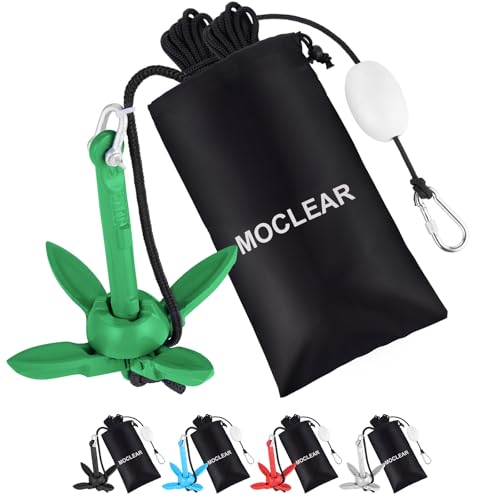
Best for: kayaks, canoes, and small paddle craft needing reliable anchoring in varied conditions. Includes folding grapnel anchor, 40 ft rope, buoy float, D shackle, locking carabiner, zip ties, and storage bag. Weight options cover shallow and mid-depth needs.
Why chosen: This kit offers a full ballast of accessories, enabling fast setup and secure anchoring. The two weight options address different depths and bottom types, making it versatile for family use.
Caution: The 1.5 lb option is best in shallow waters; for deeper or stronger currents, choose the 3.5 lb version or add chain for better holding power.
CHERAINTI Kayak Anchor

Best for: kayaks, jet skis, SUPs, and inflatables needing a compact, four-prong design for stable holds. It folds down to 12″ x 3″ for storage and includes a drawstring bag to protect gear surfaces.
Why chosen: The grapnel-style setup anchors quickly and securely in a variety of substrates, including sand and gravel. The compact form factor is ideal for travelers who prioritize portability.
Caution: Effective operation relies on proper collar adjustment; ensure the flukes lock before use to avoid sudden losses in current.
Moclear Kayak Anchor Kit, Blue

Best for: portable kits for small boats and SUPs where a complete anchoring setup is desired. The blue variant mirrors the green kit with a folding grapnel and 40 ft rope, plus a buoy and hardware for quick setup.
Why chosen: The complete kit provides balanced weight, accessible storage, and dependable corrosion resistance. It’s a good all-around performer for casual water activities.
Caution: Like other folding grapnels, performance depends on bottom type; rocky beds may require a larger anchor or chain to maximize hold in deep water.
BeGrit Kayak Anchor

Best for: paddlers with limited storage who still want a folding, lightweight anchor. Weighing 1.5 lb, this small anchor uses a four-fluke grapnel design suited for sandy, weedy, or rocky bottoms.
Why chosen: The compact closed size makes it easy to carry and store, and the 32.8 ft anchor tow rope adds enough length for most casual anchoring tasks. A carrying bag helps preserve gear and keep surfaces scratch-free.
Caution: In strong currents or deep water, consider a larger weight for security or pair with a longer rope to ensure adequate scope.
Buying Guide
What bottom type do you face?
Sand and mud generally provide good holds for light to medium anchors. Weeds and rocky substrates may require a heavier anchor or grapnel design to bite effectively. Consider your typical environment when selecting weight and design.
How portable should your kit be?
Folding designs and compact storage bags are ideal for inflatable boats and travelers. If you carry gear on long trips, prioritize kits that fold down to 12″ x 3″ or smaller and include protective bags.
What depth and current are typical?
Shallow, calm waters suit lighter anchors (1.5 lb) or mid-weight options (3.5 lb). For deeper channels or stronger currents, consider heavier anchors or add-on chain to improve holding power.
What accessories matter most?
A complete kit with rope, buoy, shackles, and storage bag saves time and reduces the risk of missing components. A visible buoy helps locate the anchor, and a protective bag reduces wear on your inflatable surfaces.
Safety and maintenance considerations
Rusted parts can degrade performance; look for rust-resistant or coated metals. After use, rinse with fresh water if you’re in saltwater and dry before storage to extend life.
Frequently Asked Questions
- What size anchor is best for an inflatable boat? Choose a weight matching typical depth and bottom type. Lighter kayaks and SUPs often perform well with 1.5 lb to 3.5 lb folding anchors, while deeper or stronger currents may require larger weights or chained setups.
- Do folding anchors hold well in sandy bottoms? Yes, folding grapnels are designed for quick deployment and good bite in sand or mud; ensure flukes lock securely.
- Is a complete anchoring kit necessary? A complete kit saves setup time and ensures you have essential hardware (rope, buoy, bag) readily available.
- Should I choose multiple anchors? For variable bottoms or currents, carrying a secondary lighter or heavier anchor can enhance reliability in challenging conditions.
- How do I store my anchor when not in use? Use the supplied carrying bag or a protective pouch. Ensure the anchor and rope are dry before storage to prevent rust and mildew.
- Can anchors damage my inflatable boat? Use a padded bag and inspect the anchor for sharp edges. A well-padded bag minimizes scratches and scuffs on your hull.