Best Aluminum Boat Primer Paint for Durable Marine Finishes
Answer: For aluminum boat projects, choose primers and barrier coats that optimize adhesion, corrosion resistance, and ease of re-coating. The best options listed here are targeted for aluminum and galvanized metals, with both single-coat and two-part systems. This guide uses clear comparisons to help boaters decide which primer or barrier coat fits their hull, trailer, or hunting blind setup. The top picks cover interior/exterior surfaces, fast-drying formulas, and long-lasting protection against water exposure and salt air. The buyer profiles include casual weekend sailors, maintenance-focused boat owners, and aluminum-hull enthusiasts needing durable protection.
Summary of chosen products
| Product | Best For | Main Benefit |
|---|---|---|
| Rust-Oleum Stops Rust Flat Aluminum Primer | General aluminum surfaces | Water-based acrylic with rust prevention |
| Rust-Oleum Marine Metal Primer | Metal surfaces above waterline | Excellent adhesion for topcoats |
| TotalBoat Aluminum Boat Paint (Quart) | New paint application on aluminum canoes, jon boats | No priming needed; fast recoat |
| Rust-Oleum Professional Aluminum Primer Spray | Bare aluminum priming | Durable, weather-protective base coat |
| TotalBoat Aluminum Boat Barrier Coat (Quart) | Underwater metal protection | Two-component epoxy barrier with high build |
Rust-Oleum 8781502 Stops Rust Flat Aluminum Primer

Best for general aluminum and galvanized metal surfaces that require rust prevention and easy top coat adhesion. Dries to touch in 1–2 hours and covers 55–90 square feet. This water-based acrylic primer is suited for exterior and interior aluminum surfaces facing weather exposure. It’s a solid choice for boat trailers or small aluminum hull panels where quick handling is needed.
Who it’s best for: casual boat owners and maintenance projects where a straightforward, fast-drying primer is desired. Caution: not a two-part system, so long-term chemical resistance relies on the topcoat compatibility and maintenance cycles.
Rust-Oleum Marine Metal Primer, Quart, White

Designed to prime metal surfaces above the waterline, this base coat improves adhesion for subsequent topcoats and helps deliver longer-lasting finishes. It dries to the touch in 1–2 hours and covers up to 100 sq ft, making it suitable for larger aluminum hull panels. This primer is best when used as the first layer in a multi-coat system on boats exposed to spray or splashing.
Who it’s best for: boaters planning a full repaint with multiple coats where superior adhesion is a priority. Caution: as a white primer, you may need a color-matched topcoat to avoid visible show-through on dark hull finishes.
TotalBoat Aluminum Boat Paint (Quart)
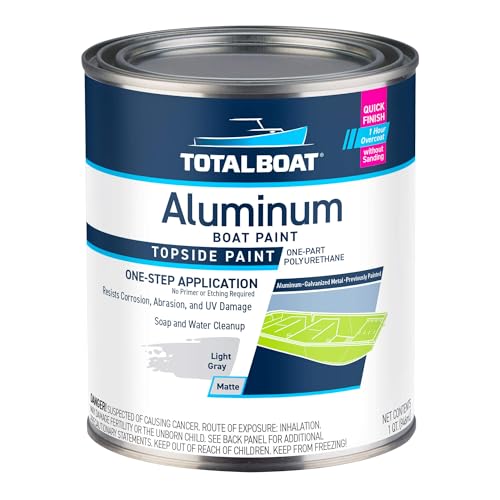
This is a reformulated aluminum-specific marine paint designed for better finish adhesion on aluminum and galvanized metal. It offers improved resistance to chips, scratches, lifting, peeling, fading, and chemical damage. The low-sheen finish is versatile for various boats and can be used to create camo patterns for hunting setups. No priming is necessary; apply 2–3 coats and recoat in about 1 hour at 72°F.
Best for: boaters seeking a one-part polyurethane coating with quick recoat times and minimal surface prep. Caution: ensure surfaces are clean and dry; for best adhesion, pre-wet with TotalBoat Etch Wash before applying.
Rust-Oleum 254170 Professional Aluminum Primer Spray

Designed specifically for bare aluminum, this spray primer prepares the surface for painting while offering rust protection and a tough finish that withstands weathering. The oil-based formula provides durable, corrosion-resistant color and coverage of up to 14 sq ft per can. Dries to touch in about 15 minutes and accepts topcoats quickly. Indoor/outdoor suitability makes it versatile for hull touch-ups and aluminum trailers.
Who it’s best for: small-area repairs or spot priming where a fast-drying, spray-on solution is convenient. Caution: coverage is limited, so larger hull areas may require multiple cans and careful seam handling.
TotalBoat Aluminum Boat Barrier Coat (Quart, Gray)

This is a high-build, two-component epoxy primer and barrier coat designed for excellent corrosion prevention on aluminum hulls and pontoon boats. It provides superior protection on all underwater metals and dries quickly, with no sanding needed between coats. Use as a protective layer before bottom paints or other 1- and 2-part coatings.
Best for: owners needing maximum underwater corrosion protection and a durable base for long-term complete hull coatings. Caution: two-component systems require accurate mixing and proper safety handling per manufacturer directions.
TotalBoat Aluminum Boat Paint (Gallon) Army Green

This gallon-size option mirrors the quart formula but in a larger container, designed for extensive aluminum hull projects. The reformulated formula emphasizes better adhesion on aluminum and galvanized metal with a low-sheen finish. It remains a one-part polyurethane paint that dries quickly and permits recoat in about 1 hour at 72°F. A prep wash like TotalBoat Etch Wash enhances adhesion.
Best for: larger boats or repeat jobs where a longer-lasting, uniform finish is needed. Caution: ensure adequate ventilation during application and curing for indoor-use scenarios.
Buying Guide: How to Choose Aluminum Boat Primers and Coatings
- Surface type: Confirm whether your hull is bare aluminum, galvanized aluminum, or previously coated. Above-waterline primers focus on adhesion and weather resistance, while underwater barrier coats protect against corrosion in submerged areas.
- Single-part vs. two-part: One-part polyurethane or acrylic primers offer easier application and faster turnaround. Two-part epoxy barrier coats provide stronger corrosion protection but require mixing and precise application.
- Drying time and recoat windows: If you’re maintaining a time-sensitive project, pick products that dry quickly and allow coat-to-coat timing within an hour or two. For detailed hull work, slower-drying options may improve alignment and coverage.
- Topcoat compatibility: Ensure the selected primer works with your intended topcoat, whether it be marine-grade enamel, polyurethane, or another specialized paint. Incompatibility can cause delamination or poor adhesion.
- Coverage and project size: Calculate the hull area to estimate how many cans or quarts you’ll need. Larger boats may benefit from gallon or two-part systems for fewer seams and longer-lasting results.
- Environmental conditions: Humidity, temperature, and ventilation influence curing. Most products specify ideal conditions; follow manufacturer guidance for best results to avoid peeling or poor adhesion.
- Maintenance and touch-ups: For boats exposed to saltwater or frequent ramp use, prioritize products with robust corrosion resistance and easy touch-ups without requiring full stripping.
- Safety and handling: Two-part epoxy systems require PPE and careful mixing. Always read the safety data sheets and work in a well-ventilated area.
FAQs
- Q: Do I need a primer on aluminum hulls? A: Primers enhance adhesion and corrosion protection, but some one-part systems claim no priming is necessary before applying topcoat—verify with your chosen product.
- Q: Can I use any topcoat over aluminum primers? A: Yes, but ensure the topcoat is compatible with the primer and intended for outdoor or marine use.
- Q: How long should I wait between coats? A: Dry-to-touch times vary; follow product directions, typically 15 minutes to a few hours for most primers.
- Q: Is a two-part epoxy barrier coat worth it? A: For aluminum hulls or pontoons exposed to harsh conditions, a two-part epoxy barrier offers greater long-term protection against corrosion.
- Q: Can I spray or brush these products? A: Most listed products support brushing, rolling, or spraying; check your product’s application guidelines for best results.
- Q: How do I prepare aluminum before priming? A: Clean, degrease, and lightly etch the surface as recommended by the primer manufacturer to maximize adhesion.