Best Aluminum Boat Bottom Paint Sealer Options for 2026
Direct answer: For aluminum boats, choose epoxy barrier coats and sealers that prevent corrosion, seal leaks, and provide a solid base for bottom paints. The following selections cover barrier coats, ultra-slick coatings, leak sealing, and compatible paints. They’re best suited for aluminum hulls, pontoons, and other underwater metal surfaces, with clear guidance on when each is most effective.
The buyer types below align with common needs: serious corrosion protection on aluminum hulls (Barrier Coats), ultra-slick hull protection for propulsion efficiency (Low-friction coatings), reliable leak sealing for rivets and seams, and ready-to-paint aluminum bottom finishes for quick setups. Use the table to compare core benefits at a glance.
| Product | Best For | Key Benefit |
|---|---|---|
| TotalBoat Aluminum Boat Barrier Coat (Quart, Gray) | Corrosion protection on aluminum hulls | High-build epoxy primer and barrier coat; fast-drying; no sanding between coats |
| Fasco Epoxies Super Slick 2000 Epoxy Bottom Coating | Ultra-slick hull surfaces for reduced drag | Two-part epoxy with PTFE; highly slippery finish |
| TotalBoat TotalProtect Epoxy Barrier Coat System (Gray, Quart) | Barrier coat for gelcoat and metal surfaces | High-build epoxy barrier; protects above/below waterline |
| Travaco RM330K Gluvit Waterproof Epoxy Sealer | Sealing leaks on aluminum hulls and decks | Gluvit barrier coat; seals seams, rivets, and leaks |
| TotalBoat Aluminum Boat Leak Sealer | Leaking rivets and seams repair | Two-part epoxy sealer; long working time; flexible seal |
TotalBoat Aluminum Boat Barrier Coat (Quart, Gray)

Best for aluminum hulls and pontoon boats that need robust corrosion protection. This is a high-build, two-component epoxy primer and barrier coat designed to pair with bottom paints or other 1- and 2-part coatings. It provides superior protection for underwater metals and dries quickly without sanding between coats.
Best for: boaters seeking a strong, compatible base coat on aluminum hulls before applying top paints. Caution: avoid overcoating with incompatible products without following prep guidelines.
Fasco Epoxies Super Slick 2000 Epoxy Bottom Coating

Best for hull surfaces where minimizing drag is the priority. This is a premium two-part epoxy bottom coating formulated with PTFE and friction-reducing additives for a notably slippery finish. It’s engineered for durability on aluminum hulls, jet skis, airboats, and other watercraft.
Choose this if your goal is improved glide and reduced fuel consumption. Limitation: its ultra-slick nature may require careful surface preparation and compatible topcoats.
TotalBoat TotalProtect Epoxy Barrier Coat System (Gray, Quart)
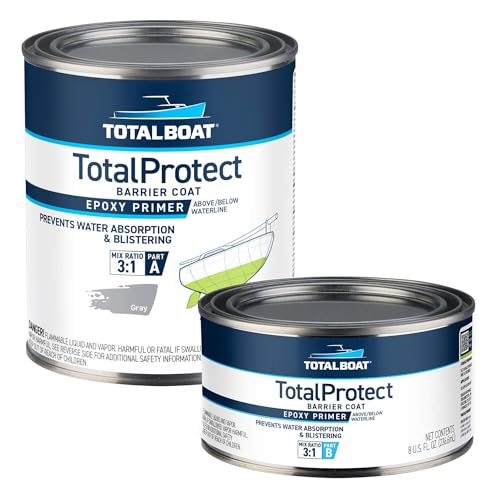
Best for above-and-below-waterline protection with a single system. This high-build two-part epoxy primer and barrier coat helps prevent gelcoat blistering and offers strong protection on all underwater metals, including aluminum. It serves well as a versatile base before applying bottom paints.
Better for: boats needing durable barrier protection across mixed boarding surfaces. Limitation: as a barrier coat, it is most effective when paired with appropriate topcoats as specified.
Travaco RM330K Gluvit Waterproof Epoxy Sealer
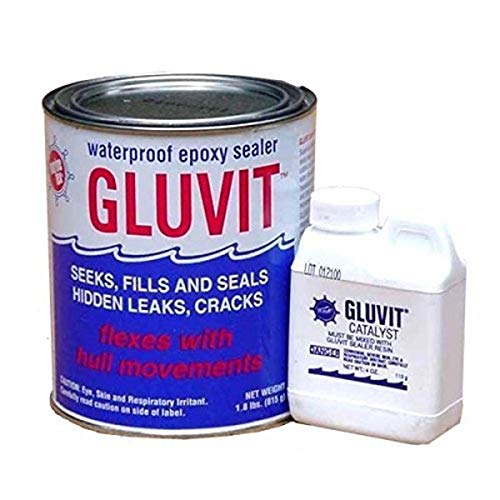
Best for sealing leaks and leaks around aluminum hulls and decks. Gluvit provides barrier protection for hulls, decks, and seams, sealing leaky rivets and joints on fiberglass and metal surfaces alike.
Why selected: it offers a dedicated sealing solution when leaks are the primary concern. Caution: gluvit works best as part of a broader corrosion-control plan and surface prep must be thorough.
TotalBoat Aluminum Boat Leak Sealer

Best for repairing leaking rivets and seams on aluminum boats. This two-part, flexible, waterproof epoxy sealer has a long work time to ensure good penetration and a strong seal. It tolerates temperatures down to 40°F when properly prepared.
Choose this if you need a reliable, durable seal against leaks. Limitation: not a standalone barrier coat; use with appropriate preparation and compatible coatings for best results.
Buying Guide
What type of protection do aluminum boats need?
Aluminum hulls benefit from a barrier coat that prevents corrosion and creates a stable surface for top paints. Epoxy barrier coatings are common choices because they form a durable, chemically resistant layer.
Should I use a slick coating or a standard barrier coat?
A slick coating can reduce drag and improve speed, but it may require precise surface prep and compatible primers. A barrier coat offers robust corrosion protection and can serve as a reliable base for subsequent bottom paints.
What about leak sealing?
Leaking rivets and seams demand a dedicated sealer or Gluvit-type product. Use a leak sealer to address leaks and then apply a barrier coat to protect the entire hull.
How to choose between quart and gallon quantities?
Quarts are suitable for small-to-moderate projects or touch-ups. Gallons are more economical for larger boats or full hull applications. Always estimate surface area and follow manufacturer coverage guidelines.
Which products are best for aluminum specifically?
Look for products labeled for aluminum or all underwater metals, and those that offer compatibility with aluminum surfaces. Barrier coats and epoxy sealers designed for aluminum hulls provide the most reliable protection.
FAQ
- What is the primary purpose of an aluminum boat barrier coat? To protect against corrosion and prepare a durable base for bottom paints on aluminum hulls.
- Can I use a slick epoxy coating on any aluminum boat? It is best when the surface is properly prepared and the coating is compatible with topcoats; otherwise, adhesion issues may occur.
- Is Gluvit suitable for all hull types? Gluvit is a versatile sealer that works on fiberglass, wood, aluminum, and steel, but verify compatibility with your specific boat and coatings.
- Do I need to sand between coats? Some barrier coats dry without sanding, but follow manufacturer instructions for the best results.
- When should I apply leak sealer? Use leak sealer to address known leaks in rivets or seams, then apply a barrier coat for ongoing protection.
- What maintenance is required after sealing? Regular inspections for cracks or blistering and re-coating as needed according to usage and environment.