Best 8D Deep Cycle Batteries for Reliable Off-Grid Power and RV Use
Answering the need for dependable, long-lasting power storage, these 8D deep cycle batteries are designed for off-grid homes, RVs, boats, and solar backup systems. This guide highlights five strong options, explaining who each is best for, and why. You’ll find clear, practical comparisons to help you choose the right size, chemistry, and safety features for your setup.
Buyer’s quick-glance table of chosen products:
| Product | Type | Best For | Key Benefit | Limitations |
|---|---|---|---|---|
| LiTime 24V 230Ah | LiFePO4 | High-capacity solar or RV systems | Very high energy storage in a compact 8D format | Higher upfront cost |
| LiTime 12V 460Ah | LiFePO4 | Home solar + backup power | Very long runtime with robust BMS | Requires 24V system or series connection |
| VMAX XTR8D-310 | AGM | RVs, boats needing rugged 12V power | Well-known rugged build and capacity | Heavier and shorter cycle life vs LiFePO4 |
| NPP NPG12-250Ah | Gel AGM | Off-grid solar and marine where AGM is preferred | Non-spill, stable performance | Lower energy density than LiFePO4 |
| Redodo 24V 200Ah | LiFePO4 | Compact 24V systems with strong BMS | Solid energy density and long cycle life | Weight and size similar to other 24V packs |
LiTime 24V 230Ah LiFePO4 Battery — 8D Pack

Overview: This LiFePO4 8D battery delivers about 230Ah and roughly 5888Wh, designed for solar storage, RVs, boats, and off-grid applications. It features a 200A BMS and a durable IP65-rated case. Best for users needing a reliable, long-lasting energy reserve in a compact 8D footprint.
Who it’s best for and why: Ideal for homeowners with solar arrays or RV enthusiasts who require significant stored energy in a single 8D unit. The high capacity translates into longer runtimes and fewer cycles to meet daily power needs.
Why selected: The combination of high energy density and strong safety features makes this model a straightforward choice for reliable back-up power in varied environments.
Careful note: While the 4,000+ cycles at 100% DOD offer long service life, 100% DOD is rarely used in practice; plan for partial cycling to maximize longevity.
LiTime 12V 460Ah LiFePO4 Battery — 8D Group

Overview: A 12V 460Ah LiFePO4 pack with a built-in 250A BMS and a total energy around 5888Wh. It targets solar storage, RVs, boats, and off-grid setups, offering a long service life with strong safety protections and broad application compatibility.
Who it’s best for and why: Designed for larger home solar systems or backup grids where a single 12V block must deliver substantial energy with robust protection. It’s especially suitable for environments where safety and longevity are priorities.
Why selected: The 250A BMS and design to support deep discharge cycles provide a dependable backbone for energy storage systems seeking extended operation without frequent battery changes.
Caution: The 12V format may require pairing or series/parallel configurations to match your appliance voltage requirements; verify system compatibility before purchase.
VMAX XTR8D-310 8D 12V 310Ah Deep Cycle

Overview: The XTR8D-310 is a heavy-duty 12V 310Ah AGM deep cycle battery. It emphasizes rugged construction and SAE/3/8″ post terminals, making it a solid choice for marine, RV, and auxiliary power needs requiring a spill-resistant, maintenance-friendly solution.
Who it’s best for and why: Choose this if you need a proven AGM option with straightforward installation and reliable, steady performance in demanding environments like boats or campers where AGM chemistry is preferred.
Why selected: For those prioritizing non-Li-ion chemistry with excellent safety profiles and ease of use, this model offers dependable 12V power in a durable package.
Limitation: AGM batteries generally have lower energy density and cycle life compared to LiFePO4, which can result in more frequent replacements for long-term high-demand use.
NPP NPG12-250Ah Gel Deep Cycle (2 Pack)

Overview: This two-pack gel deep cycle battery (12V, 250Ah each) is designed for off-grid solar, wind, RV, and marine use. It emphasizes spill-proof design and wide operating temperature ranges, with a focus on stability and resilience in diverse conditions.
Who it’s best for and why: Best for installers who prefer AGM/gel technology due to non-spill design and straightforward maintenance, especially in spaces where leaks would be problematic or where mounting orientation might vary.
Why selected: The gel/VRLA approach offers a reliable, low-maintenance option that performs consistently across temperature extremes, making it suitable for portable or stationary setups.
Caution: Gel systems can be sensitive to charging regimes; ensure the charger algorithm matches gel chemistry to avoid performance penalties.
LiTime 2-Pack 24V 460Ah LiFePO4 — 8D Group
Overview: A two-pack 24V 460Ah LiFePO4 arrangement with a 250A BMS, offering up to 5888Wh of energy per unit. Designed for home storage, solar power systems, RVs, and marine applications.
Who it’s best for and why: Best for users who want higher voltage configurations with increased total energy while keeping a compact footprint; beneficial for larger solar setups or backup power banks.
Why selected: The combination of high capacity, robust BMS, and LiFePO4 chemistry provides a balanced option for longevity and safety in grid-tied or off-grid storage.
Limitation: In multi-pack configurations, ensure proper balancing and wiring to maintain even charge/discharge across all units.
Redodo 24V 200Ah LiFePO4 Battery
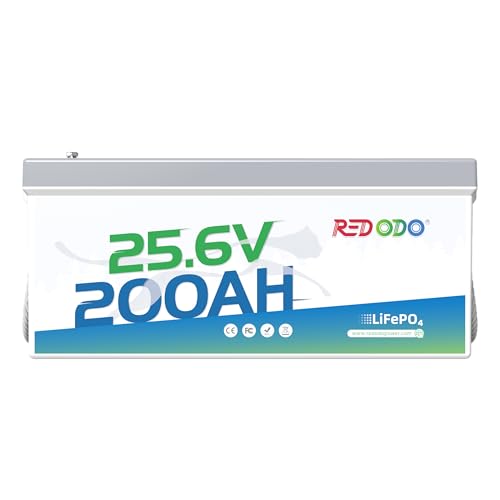
Overview: The Redodo 24V 200Ah LiFePO4 battery offers a 5120Wh energy capacity with a 200A BMS, designed for solar systems, RVs, back-up power, and RV-boat hybrids. It emphasizes high energy density and a long cycle life in a 24V format.
Who it’s best for and why: Best for users needing a reliable 24V storage option with strong protection, particularly in solar-resilience setups or remote locations where consistent performance matters.
Why selected: The 200A BMS and A-grade LiFePO4 cells support durable operation and safety across a range of temperatures and load conditions.
Caution: Weight is substantial for transport or installation; plan mounting and handling accordingly.
Buying Guide: Key Considerations for 8D Deep Cycle Batteries
- Chemistry and longevity: LiFePO4 offers high cycle life and safety. AGM and Gel provide robustness in certain environments but typically offer lower energy density per kilogram.
- Voltage configuration: 12V vs 24V options affect system design. Plan for series/parallel connections to achieve required voltage and capacity.
- Battery management system (BMS): A strong BMS protects against overcharge, over-discharge, and short circuits. Look for 200A–250A BMS ratings for 8D packs.
- IP rating and durability: IP65 or higher supports dust and water resistance for indoor/outdoor use. Consider enclosure requirements for weather exposure.
- Weight and footprint: 8D formats are heavy. Ensure rack mounting, vibration resistance, and load-bearing support in vehicles or installations.
- Temperature performance: Operating temperature range influences capacity and cycle life. Gel and AGM may tolerate higher temperatures in certain climates.
- Cycle life in practice: Manufacturers provide cycles at different DOD (depth of discharge). Real-world usage often yields lower cycles than peak specs.
- System integration: Verify compatibility with solar inverters, charge controllers, and backup power systems. Some packs require specific balancing or charging profiles.
FAQ
- What is an 8D battery best used for?
– They are typically used in high-capacity off-grid, RV, marine, and backup power applications where space or weight considerations limit multiple smaller batteries. - Which chemistry lasts the longest in deep-cycle use?
– LiFePO4 generally offers the longest cycle life and safer operation for deep cycling, followed by AGM or Gel depending on use-case and charging profile. - Do I need a special charger for LiFePO4 packs?
– Yes. Use chargers compatible with LiFePO4 chemistry to ensure correct voltage and charging profile for longevity and safety. - Can I mix battery chemistries in one system?
– Mixing chemistries is not recommended due to imbalanced charging and differing voltage profiles, which can damage cells and reduce efficiency. - How many 8D batteries do I need for 24V or 48V systems?
– For 24V, two 12V blocks in series are common; for 48V, four 12V blocks in series are typical. For LiFePO4, ensure proper BMS and balance across packs. - What safety features should I look for in an 8D battery?
– Look for a high-current BMS, IP65 or better protection, flame-retardant enclosures, and robust over/under-voltage protections.