Best 800 Cranking Amp Marine Batteries for Reliable Boat Starts
Answering the need for strong starts and dependable endurance, this guide highlights 800 CCA marine batteries suited for boats, pontoons, and shoreline craft. The top picks balance starting power with long-lasting performance for anglers, cruisers, and weekend sailors. Each product is evaluated for who it’s best for, along with practical considerations like weight, maintenance, and suitability for outdoor conditions.
Summary table of selected products:
| Product | Brand | Type | Key Benefit | Best For |
|---|---|---|---|---|
| Mighty Max MM-G27M | Mighty Max Battery | Deep-Cycle AGM | 800 CCA with dual-purpose power | All-around boating and off-grid use |
| Redodo 12V 20Ah LiFePO4 | Redodo | Lithium LiFePO4 | 800 CCA, light weight, high cycle life | Frequent starts and weight-conscious setups |
| OPTIMA RedTop 34/78 | OPTIMA | AGM | 800 CCA, SpiralCell technology | Rugged, versatile mounting |
| OPTIMA 34M Bluetop | OPTIMA | AGM | 800 CCA, dual terminals | Marine and RV versatility |
| Banshee Group 27-12V 77Ah | Banshee | Flooded/Enhanced Flooded | 800 CCA, affordable option | Budget-minded boaters |
Mighty Max Battery MM-G27M, 12V 100Ah Deep-Cycle AGM

Features include Marine-Grade Confidence, dual-purpose power, and strong starting capability. With 800 CCA and 850 MCA, this 100 Ah AGM battery provides solid engine starts and long-lasting power for electronics and gear. The dual-purpose design supports both recurring starts and sustained discharge for accessories.
Best for: Boat owners who need reliable starting power plus deep-cycle endurance for electronics and trolling motors. Why selected: Strong overall performance, maintenance-free AGM design, and clear suitability for marine environments.
Caution: As a deep-cycle unit, it’s heavier; consider weight and mounting space on smaller craft.
Litime 12V 20Ah Marine Starting Lithium Battery

This lithium starting battery offers 650-800 CCA with low-temp protection and over 5000 cycles. BMS protections guard against moisture, salt spray, and temperature extremes, while low-temperature cut-off helps prevent charging in freezing conditions.
Best for: Boat owners who prioritize weight savings and long cycle life in harsh environments. Why selected: High starting power with built-in protections suited to marine conditions.
Caution: Not compatible with certain Yamaha outboards or non-marine starters; confirm compatibility with your propulsion system before purchase.
Redodo 12V 20Ah LiFePO4 Marine Cranking Battery

With 800 CCA (14℉@1s) and 810 MCA, Redodo’s lithium option is designed for high-power starts and reliable performance in marine settings. The prismatic cells offer shock and vibration resistance, while a sheet metal design emphasizes durability and longevity.
Best for: Users needing strong starts in rough seas with a lighter battery option. Why selected: Combines high CCA with durable construction and long cycle life.
Caution: LiFePO4 requires proper charging strategies; ensure your charger supports lithium batteries for optimal results.
Redodo 12V 20Ah Lithium LiFePO4 Battery, U1 Group

Offers 800 CCA with 40C discharge, built-in BMS, and robust prismatic cells. The U1 group size is compact, making it suitable for space-limited installations.
Best for: Small to mid-sized boats needing compact, high-power starting capability. Why selected: Space-efficient option without sacrificing starting power.
Caution: Check battery compartment dimensions to ensure a proper fit in limited spaces.
OPTIMA RedTop 34/78 Sealed AGM

12-Volt AGM with 800 CCA, dual SAE & GM posts, and 50 Ah C20 capacity. SpiralCell Technology delivers consistent starting power and faster charging.
Best for: Boats requiring dependable starting power with versatile mounting and maintenance-free operation. Why selected: Renowned durability and reliable cold-weather starts.
Caution: Heavier than some alternatives; ensure mounting accommodates weight distribution on the craft.
OPTIMA Bluetop 34M Sealed AGM

12-Volt AGM with 800 CCA; dual terminal design and 50 Ah C20. It uses SpiralCell Technology for strong performance in adverse weather.
Best for: Budget-conscious buyers needing a reputable marine-friendly option with flexible mounting. Why selected: Solid reliability with easy integration into various boats and RVs.
Caution: Some mounting configurations may require additional adapters or hardware for dual-terminal use.
Deep Cycle Marine Battery, Group 31, 800 CCA

Group 31 with 800 CCA and dual post terminals. A durable option designed for larger boats needing robust starting power.
Best for: Larger vessels that demand higher starting power and solid performance in demanding conditions. Why selected: High CCA and proven form factor for spacious battery compartments.
Caution: Heavier and may require more space than smaller group sizes.
Banshee 27-12V 77Ah 800 CCA (2-Pack)
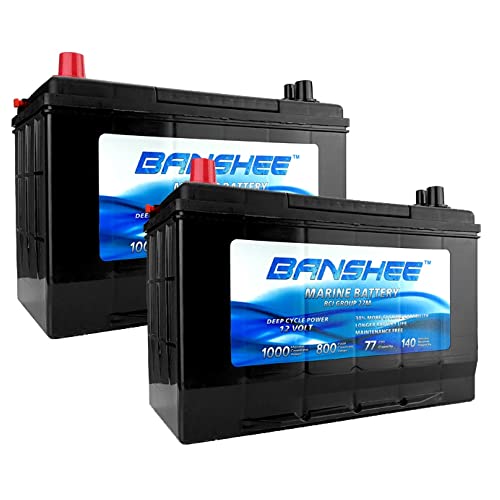
Replaces Optima D27M with 800 CCA and 77 Ah capacity, sold as a two-pack for convenience and savings.
Best for: Budget-minded buyers who want multiple reliable starts or replacement sets. Why selected: Cost-effective option with familiar dimensions and compatible CCA.
Caution: When purchasing as a multi-pack, verify the exact terminal type and spacing for your boat’s battery tray.
Buying Guide: Key Considerations for 800 CCA Marine Batteries
- Ensure the battery group size (e.g., 27M, 34/78, 31) fits your boat’s battery tray and terminals.
- AGM batteries are maintenance-free and spill-proof, while LiFePO4 offers lighter weight and longer cycle life but may require compatible chargers.
- Choose 800 CCA as a baseline for cranking performance in cold weather; higher MCA helps with accessories and electronics.
- Larger group sizes provide more capacity but add weight. Weigh trade-offs against mounting space and vessel performance.
- AGM and LiFePO4 resist moisture and salt spray better than traditional flooded types; consider exposure to marine elements.
- Lithium options require compatible high-CCA chargers and BMS awareness; conventional lead-acid chargers may not properly manage lithium cells.
- Batteries with robust cold-weather performance and salt spray resistance perform better in variable marine climates.
FAQ
- What does 800 CCA mean for marine batteries? It indicates the battery’s cranking capability at 0°F (-18°C). Higher CCA helps start engines in cold weather and under heavy electrical load.
- Are lithium batteries worth the extra cost for boats? For frequent starts, lighter weight, and longer cycle life, lithium options can be advantageous if you use compatible chargers and BMS.
- Can I mix battery chemistries on a boat? Mixing chemistries is generally not recommended due to differing discharge and charging profiles, which can reduce overall performance and life.
- Is maintenance-free better for marine use? Yes, maintenance-free AGM and LiFePO4 reduce corrosion risk and eliminate water top-ups, which is beneficial in saltwater environments.
- What should I consider when replacing multiple batteries? Match CCA, reserve capacity, and physical size across replacements to ensure balanced performance and proper charging.
- How important is the battery tray size? Very important; an ill-fitting battery can cause vibration, short life, or fitment issues. Measure tray dimensions before purchase.