Best 6-Gallon Gas Tank Options for Outboard Motors: Reliable Marine Fuel Solutions
If you’re shopping for a 6-gallon gas tank for an outboard motor, this guide points to sturdy, EPA/CARB-compliant cans designed for safe, portable fueling on boats. These tanks suit anglers, recreational boaters, and saltwater users who need a compact, transportable fuel source with simple refueling access. The top picks below emphasize built‑in gauges, vented caps, and durable construction to minimize spills and vapor buildup while out on the water.
| Product | Brand | Capacity | Best For | Why Pick |
|---|---|---|---|---|
| Scepter 6 Gallon Portable Marine Gas Can | Scepter | 6 gal | Boat owners needing built-in gauge | 2-way vented cap and built-in fuel gauge with underseat design |
| DEF Portable Boat Fuel Tank, 6gal | DEF | 6 gal | Budget-conscious users | Two sealing modes, anti-leak design, fuel indicator |
| Attwood 8806LP2 EPA Certified 6 gallon | Attwood | 6 gal | High-regulation setups | Cap with built-in vacuum valve for automatic venting |
| VEVOR Marine Tank, 6.34-Gallon | VEVOR | ≈6.34 gal | General purpose transfer | Clear gauge, 9.8 ft hose, corrosion-resistant |
| Amenitlif 6 Gallon Marine Tank | Amenitlif | 6 gal | Lightweight, portable use | i-Shaped handle, fuel level indicator, built-in filter |
Scepter 6 Gallon Portable Marine Gas Can

The Scepter model provides a 6-gallon capacity with molded-in feet for stability and ventilation. It features a 2-way vented gas can cap that allows airflow during refueling and automatically releases pressure above 5 PSI to prevent vapor buildup. It is compatible with diesel and ethanol-blended fuels and includes a built-in fuel gauge, with a side fuel line attachment (line sold separately). Best for boaters who want a compact, under-seat fuel option with easy level checks.
Who this is best for: boaters who prioritize a built-in gauge and vented cap for safer on-deck refueling. Why selected: combined gauge, venting, and compact underseat design aid quick fuel checks and storage. Caution: ensure compatible fittings because the fuel line is sold separately in many setups.
DEF Portable Boat Fuel Tank, 6gal

The DEF 6-gallon tank uses high-density polyethylene for aging, impact, and corrosion resistance. It offers two modes of sealing and venting, including a vented design that supports smooth fuel flow and reduces leakage. An oil volume indicator helps monitor remaining fuel quickly, and a built-in inlet filter helps keep fuel clean. Best for: budget-minded boaters who want reliable, straightforward fuel monitoring and a flexible venting option. Limitation: the two-cap design requires attention to correct use in venting vs. sealing modes to ensure proper operation.
Attwood 8806LP2 EPA Certified 6 Gallon

Attwood’s 8806LP2 meets EPA and CARB regulations and includes a cap with a built-in vacuum valve to enable automatic venting, reducing the need for manual venting during fueling. This design is suited for users who require regulatory compliance and a simple refueling experience. Best for: boaters who prioritize regulatory compliance and hands-off venting. Caution: ensure compatibility with your existing fittings and hoses, as specs vary by model.
VEVOR Marine Tank, 6.34-Gallon

The VEVOR tank offers a gauge for visual fuel level and a 9.8-foot hose, with a separate inlet and outlet to prevent spills. It’s made from high-density polyethylene for durability and resistance to aging and corrosion. Best for: users who want a clearly visible fuel level and a long hose for flexible fueling on larger vessels. Caution: avoid prolonged sun exposure to minimize aging and expansion risk.
Amenitlif 6 Gallon Marine Portable Boat Gas Tank
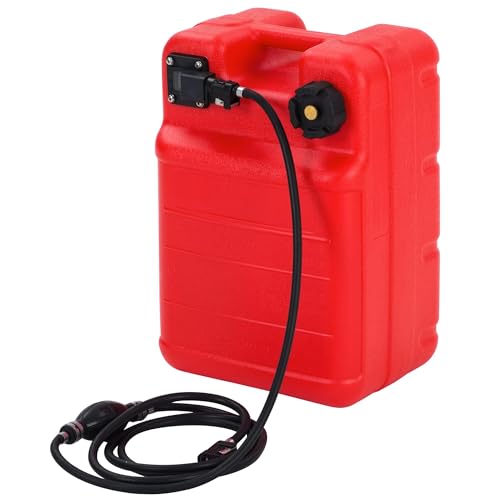
Amenitlif emphasizes a lightweight, portable design with an ergonomic I-shaped handle for easy carrying. It includes a fuel level indicator and built-in filter to monitor fuel volume and maintain fuel cleanliness. Best for: boaters who need a portable tank that’s easy to carry and quick to check fuel levels. Caution: check your boat’s fitting compatibility since some systems require specific adapters for the gauge or hose connections.
Buying Guide
Key purchase considerations help you select the right 6-gallon tank for your outboard motor:
- Ventilation and venting: Look for vented caps or automatic vacuum valves to prevent vapor buildup and simplify refueling on deck.
- Fuel gauge and level indicators: A built-in gauge or clear indicator helps plan fuel stops and avoid running out mid-trip.
- Material and durability: High-density polyethylene tanks resist aging, impact, and corrosion in marine environments.
- Hose length and fittings: A longer hose provides flexibility for different boat layouts; verify hose compatibility with your engine and fittings.
- Sealing/venting modes: Some tanks offer dual sealing and venting modes; ensure correct usage to prevent leaks and maintain fuel flow.
- Weight and portability: Under-seat or compact designs are ideal for small boats; consider handle type and balance for easy carrying.
- Regulatory compliance: EPA and CARB compliance ensures adherence to fuel evap and storage standards in affected regions.
FAQ
- Q: What size is a typical 6-gallon outboard fuel tank? A: Most standard options hold about 6 gallons (approximately 22.7 liters), with some variants at 6.34 gallons.
- Q: Do these tanks work with ethanol-blended fuels? A: Many models are designed to handle ethanol-blended fuels commonly found in marine environments; check the specific product notes.
- Q: Is venting automatic or manual on these tanks? A: Some tanks include automatic vacuum valves or vented caps, reducing the need for manual venting.
- Q: Can I use these tanks for diesel? A: Some models list compatibility with diesel; verify fuel type compatibility in the product description before use.
- Q: How important is a built-in fuel gauge? A: A gauge simplifies fuel management on longer trips and reduces the risk of running dry on the water.
- Q: Are these tanks compliant with EPA and CARB regulations? A: Several models advertise EPA and CARB compliance, indicating adherence to regulatory standards for fuel storage on boats.