Best 18-Gallon Boat Gas Tanks for Safe, Efficient Fueling on the Water
Answering the buyer’s search: a true 18-gallon boat gas tank offers ample on-board fuel capacity for longer trips, cleaner top-side installations, and easier handling. This guide highlights five 18-gallon contenders and practical alternatives, helping buyers choose based on mounting style, material, and compatibility. Each entry notes who it’s best for and a key caveat to consider before you buy. A quick summary table is provided below to compare core specs at a glance.
| Product | Approx. Capacity | Best For | Notes |
|---|---|---|---|
| RDS MFG INC General-Purpose Fuel Tank – 18-Gallon | 18 gallons | General boat use, aftermarket or retrofit | Top-siphon capable; aluminum variants available |
| Moeller Boating Topside Fuel Tank (18-Gallon) | 18 gallons | Topside mounting on older boats | Rotationally molded, UV-stabilized; fits pre-2011 boats |
| Sierra International 031618 18 Gal Topside Tank | 18 gallons | Moeller-red compatible topside installs | Moeller-style red tank; simple top-side fit |
| RDS MFG INC 62533 General Purpose Tank – 18 Gal | 18 gallons | Adding capacity via gravity feed or factory-tuel | Fully welded seams; aluminum option resists rust |
| Scepter 12 Gallon Portable Boat Gas Tank | 12 gallons | Smaller craft or portable need | Not 18 gallons, but close in form; note vented cap and built-in gauge |
RDS MFG INC General-Purpose Fuel Tank – 18-Gallon

The RDS MFG INC 18-Gallon general-purpose tank is designed for flexible fuel storage on boats requiring a compact, dependable solution. It supports top siphoning via an electric pump and is categorized as a motor engine fuel tank. This model is best for buyers who want a straightforward, factory-style tank for retrofits or new installations where width and height are constrained. A potential limitation is that some configurations rely on specific pump arrangements, so verify your mounting clearances and connections before purchasing.
Moeller Boating Topside Fuel Tank (18-Gallon)

Moeller’s 18-gallon topside tank is a classic choice for boats built before 2011 or those needing a topside configuration. It features a rotationally molded, cross-linked polyethylene construction with UV-stabilized resin for outdoor durability. Dimensions run large for slim decks, but the design excels in reliability and compatibility with topside mounting. Choose this if your vessel has traditional topside mounting and you want a proven, lower-maintenance option. A limitation is that it’s optimized for older boat builds, so newer hulls may require different mounting hardware.
VEVOR Marine Tank, 14.53 Gallon

Although not strictly 18 gallons, the VEVOR 14.53-gallon tank provides a strong alternative when space is tight or when matching an existing system. It uses high-density polyethylene and includes a long fuel hose, with design emphasis on leak resistance and impact tolerance. It’s best for boats that need a robust, compact solution and can accommodate a slightly smaller capacity. Avoid this if your total fuel requirements exceed 14.5 gallons and you must stay at exactly 18 gallons.
RDS MFG INC 62533 General Purpose Tank – 18 Gal

This 18-gallon RDS MFG INC model emphasizes versatility, including potential use for gravity feeding to supplement factory tanks. The tank is described as aluminum and fully welded, which helps prevent rust and fuel contamination. It’s best for buyers seeking a model that can be integrated into larger fuel systems and durability is a priority. A limitation to note is that alloy options may require careful corrosion management depending on fuel and operating conditions.
Sierra International 031618 18 Gal Topside Tank
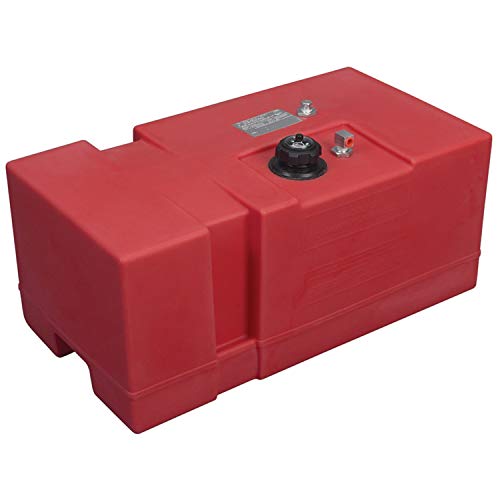
Sierra’s 18-gallon topside tank in a Moeller red configuration offers a straightforward installation for topside mounting on compatible boats. The 18-gallon capacity suits mid-length cruises and ensures a balance between fuel on hand and deck space. Best for boats that prioritize a widely compatible, pre-sized topside option. A caveat: verify color compatibility with your existing system to avoid fitment issues in tight compartments.
Buying Guide
Key purchase considerations for 18-gallon boat gas tanks include mounting style, material, fit for your hull, and compatibility with your fuel system.
- Mounting Type: Topsides vs. below-deck. Topsides offer easy access for fueling and gauge viewing, but may require extra clearance and mounting hardware.
- Material: Cross-linked polyethylene is UV-stable and impact-resistant; aluminum tanks resist corrosion but may require special coatings or fittings.
- Capacity Flexibility: While aiming for 18 gallons, having a model that supports gravity feed or connections to factory tanks can add versatility on longer trips.
- Fuel Type Compatibility: Confirm compatibility with gasoline, ethanol blends, and any diesel options if used as a supplement.
- Tank Gauges and Fittings: Built-in gauges simplify monitoring; check for fitment with standard 1/4 NPT marine fittings and hoses of appropriate length.
- Ventation and Safety: Vented caps help manage pressure and vapor buildup; ensure the chosen model matches your boat’s venting system.
Frequently Asked Questions
- What is the standard capacity of an 18-gallon boat gas tank? — It holds 18 gallons, typically used for mid-length trips and moderate fuel reserves.
- Can an 18-gallon tank be used as a supplement to a factory tank? — Yes, especially models designed for gravity feed or top-side mounting; verify fittings and clearance.
- What material is best for marine tanks? — Cross-linked polyethylene offers durability and UV resistance; aluminum tanks resist rust but may require different fittings.
- Are top-side tanks easy to install on older boats? — They can be, but ensure there is adequate space and mounting hardware for the topside configuration.
- Do all 18-gallon tanks come with built-in gauges? — Not all do; check individual product features if quick fuel level checks are important to you.
- What should I watch for when selecting an 18-gallon tank? — Pay attention to mounting clearance, connection type, and compatibility with your boat’s fuel system.