Best 12V Salt Water Pump Options for Marine Use and Off-Grid Water Systems
Looking for a dependable 12V pump specialized for salt water or marine environments? This guide highlights five top 12V salt water and marine water pumps, chosen for reliability, suitability for saltwater systems, and ease of integration into boats, RVs, and off‑grid setups. Each option includes who it’s best for, key strengths, and a practical caution. A quick comparison table follows to help you decide at a glance.
Summary table of selected products:
| Product | Best For | Key Strength | Potential Limitation |
|---|---|---|---|
| SEAFLO 33 Series DC Diaphragm Pump | Moderate water needs on boats/RVs | 3.0 GPM, self-priming, run-dry safe | EPDM/Santoprene materials may require care with certain fuels |
| WASSERMANN RV Pump | RV living and camp setups | 4.0 GPM, complete kit, 45 PSI | Includes multiple adapters; ensure compatibility with hoses |
| SEAFLO 55 Series Diaphragm Pump | High‑demand freshwater and saltwater tasks | 5.5 GPM, 60 PSI, built‑in warranty | Intermittent duty spec; plan for continuous use accordingly |
| VEVOR Washdown Pump | Saltwater deck wash and auxiliary pumps | 7 GPM, 60 PSI, saltwater strainers | Noise and vibration control depend on mounting |
| SEAFLO 21‑Series Diaphragm Pump | Compact systems and off‑grid projects | 1.2 GPM, 35 PSI, compact | Not self-priming; plan flow path to ensure priming |
SEAFLO 33 Series DC Diaphragm Pump

This 12V pump delivers up to 3.0 GPM at 45 PSI and includes a self-priming capability with a 6-foot suction lift. It is designed for marine and RV water systems that require steady flow with simple installation. Best for moderate water transfer and potable water schemes in small boats or campers where space is limited.
Best for: boaters and RV users needing a compact, reliable diaphragm pump with run-dry safety. Why selected: robust 3-chamber design and built-in pressure switch provide smooth flow at moderate pressure. Caution: EPDM/Santoprene materials should be considered if exposed to certain solvents or extreme chemical exposure.
WASSERMANN RV Pump, 12V 4.0 GPM

This kit‑style pump provides up to 4.0 GPM at 45 PSI and includes multiple adapters, a filter, and manual for RV or small marine installations. It’s well suited for RV living, boat showers, or small freshwater systems requiring dependable pressure. Best for: RV owners who want a complete pump kit with flexible mounting options. Caution: Verify hose compatibility with the included fittings and ensure proper method of priming for non‑self‑priming setups.
SEAFLO 55 Series 12V RV Water Pump

This 12V diaphragm pump offers 5.5 GPM at 60 PSI with a four‑year warranty. It’s engineered for long‑term freshwater delivery in RVs, boats, cabins, and off‑grid settings. Best for: users needing higher flow and pressure for routine water use. Caution: Intermittent duty rating may limit continuous heavy use; plan duty cycle accordingly.
VEVOR Washdown Pump, 12V DC
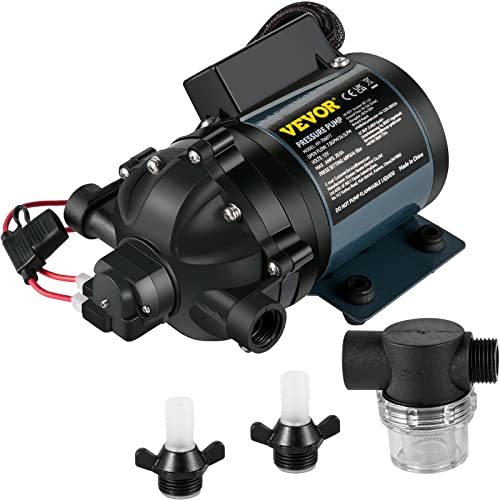
With 7 GPM at 60 PSI and a 12V motor, this pump is designed for robust deck washing and saltwater handling. It includes an EPDM valve and a universal saltwater strainer with threaded fittings. Best for: boat decks, yachts, and RVs needing higher flow for washdowns. Caution: Higher flow may require sturdier mounting to minimize vibration and noise.
SEAFLO 21-Series Water Pressure Diaphragm Pump

This compact 12V pump delivers 1.2 GPM at 35 PSI with self-priming capability up to 4 feet. It is reliable for RV, boat, and off‑grid setups where space is at a premium. Best for: small systems or auxiliary supply lines. Caution: Not self-priming beyond short lifts; plan for gravity or pre‑priming to avoid dry running.
Buying Guide: Key Purchase Considerations
- Flow rate and pressure: Match GPM and PSI to your system’s needs. Higher GPM is beneficial for immediate tasks like deck washing; lower GPM with steady pressure suits potable water delivery.
- Self-priming capability: Essential for installations where the pump may run dry or where suction lift is significant. If not self-priming, ensure proper priming method.
- Materials and compatibility: Saltwater pumps often use EPDM/Santoprene components; confirm chemical compatibility with your fluid and temperature range (up to about 140°F / 60°C).
- Warranty and durability: A four‑year warranty is common among marine models and indicates a focus on long‑term reliability in harsh environments.
- Installation considerations: Look for included fittings, strainers, and easy access for maintenance. Submersible vs inline design affects mounting and space requirements.
- Noise and vibration: Mounting options and base stability influence noise; consider pumps with vibration‑reducing features or stable bases for quiet operation.
- Compliance and safety: For potable water, ensure pumps meet NSF/UL/UL 778 standards and RV plumbing guidelines to avoid contamination risks.
Frequently Asked Questions
- What is the advantage of a 4-year warranty on marine pumps?
It indicates longer expected service life and manufacturer confidence in durability for demanding marine and RV environments. - How do I choose between 3.0 GPM and 5.5 GPM pumps?
Choose 3.0 GPM for moderate water delivery and space constraints; choose 5.5 GPM where higher flow is needed for rapid filling, washdowns, or multiple outlets. - Is self-priming essential for saltwater installations?
Yes, self-priming helps ensure reliable operation after emptying or pumping from lower reservoirs, reducing maintenance concerns. - Can these pumps handle sea water reliably?
Most are designed for saltwater use, but verify material compatibility (EPDM/Santoprene) and consider external strainers to protect the pump. - What maintenance steps matter most?
Regularly check fittings, clean filters, inspect for leaks, and ensure the diaphragm and valves remain in good condition to prevent leaks and loss of prime. - Do these pumps require external power management?
Yes, as DC pumps, they should be wired to a suitable 12V source with appropriate fusing and circuit protection.