Best 12v Dehumidifier Options for Boats: Quiet, Compact Solutions for Damp Cabins
Answers for buyers seeking compact, boat-friendly moisture control. This guide compiles 12v- and boat-suitable dehumidification options and moisture absorbers, highlighting who each product is best for. Ideal for small cabins, pilot houses, or tight bilges where space is limited and power is a concern. The top picks include dedicated marine units and portable absorbers that work well in boats, RVs, and other confined spaces.
Summary of selected products:
| Product | Best For | Power Type | Key Benefit |
|---|---|---|---|
| Davis Air-Dryr 500 Marine Air Dryer Dehumidifier for Boats, RVs, Small Rooms | Mid-size boat cabins | AC | High air volume in compact housing |
| Ivation IVADM35 Powerful Mid-Size Thermo-Electric Dehumidifier | Boats, RVs, closets | Thermo-Electric (Peltier) | Quiet operation, up to 20 oz/day |
| Mocar7 Air Dryer | Small boats and RVs | AC | Low power, compact, safe operation |
| UIDYGGD Dehumidifier, for Boat | Small boats | AC | Boat-specific dehumidification |
| Better Boat Moisture Absorber 4 Pack Hanging Bags | Boats without built-in units | Charcoal crystal | Odor control and moisture absorption |
Davis Air-Dryr 500 Marine Air Dryer Dehumidifier for Boats, RVs, Small Rooms

The Davis Air-Dryr 500 is a compact marine dehumidifier designed for boats, RVs, and small rooms. It features a neutral polycarbonate housing for strength and a slim profile that fits in confined spaces. The unit can move a high volume of air, helping to reduce humidity quickly in limited spaces often found on boats. Best for: boat cabins or compact compartments where high air exchange is needed. Limitation: appliance-based dehumidification may require a dedicated electrical circuit on some vessels.
Ivation IVADM35 Thermo-Electric Dehumidifier

The Ivation IVADM35 uses thermo-electric (Peltier) technology with no moving parts, delivering quiet operation ideal for boats, RVs, and small spaces. It dehumidifies up to about 20 ounces per day, making it suitable for cabins, closets, and small compartments on vessels where noise sensitivity matters. Best for: boats or RV interiors where quiet operation is prioritized. Caution: larger spaces may require multiple units or supplemental moisture control.
Mocar7 Air Dryer for Boats and Small Spaces
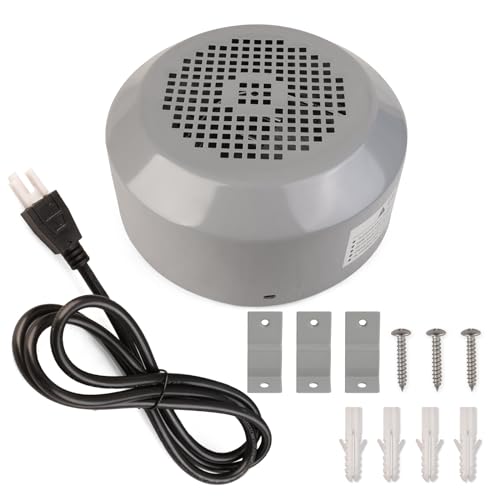
The Mocar7 Air Dryer is a compact 120V unit rated at 70 watts, designed for boats and small spaces. Its energy-efficient design allows operation from a standard outlet, with built-in safety features and a focus on keeping cabin air dry without heavy power use. Best for: small boats or RVs with accessible electrical outlets that want a simple, low-power dehumidifier. Limitation: 70-watt devices may require longer run times for larger cabins.
UIDYGGD Dehumidifier, for Boat

The UIDYGGD boat-specific dehumidifier focuses on compact boats where dedicated moisture control is needed. This unit is designed for tight spaces common in small vessels and aims to reduce humidity levels effectively. Best for: smaller boats where a dedicated 12v or low-profile dehumidifier is needed. Caution: information on exact power draw is not specified in the data provided.
Better Boat 4 Pack Moisture Absorber Hanging Bags

These hanging bags use activated charcoal and moisture-absorbing crystals to remove dampness and odors in boats, closets, or cramped cabins. Best for: quick, low-effort moisture control in spaces without a powered unit. Caution: does not actively dehumidify large volumes of air; effectiveness depends on space size and air exchange.
Better Boat Moisture Absorber 4 Pack
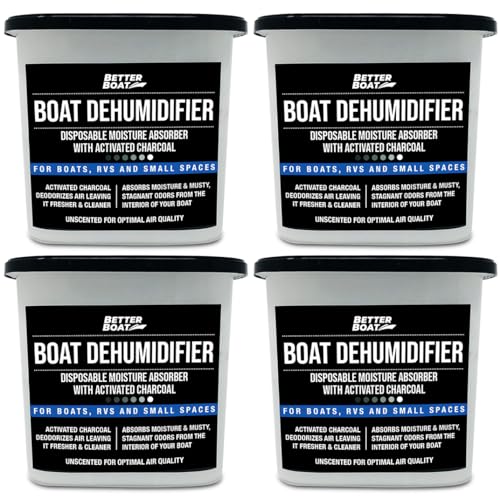
Another set of moisture-absorbing crystals designed for boats and moving spaces. The kit emphasizes odor control and a visible replacement timeline through a semi-transparent container. Best for: supplementing powered dehumidifiers in boats where passive moisture control is sufficient or as a backup. Limitation: not a replacement for higher humidity scenarios in larger cabins.
Buying Guide: Key Considerations for Boat Moisture Control
- Boat size and space: Smaller cabins benefit from compact, low-profile units or moisture absorbers. Larger cabins may need multiple units or a combination of methods.
- Power availability: Choose AC units for shore power or thermo-electric options for quieter operation. Some boats have limited electrical capacity; match device draw to available power.
- Noise sensitivity: Thermo-electric models typically run with minimal noise, suitable for sleeping areas and cabins where quiet is valued.
- Portability and mounting: Consider units with handles, slim profiles, or wall-mounting options for tight spaces and movement aboard.
- Maintenance and replacement: Crystals and charcoal absorbers offer maintenance-free operation but may require periodic replacement; powered units require emptying or filter care.
- Moisture vs. odor control: For musty odors, activated charcoal or odor-absorbing bags provide dual-action benefits; for moisture alone, active dehumidification is more effective in larger spaces.
Frequently Asked Questions
- What size dehumidifier is best for a small boat cabin?
– A compact dehumidifier with a small air-change requirement is usually best; consider units that occupy minimal space and have energy-efficient operation. - Do 12V dehumidifiers exist for boats?
– Some boaters use 12V-rated compact dehumidifier modules or thermo-electric units designed for low power; verify voltage and power draw before installation. - Can moisture absorbers replace a dehumidifier on a boat?
– They are useful for odor control and light humidity, but they do not actively remove large amounts of moisture like powered units. - Is it better to use one larger dehumidifier or multiple small ones on a boat?
– Multiple smaller units can target specific damp spots more effectively and reduce overall power load, depending on cabin layout. - How often should I replace moisture-absorbing crystals?
– Replacement depends on ambient humidity and intake; check the container’s visibility and follow manufacturer guidelines. - What maintenance is required for thermo-electric dehumidifiers?
– Typically none beyond emptying collected water and occasional filter cleaning, depending on the model.