Best 105 Amp Hour Marine Battery Options for Boats and RVs
Answering the question: the best 105 amp hour marine battery options provide long deep-cycle power, reliable starting capability, and compatibility with trolling motors and onboard accessories. This guide highlights five top 100–105Ah batteries that suit boaters and RV owners seeking durable, high-capacity power. Choose based on whether you need pure deep-cycle performance, dual-purpose starts, or lighter lithium options for weight savings. The buyer profiles below help you pick the right match for your vessel and usage pattern.
| Product | Brand | Type | Key Strength | Best For |
|---|---|---|---|---|
| Interstate Batteries Marine/RV Battery 12V 100Ah | Interstate Batteries | AGM Dual-Purpose | 2x-3x life vs conventional AGM, strong cranking and deep-cycle mix | Boat owners needing a reliable dual-purpose power unit |
| Interstate Batteries Marine Deep Cycle Battery 12V 100Ah | Interstate Batteries | Pure Lead AGM Deep Cycle | Extreme deep-cycle power, thick plates for long life | Anglers and cruisers running accessories long hours |
| WEIZE 12V 100Ah Deep Cycle Battery | WEIZE | AGM Deep Cycle | 2x longer cycle life vs traditional flooded batteries | RV, marine, solar setups needing maintenance-free power |
| BUKNUWO 12.8V 100Ah LiFePO4 | BUKNUWO | LiFePO4 Deep Cycle | Lightweight, high cycle life, fast charging | Weight-conscious boats and off-grid setups |
| VEVOR 12V 105Ah LiFePO4 Dual Purpose | VEVOR | LiFePO4 Dual Purpose | 1000CCA; robust BMS; long life | Marine and RVs needing starting power plus deep cycle |
Note: The table above summarizes key strengths. Always verify fit in your battery compartment and confirm compatibility with your equipment before purchase.
Interstate Marine/RV 100Ah AGM Dual-Purpose Battery

The Interstate Marine/RV Battery combines starting power with deep-cycle capacity in an AGM design. It’s built to handle trolling motor loads and motor starts, making it a versatile choice for anglers and weekend boaters. Best for boaters who need a single, reliable unit for both cranking and extended accessory use. A potential limitation is that performance relies on consistent charging; ensure your charging system maintains proper AGM voltage.
Interstate Marine Deep Cycle 100Ah AGM Battery
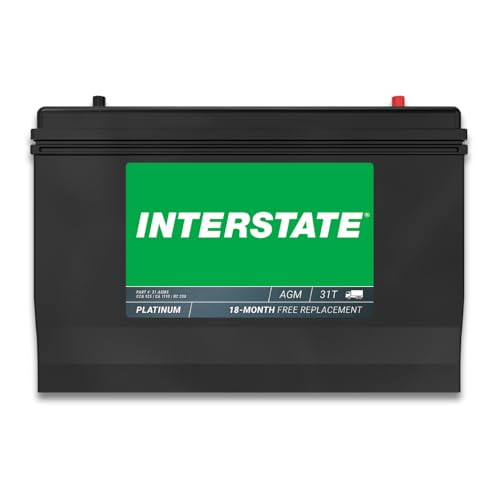
This pure lead AGM deep-cycle battery is designed for long-duration power to marine electronics and appliances while maintaining solid cranking performance. Best for owners who prioritize deep-cycle longevity and higher discharge tolerance. A caution: ensure your charger supports pure lead AGM charging profiles to maximize life.
WEIZE 12V 100Ah Deep Cycle Battery

WEIZE 100Ah is a maintenance-free, sealed lead-acid deep-cycle battery. It’s a solid choice for RVs, trolling-motor-equipped boats, or off-grid setups where reliable long-run power matters. Best for users who want a straightforward, maintenance-free marine power source. Limited by SLA sensitivity to deep discharges compared with lithium options.
BUKNUWO 12.8V 100Ah LiFePO4 Battery

BUKNUWO’s LiFePO4 battery offers high energy density, light weight, and a long cycle life. It features a 100A BMS and extensive temperature protections, with the ability to parallel or series-connect for larger systems. Best for weight-conscious users who can accommodate lithium charging needs. Noted limitation: LiFePO4 systems require compatible charging strategies and may have higher upfront costs than lead-acid.
VEVOR 12V 105Ah LiFePO4 Dual Purpose
VEVOR’s LiFePO4 dual-purpose model delivers 105Ah capacity with a 1000CCA start capability and a built-in BMS for overcharge, discharge, and thermal protection. Best for mariners who want robust starting power and extended deep-cycle capability withLithium advantages. A potential limitation is the need for a compatible battery management approach and charging source to maximize lifespan.
Buying Guide: Key Considerations for 105Ah Marine Batteries
- Battery chemistry: Choose AGM if you want maintenance-free, spill-proof performance; LiFePO4 if you prioritize weight, cycle life, and faster charging; note LiFePO4 systems require appropriate chargers.
- Depth of discharge: Lead-acid often handles shallower cycles; LiFePO4 typically allows deeper DoD with longer life.
- Starting vs. deep-cycle balance: Dual-purpose models combine both needs, but dedicated deep-cycle or starting batteries may be more efficient for specific loads.
- Weight and space: LiFePO4 variants are lighter; ensure your battery compartment can accommodate the size and weight.
- Charger compatibility: Confirm charger voltage, current limits, and AGM vs. LiFePO4 charging profiles to maximize lifespan.
- Cell safety and monitoring: Look for batteries with built-in protections (BMS) for LiFePO4 and quality seals for AGM.
FAQ: Quick Answers for Marine Battery Shopping
- What does 105Ah mean for a marine battery? – It indicates the capacity to deliver 105 amp-hours of usable energy before needing a recharge, affecting how long you can run accessories and engines between charges.
- Is LiFePO4 better than AGM for boats? – LiFePO4 is lighter and typically lasts longer with more cycles, but may require compatible charging systems and higher upfront costs.
- Should I buy a dual-purpose battery? – Dual-purpose batteries can start engines and power deep-cycle loads, offering convenience but sometimes sacrificing peak cranking power compared to dedicated starters.
- How do I choose between 12V and 12.8V options? – 12V lead-acid variants are standard; 12.8V LiFePO4 is a common alternative with different charging needs and cycle life.
- What is a BMS and why does it matter? – BMS protects lithium cells from overcharge, deep discharge, and short circuits, extending life and safety.
- Can I mix battery chemistries on the same vessel? – It’s generally not recommended to mix chemistries in the same system due to different charging profiles and voltage behavior.