Best Trolling Bags for Boats: Drift Socks and Sea Anchors for Steady Trolling
Answer: Drift socks and sea anchors are designed to slow and stabilize a boat’s drift while trolling, bottom fishing, or casting. These bags are best for anglers seeking better control in winds, currents, and choppy water. The top picks below are suited to boats ranging from kayaks and pontoons to larger trolling boats. They help maintain position, reduce drift, and increase fishing opportunities in varied water conditions. The table summarizes key options to compare at a glance.
| Product | Size / Set | Best For | Notes |
|---|---|---|---|
| MOOCY Drift Sock Boat Kit (35″) | 35″ drift sock, 30 ft float rope, 30 ft dump line | 16–20 ft boats, trolling in moderate conditions | Includes harness buoy and storage bag |
| J Deez Amish Beckman Beefy Bag Sea Anchor (28″) | 28″ drift sock | Drift reduction in strong winds | Compact option for smaller vessels |
| MOOCY Drift Sock (25″) | 25″ drift sock, 30 ft rope & dump line | Medium boats, versatile trolling setups | Same sea anchor design, different size |
| MOOCY Drift Sock (18″) | 18″ drift sock, 30 ft rope & dump line | Smaller craft and tight spaces | Compact for easy storage |
| BLUEWING Sea Anchor Drift Sock (42″) | 42″ sea anchor style drift sock | Center console, power boats, larger craft | Heavy-duty 840D nylon fabric |
MOOCY Drift Sock Kit — 35 Inch

The 35″ drift sock kit from MOOCY includes a 35″ sock, a harness buoy, a 30 ft float rope, a 30 ft dump line, and a storage mesh bag. The stainless steel clip enables quick secure attachment and release. This setup is best for 16–20 ft trolling boats, kayaks, and pontoons. It is designed for trolling, bottom fishing, and casting, with a controlled drift that can improve fishing success. Best for anglers who need a reliable, all-in-one drift and sea anchor solution with simple deployment.
Who it’s best for: anglers who fish from mid-sized boats and want a ready-to-use drift-control kit. Why selected: comprehensive kit, durable hardware, and multi-scene compatibility. Caution: larger size may be less ideal for very small vessels or compact storage spaces.
J Deez Amish Beckman Beefy Bag Sea Anchor (28″)
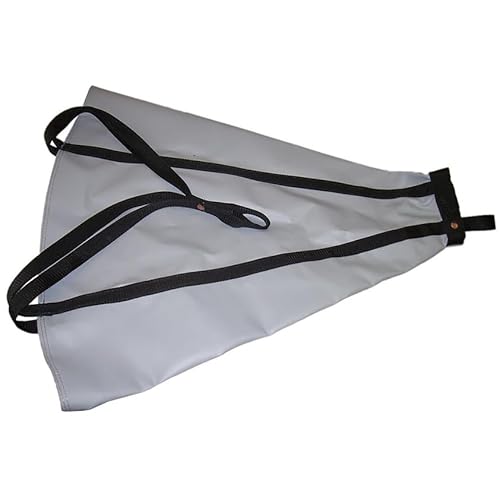
The J Deez Beckman 28″ Beefy Bag Sea Anchor is a compact option designed to slow drift during trolling or drifting. It’s best for anglers with smaller boats or those seeking a lightweight, simple solution. The data indicates it slows the boat’s drift rate effectively, helping keep you near structure or schools. Best for: vessels that require a modest drag without encumbering movement. Caution: a smaller sock may provide less drag in very heavy winds and waves compared to larger models.
MOOCY Drift Sock Kit — 25 Inch

The 25″ MOOCY drift sock kit mirrors the 35″ model with a 25″ sock, along with the same 30 ft float rope and 30 ft dump line. It provides multi-scene fishing compatibility and a dual-purpose function, serving as both drift sock and sea anchor. Best for: mid-sized boats and anglers who want a more compact drift control solution. Caution: smaller diameter means less drag than larger socks in heavy conditions.
MOOCY Drift Sock — 18 Inch
The 18″ MOOCY drift sock is a compact option designed for 14 ft boats or smaller craft, with a 30 ft float rope and 30 ft dump line. It shares the same dual-purpose design and durable construction. Best for: smaller boats or tight storage situations where space is at a premium. Caution: maximum drag may be less pronounced than larger socks in windy conditions.
BLUEWING 42 Inch Sea Anchor Drift Sock

The BLUEWING 42″ drift sock uses tough 840D nylon rip-stop fabric with reinforced webbing strap for premium durability. It stabilizes the boat and slows drifting in strong currents and winds. Best for center consoles, power boats, sailboats, jet skis, and inflatables needing stronger drag. Caution: heavier fabric means potential for more storage space and weight when not in use.
Buying Guide: Key Purchase Considerations
- Boat size and setup: Choose a drift sock size that matches your vessel length and typical trolling setup. Larger boats often benefit from 35″ or longer options or even 42″ for heavy winds.
- Drag vs. maneuverability: Larger socks provide more drag, which improves drift control but can slow you down. Smaller options offer less resistance and are easier to manage on smaller craft.
- Materials and durability: Look for marine-grade PVC or nylon fabrics with reinforced straps. Saltwater resistance and UV stability extend life in sunny, coastal environments.
- Attachment hardware: Quick-release clips and corrosion-resistant fittings simplify deployment and retrieval, reducing on-water fiddling time.
- Multi-scene use: Drift socks that double as sea anchors offer flexibility across trolling, bottom fishing, and casting scenarios.
- Storage considerations: Consider kit organization (mesh bags, included lines) to keep gear tidy and quick to deploy.
Frequently Asked Questions
- What is a drift sock used for?
A drift sock, or sea anchor, slows a boat’s drift and stabilizes it during trolling or drifting, helping anglers stay near structure or fish-holding areas.
- Which size is right for my boat?
Choose based on vessel length and typical wind/water conditions. Smaller boats benefit from 18″–25″ socks, while larger boats may need 28″–42″ or larger for adequate drag.
- Can drift socks be used in saltwater and freshwater?
Yes. Most kits are designed for oceans, lakes, and rivers, but always check the fabric and hardware for saltwater durability.
- Do drift socks require special maintenance?
Rinse with fresh water after use, dry completely, and store in a mesh bag to prevent mildew and wear on lines.
- Are drift socks easy to deploy by one person?
Yes. Look for kits with quick-release clips and simple attachment points to minimize on-water setup time.
- When should I avoid using a drift sock?
In extreme conditions where weather or current makes safe operation difficult, prioritize safety and consider alternative stabilization methods.