Best Boat Fire Extinguisher Options for Engine Compartments in 2026
Direct answer: For boat engine compartments, choose compact, marine-rated extinguishers with Class B and C compatibility, corrosion-resistant construction, and reliable discharge performance. The 5BC and 10BC Kidde models are strong all-around choices for many boat crews, while First Alert and H3R’s MaxOut offer alternatives for different vessel sizes and maintenance preferences. This guide highlights five top picks and explains who should pick each one, plus practical buying considerations for marine safety kits.
Summary table of chosen products:
| Product | Brand | Best For | Main Benefit |
|---|---|---|---|
| Kidde Fire Extinguisher for Boats, Single-Use 5BC | Kidde | Small to mid-size boats | Corrosion-resistant, all-metal construction |
| First Alert Marine Fire Extinguisher FE1A10GR | First Alert | UL-rated, versatile marine use | Durable metal valve and trigger |
| Kidde Fire Extinguisher for Boats, Single-Use 10BC | Kidde | Boats with higher risk fires | Quick discharge and long range |
| MaxOut ABC Fire Extinguisher (2.5 lbs) | H3R Performance | Versatile, multi-environment safety | Expanded range and non-caking formula |
| First Alert FE5R-PWCNA | First Alert | Personal watercraft and small boats | Coast Guard listed, portable |
Kidde Fire Extinguisher for Boats, Single-Use 5BC
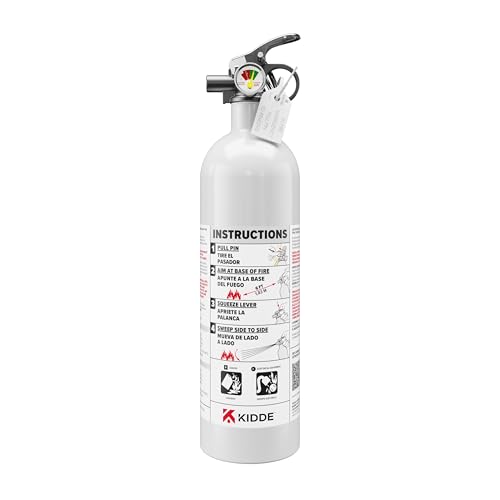
Kidde’s 5BC model is engineered for marine fires involving flammable liquids, gases, and electrical equipment. It features corrosion-resistant aluminum and stainless-steel parts, an all-metal valve assembly, and a durable stainless-steel lever with an easy-pull safety pin. Best for: small to mid-size boats that need robust, low-maintenance protection. Limitation: single-use design requires replacement after discharge or professional servicing if applicable.
Why choose this for boats?
- Class B and C coverage addresses both fuel and electrical fires common on engines.
- All-metal construction is advantageous in humid marine environments.
- 12X corrosion resistance helps longevity in saltwater settings.
First Alert Marine Fire Extinguisher FE1A10GR
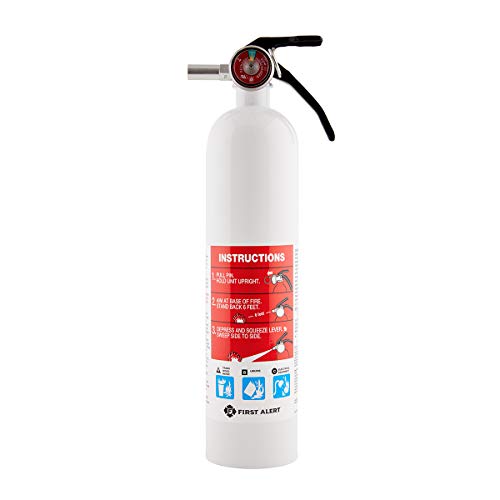
First Alert’s marine extinguisher is UL-rated for marine use and built with an all-metal construction, including a commercial-grade valve and trigger. It is a versatile, multipurpose unit that tackles wood, paper, trash, plastics, gasoline, oil, and electrical fires. Best for: boaters seeking a well-established, widely available option with professional recharge availability. Limitation: Rechargeability is contingent on service by certified professionals after use.
Why choose this for boats?
- UL rating of 1-A:10-B:C aligns with common fire safety standards.
- Multipurpose dry chemical agent provides broad coverage for engine-compartment fires.
- Premium metal components contribute to durability in marine environments.
Kidde Fire Extinguisher for Boats, Single-Use 10BC
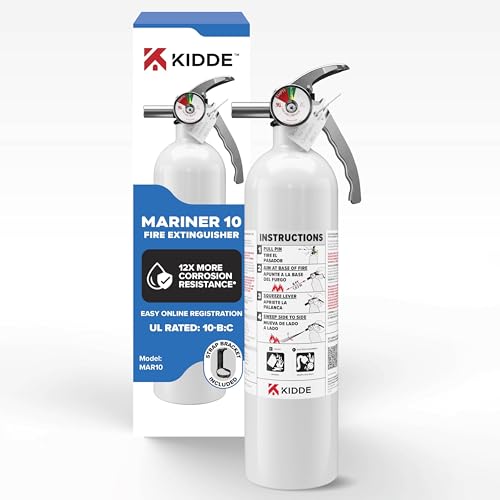
This 10BC model provides robust coverage for more intense or larger engine-compartment scenarios, with a discharge time of 8–12 seconds, a discharge range of 6–8 feet, and an operating pressure around 100 PSI. Best for: boats with higher potential fire exposure or those needing quicker, longer-range discharge. Limitation: Higher Class rating may be unnecessary for minimal engine bay risk, increasing cost.
Why choose this for boats?
- Higher BC rating broadens applicability to more fire types.
- Faster discharge and longer reach can improve response time in tight spaces.
- Corrosion-resistant construction suitable for marine use.
MaxOut ABC Fire Extinguisher (2.5 lbs)

H3R’s MaxOut ABC extinguisher targets Class A, B, and C fires with a 2.5 lb capacity. It offers a range up to 15 feet and uses a non-caking formula to prevent clumping in critical moments. Best for: multifunctional safety kits on mid-size boats or as a secondary unit for cabins and cockpits. Limitation: It may be larger and heavier than compact 5BC units, affecting placement on very small boats.
Why choose this for boats?
- Multi-class protection reduces need for multiple extinguishers.
- Extended reach supports longer reach across engine bays and compartments.
- Non-caking formula maintains discharge effectiveness over time.
First Alert Personal Watercraft Fire Extinguisher FE5R-PWCNA

Designed to meet U.S. Coast Guard Size I requirements for personal watercraft, this extinguisher uses dry chemical agent and is UL-classified 5-B:C. Best for: small, high-mobility craft like personal watercraft and compact inflatables where quick, simple operation matters. Limitation: Smaller capacity may require more frequent replacement for larger vessels or high-fire-risk areas.
Why choose this for boats?
- Coast Guard compatibility ensures regulatory alignment for certain craft.
- Portability makes it easy to deploy on smaller vessels.
- UL 5-B:C classification covers typical marine fire risks.
Buying Guide: Key Purchase Considerations
What size and rating should I pick for my boat?
- Small boats or engine compartments: 5BC or 1 x 5BC plus a secondary smaller unit may suffice.
- Larger engines or higher risk areas: 10BC or ABC extinguishers provide broader coverage and faster discharge.
Do I need rechargeable vs. disposable models?
- Disposable (single-use) units are common for boats and easier to replace after discharge.
- Rechargeable units can be cost-effective over time but require professional service after use.
What about mounting and accessibility?
- Mount extinguishers in clearly marked, accessible locations near the engine bay and on deck storage areas.
- Use mounting brackets that fit the extinguisher size and withstand marine vibrations.
What maintenance is recommended?
- Inspect seals, pressure gauges, and accessibility at least monthly during boating season.
- Replace after any discharge or per manufacturer guidance; ensure replacements are sea-worthy and UL/CG compliant where applicable.
How many extinguishers should a typical boat have?
- General guidance suggests at least one in the engine compartment and one on deck or cabin area, depending on boat size and storage layout.
- Consider adding a dedicated PWC or cockpit extinguisher for quick access in tight spaces.
Practical checklist for choosing
- Evaluate engine bay fire risk and typical fuel types on board.
- Balance weight, size, and placement for easy reach in emergencies.
- Prefer units with corrosion-resistant materials for life at sea.
- Ensure the unit conforms to applicable marine safety standards or Coast Guard requirements.
FAQ
- What does Class B and Class C mean for marine extinguishers? Class B covers flammable liquids and gases, while Class C covers electrical equipment. Marine extinguishers labeled for these classes are intended to fight typical engine compartment fires.
- Are disposable extinguishers okay for boats? Yes, disposable units are common and easy to replace after use. They’re often adequate for smaller boats or limited compartments.
- Can I reuse a discharged extinguisher? Some models are rechargeable by certified professionals; others are single-use and must be replaced after discharge.
- Where should I mount extinguishers on a boat? In the engine compartment, near access hatches, and on deck or in the cabin for rapid reach during a fire.
- Is Coast Guard approval important? For certain crafts, yes; some First Alert products meet COAST GUARD size or regulatory requirements for personal watercraft or specific vessel categories.
- How often should extinguishers be inspected? Inspect monthly during boating season and replace or service as recommended by the manufacturer or your local marine authority.