Best Electric Polishers for Boats: Top Picks for Marine Detailing
If you’re detailing a boat, you need a reliable electric polisher that handles oxidation, scratches, and swirls without overheating. Here are five top options that balance power, versatility, and control, making them suitable for boat hulls, decks, and fittings. Ideal buyers include DIY boat owners, professional detailers working on fiberglass boats, and weekend sailors seeking efficient buffing results.
Summary of selected products:
- LDHTHOPI Buffer Polisher (1600W, 7 Inch/6 Inch) – Best for heavy oxidation removal on boats.
- Vkdemer Cordless Car Buffer Polisher (6 In) – Best for cordless convenience on decks and rails.
- Avhrit Cordless Car Buffer Polisher Kit (6 Inch) – Best for long‑reach cordless detailing on boats.
- ZOTA Buffer Polisher (1600W, 7 Inch/6 Inch) – Best for all‑around boat polishing with long cord reach.
- Makihara Car Buffer Polisher (5 Inch) – Best for tight spaces and smaller hull areas.
LDHTHOPI Buffer Polisher 1600W 7/6 Inch

Best for heavy oxidation removal on fiberglass hulls and decks. This polisher combines a 1600W motor with 7 configurable speeds from 1000 to 3500 RPM, enabling aggressive cutting or delicate finishing. A detachable handle option enhances control on vertical surfaces or tight spaces. The three handling methods (direct, D-handle, side handle) improve comfort during long sessions. Use caution on very soft finishes to avoid over‑polishing.
Vkdemer Cordless Car Buffer Polisher (6 In, 2-Pack Batteries)

Best for a cordless setup on boats lacking easy access to power, such as mid‑dock polishing or deck railing shine. It features dual 21V batteries with a fast charger and an 8‑speed setting up to 5500 RPM. The brushless motor delivers quieter operation and higher efficiency. Lightweight at around 3 pounds, this model is easier to maneuver on vertical surfaces but may require battery management for extended sessions.
Avhrit Cordless Car Buffer Polisher Kit (6 Inch)

Best for a balanced cordless option with a 6‑inch pad for boats with tighter spaces. It includes two 2000mAh 21V batteries and six adjustable speeds (2500–6000 RPM). The 8mm random orbit provides a swirl‑free finish while reducing fatigue during long detailing sessions. Choose this if you want fast battery‑powered operation with reliable speed options, but watch for battery life during intensive polishing bursts on larger hull areas.
ZOTA Buffer Polisher 1600W 7/6 Inch

Best for high‑power, versatile boat detailing with a full copper motor for durability. It offers 7 speed levels (1000–3500 RPM) and a long power cord, which is useful when working away from outlets aboard. The dual‑action design supports broad swaths of the boat surface, from gel coat to deck hardware. Caution: heavy use at high speeds can generate heat; use brief passes and keep the tool moving to avoid overheating coatings.
Makihara Car Buffer Polisher (5 Inch)
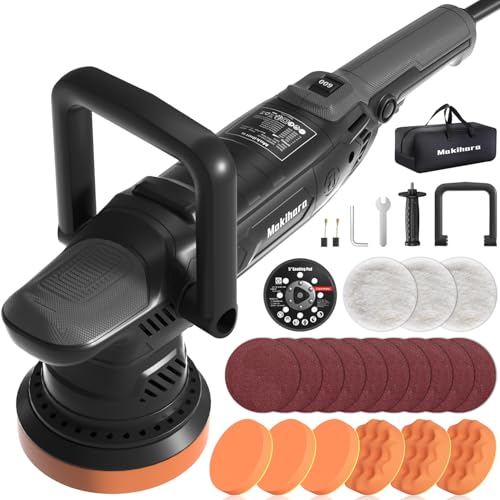
Best for tight spaces on boats, such as small bow or cabin surfaces, where a smaller pad is advantageous. This 5‑inch polisher uses a 1600W motor with 6 variable speeds (600–3600 RPM). The ergonomic design and safety lock help maintain consistent speed during long passes. It’s a solid choice for precise work in restricted areas but may be slower on large surface areas compared to bigger pads.
Buying Guide
What to consider before buying a marine polisher
- Power vs. weight: Higher wattage provides more cutting power but can increase weight. For boats, balance weight with handle ergonomics to reduce fatigue during long polishing sessions.
- Pad size and orbit: 7‑inch pads cover more area; 5‑inch pads reach tight spots. Random orbit vs dual‑action provides swirl control and finishing quality.
- corded vs cordless: Corded polishers offer uninterrupted power; cordless units help on decks and near water edges but require battery management for longer projects.
- Speed range: A broad RPM range (e.g., 1000–3500 or up to 6000) supports waxing, polishing, and defect removal. Low speeds for waxing; higher speeds for oxidation removal.
- Motor type: Copper motors tend to be durable and efficient, but brushless cordless motors reduce heat and wear during extended use.
- Comfort features: Detachable or additional handles, rubberized grips, and safety locks improve control on vertical surfaces.
- Accessories: Extra polishing pads and attachments extend versatility for different boat surfaces and finishes.
FAQ
- What is the best polisher for boat decks?
Choose a model with a wide RPM range, a 6–7 inch pad, and a comfortable grip. A brushless cordless option adds reach on deck areas without cords.
- Can I use automotive polish on boats?
Yes, many automotive polishes are suitable for gel coat and painted boat surfaces, but ensure the product is marine‑safe and compatible with your boat’s finish.
- How do I prevent heat buildup on gel coat?
Work in short passes, keep the polisher moving, and use a lower speed setting for initial defect removal. Allow the surface to cool as needed.
- What pad type should I use for swirls?
Start with a medium foam or microfiber pad for initial polishing, then switch to a finer pad for finishing.
- Is a cordless polisher worth it for boats?
Yes, for decks and remote areas where cords are cumbersome. Plan for battery life and have a spare battery or charger handy for longer sessions.
- How do I choose between 5 inch and 7 inch pads?
Use 7 inch pads for large hull areas; switch to 5 inch for tight corners, rails, and between fittings.