Best Liquid Rubber Paints and Sealants for Inflatable Boats
Looking for durable liquid rubber options to repair, reskin, or protect inflatable boats and dinghies? This guide highlights five top products that are best for inflatables, focusing on elasticity, UV resistance, and water sealing. It helps shoppers choose by intended use, such as re-skinning, bottom protection, or internal sealing, and points out practical limitations to consider before buying.
| Product | Brand | Best For |
|---|---|---|
| Inland Marine USA Liquid Rubber for Re-Skinning (White) | Inland Marine USA | Replacing skin panels on inflatables; visible white finish |
| Inland Marine USA Liquid Rubber for Re-Skinning (Gray) | Inland Marine USA | Mid-tone option for re-skinning with good contrast |
| Inland Marine USA Liquid Rubber for Re-Skinning (Black) | Inland Marine USA | Low visibility repair and dark finish for wear areas |
| TotalBoat Inflatable Boat Bottom Paint (1 Quart) | TotalBoat | Bottom protection against barnacles and growth; flexible |
| Gorilla Patch & Seal Liquid Rubber White (32 oz) | GORILLA | Waterproof sealant for leaks and cracks; multi-purpose |
Inland Marine USA Liquid Rubber Re-Skinning White

Best for visible, clean finishes when replacing inflatable skins. This white liquid rubber is designed to mix with Topside Paint components and applied for a flexible, airtight seal on inflatables. The product is available alongside gray and black variants for color coordination. Use when you want a bright, reflective surface that pairs with a topcoat for durability. Caution: color matching with adjacent panels may require test application.
- Best for: Re-skinning inflatables where a white finish is desired.
- Why selected: Provides elasticity and compatibility with Topside Paint.
- Limitation: Requires precise color matching if integrating with existing panels.
Inland Marine USA Liquid Rubber Re-Skinning Gray
Best for neutral-toned repairs where a grayscale finish helps hide wear. This gray variant shares the same formulation as white and black options, designed to pair with Topside Paint for inflatable skins. Suitable for mid-tone repairs or repairs planned to be concealed under a protective topcoat. Caution: ensure adequate surface prep to achieve a smooth finish.
- Best for: Gray skin panels or mid-tone repairs.
- Why selected: Consistent elasticity and paint compatibility with Topside products.
- Limitation: May require color-blend considerations with neighboring panels.
Inland Marine USA Liquid Rubber Re-Skinning Black
Best for low-visibility repairs or darker accents on inflatable skins. Like its color counterparts, this black variant is formulated for flexible, durable coverage when re-skinning. It can be paired with the same Topside Paint system for a cohesive finish. Caution: darker shades may require more UV protection or topcoating to preserve color over time.
- Best for: Black skin panels or disguising wear.
- Why selected: Maintains elasticity and adheres well to inflatable surfaces.
- Limitation: Color may fade under heavy sun exposure without protective topcoats.
TotalBoat Inflatable Boat Bottom Paint

Best for bottom protection on Hypalon, PVC, and rubber inflatables. This water-based ablative antifouling coating provides reliable protection against barnacles and growth in freshwater and saltwater. It remains flexible when boats are deflated and rolled, helping prevent cracking. Caution: designed for bottoms; not a topcoat for skins.
- Best for: Bottom surfaces exposed to water and organisms.
- Why selected: Durable, flexible coating with copper-based protection.
- Limitation: Not intended for skin surfaces or internal airtight sealing.
Gorilla Patch & Seal Liquid Rubber White
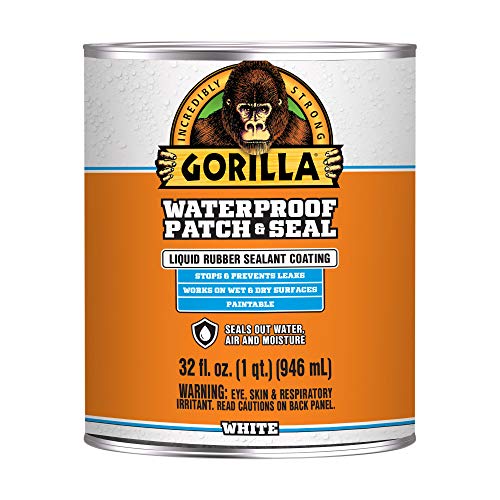
Best for sealing leaks and sealing cracks with a flexible, rubberized coating. This product works as a general waterproof sealant and can be applied by brush, roll, or pour. It is UV and temperature resistant after drying, offering lasting repairs. Caution: may require multiple thin coats for larger gaps.
- Best for: Sealing leaks from the inside or outside of inflatables.
- Why selected: Flexible, water-tight seal with ease of application.
- Limitation: Not a dedicated skin replacement; best used for sealing small to medium gaps.
Buying Guide
What to consider when choosing liquid rubber for inflatables
- Intended use: Re-skinning, bottom protection, or interior sealing will steer you toward different products (skin paints vs. bottom antifouling vs. sealants).
- Color and finish: White, gray, and black options offer different aesthetics and may require color matching with existing panels.
- Elasticity and UV resistance: Essential for inflatables that flex and spend time in sunlight; confirm elasticity and UV resistance in product specs.
- Compatibility: Some products are designed to work with specific topcoats or sealants; follow the manufacturer’s guidance for best results.
- Application method: Brush, roller, or spray compatibility can affect ease of use and the time required to complete a project.
- Surface prep: Proper cleaning, drying, and priming often influence adhesion and long-term performance.
Practical purchase considerations
- Do you need a pure skin replacement or a sealant for leaks and cracks?
- Will the product be used on the bottom hull or the inflatable skin area?
- Is color coordination important for your project or do you prefer a neutral option?
Frequently Asked Questions
- What is the difference between liquid rubber for re-skinning and sealant products?
Answer: Re-skinning products replace or cover the inflatable skin surface, while sealants fix leaks and cracks without full panel replacement. - Can these products be used on both Hypalon and PVC inflatables?
Answer: Many are designed for multiple inflatables, but always check the label for compatibility with your material. - How long does a re-skinning paint typically last under sunlight?
Answer: Durability depends on UV exposure and topcoat use; expect longer life with proper topcoating and maintenance. - Should I mix liquid rubber with other paints?
Answer: Some products are formulated to mix with specific topcoats or paints; follow the manufacturer’s mixing guidelines for best results. - Is professional application required for bottom paint on inflatable boats?
Answer: For bottoms, a clean, prepared surface and even coating are essential; DIY can work with careful preparation and follow-up. - Are these products safe for marine environments?
Answer: They are designed for marine use, but always follow disposal and environmental guidelines as specified by the manufacturer.