Best Bilge Pumps With High Flow Rates for Quick Water Removal
Answering the demand for fast, reliable water evacuation, this guide highlights top bilge pumps around 5000 GPH or close, designed for boats, yachts, and other large water-handling tasks. Best for heavy-duty marine use, each option balances power, durability, and practical features like automatic float switches or anti-airlock technology. The listed picks are suited for boaters, shipyards, and emergency responders who need rapid water removal with dependable performance.
Summary table of chosen products:
| Product | Flow Rate | Outflow | Key Benefit |
|---|---|---|---|
| SEAFLO 01 Series 4700 GPH | 4700 GPH | 2″ Outlet | High-capacity, durable with 4-year warranty |
| KolerFlo 3700 GPH | 3700 GPH | 1-1/2″ Outlet | Solid performance for mid-to-large vessels |
| JENENSERIES Submersible 3700 GPH | 3700 GPH | 1.5″ Outlet | Float-switch auto option and durable impellers |
| QWORK 1100 GPH Non-Automatic | 1100 GPH | 1-1/8″ Outlet | Anti-airlock technology for steady flow |
| Sanuke 1100 GPH Bilge Pump | 1100 GPH | 1-1/8″ Outlet | Quiet operation with anti-airlock feature |
SEAFLO 01 Series 4700 GPH Bilge Pump
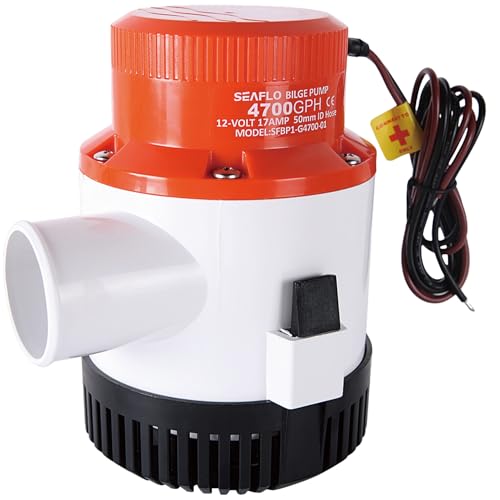
Features include 12V operation, 2″ outlet, and a max head of 26.2 feet. The pump is designed for high-demand evacuation tasks and supports a 4-year warranty. This model is best for large boats or vessels where rapid water removal is critical, such as during heavy rain or flooding scenarios. A note: the higher current draw (up to 32.1A) means wiring and power considerations are important on smaller systems. Use this when you need substantial throughput and extended reliability.
KolerFlo 3700GPH Boat Bilge Pump

With a high-capacity 3700 GPH, this pump is designed for medium to large boats needing quick water removal. It features a fully enclosed motor to resist moisture and corrosion, making it a solid choice for saltwater conditions. Best for: boaters who require strong performance in challenging environments without sacrificing durability. Limitation: not a built-in automatic switch in the base unit, so plan for an external float or switch if auto operation is desired.
JENENSERIES Submersible 3700 GPH Bilge Pump

Selected for its 3700 GPH flow and a robust impeller design, this pump includes a float switch option and a durable motor suitable for ferry, yacht, marine, and garden drainage uses. It’s best for users needing reliable automatic operation in a marine or mixed-use setting. Choose this if you want a balance of strong flow and protective features like a fail-safe floating switch to prevent continuous pumping.
MAXZONE Submersible 1100 GPH Bilge Pump
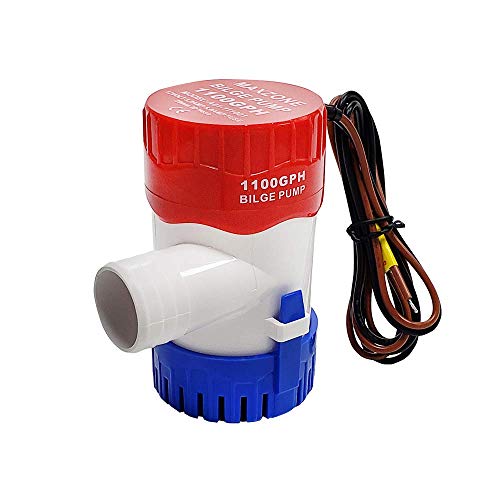
Although it delivers 1100 GPH, this model is compact and cost-effective for smaller craft or pond applications. It’s a good fit for users who prioritize portability and easy installation in limited spaces. Limitation: not suited for very rapid evacuation on large vessels where higher GPH is required.
QWORK 12V DC Submersible Bilge Pump 1100 GPH
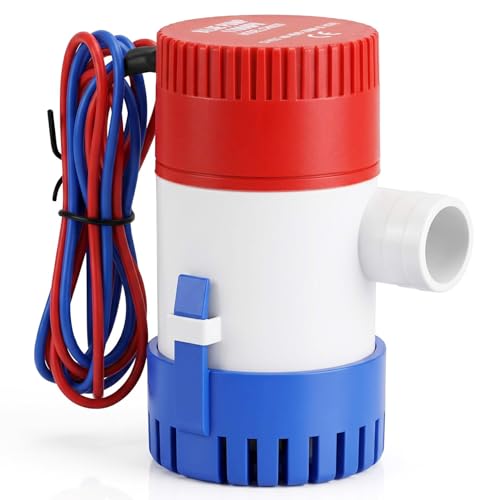
Equipped with anti-airlock technology, this 1100 GPH model maintains steady flow even in turbulent conditions. It uses a corrosion-resistant ABS housing and a stainless steel shaft for saltwater use. Best for smaller boats or as a secondary pump in larger systems. Consideration: flow is significantly lower than the 3700–4700 GPH options, so use for lighter tasks or as a backup.
YQMIGU Island Otter 1100 GPH Bilge Pump

Designed for quiet operation with a 1-1/8″ outlet, this model includes a float switch and extra clamps and fittings for flexible installation on floating boats. Best for: compact vessels and spaces where low-noise, reliable pumping is desirable. Caution: 1100 GPH isn’t enough for large flood scenarios on bigger boats.
Buying Guide: Key Considerations For Your Bilge Pump Purchase
- Flow rate needs: For fast evacuation, aim for 3000–4700+ GPH on larger vessels. For smaller boats or backup use, 1100 GPH models can suffice.
- Outflow size: A larger outlet (2″) moves more water per pass but may require matching hose and hose clamps. Ensure your hose size matches the pump outlet.
- Automatic vs. manual: Pumps with float switches offer automatic operation, turning on at a specified water level. Consider external switches if a built-in one is not present.
- Durability in marine environments: Look for corrosion-resistant housings, stainless steel shafts, and moisture-resistant motors for saltwater use.
- Electrical considerations: Higher GPH pumps draw more current. Verify vessel wiring, battery capacity, and fuse ratings to avoid wiring heat or trip issues.
- Installation flexibility: Submersible models are safer in flooded decks, while inline configurations fit tight spaces with proper mounting.
- Maintenance and warranties: A longer warranty often signals durability. Check for ease of cleaning, quick-disconnect bases, and accessible impellers.
Frequently Asked Questions
- What is a good GPH rating for a big boat bilge pump? A rating around 3700–4700 GPH is typically suitable for large boats and yachts needing rapid water removal.
- Should I choose automatic or non-automatic bilge pumps? Automatic pumps with float switches reduce manual intervention, especially in unattended areas. Non-automatic pumps may be fine for ponds or auxiliary use.
- What does “anti-airlock” technology mean? Anti-airlock features help prevent air pockets that can stop water from flowing, ensuring consistent pumping under challenging conditions.
- Is a larger outlet always better? Not always. A larger outlet increases flow but requires compatible hoses and fittings and can affect routing and hose management.
- Can I mix pumps for a backup system? Yes. Using a high-capacity primary pump with a smaller secondary pump can provide redundancy and reduce risk during emergencies.
- What maintenance steps help extend pump life? Regularly inspect seals, clean the strainer, check the float switch operation, and ensure electrical connections are corrosion-free.