Best Aluminum Boat Seam Sealer Options for Quick, Durable Repairs
Answering the question “which aluminum boat seam sealer should I buy?” this guide highlights five top products that seal leaks, rivets, and seams on aluminum boats. Each pick targets a specific use case—above-waterline sealing, underwater repairs, or barrier coating—so you can choose based on intended conditions, curing time, and paint compatibility. The buyer profiles below show who benefits most from each option and why it stands out.
| Product | Best For | Key Benefit |
|---|---|---|
| TotalBoat Aluminum Boat Leak Sealer | Small leaks and rivet seals on aluminum boats | Long working time and flexible, waterproof epoxy |
| Travaco RM330K Marine-Tex Gluvit | Sealing leaky seams or rivets on hulls | Barrier coat with broad compatibility |
| TotalBoat Aluminum Boat Barrier Coat | Corrosion protection and primer for aluminum hulls | Fast-drying, overcoat-ready epoxy barrier |
| Berkland 5200 Fast Cure | Permanent watertight bonds above and below waterline | Rapid cure, UV and weather resistant |
| STAR BRITE Putty Stick | Underwater quick repairs for aluminum parts | Rapid underwater hardening and aluminum-specific formula |
TotalBoat Aluminum Boat Leak Sealer

This two-part, flexible epoxy is designed for aluminum boats. It seals leaks around rivets and seams and patches small holes quickly and effectively. Best for boaters needing a long working time to ensure a thorough seal in variable conditions.
Why it’s selected: Long working time (about 75 minutes at 72°F) improves penetration and seal reliability. It tolerates low air and substrate temperatures down to 40°F, expanding usability in cooler seasons.
Who it’s best for: Casual and professional boaters needing a reliable, easy-to-mix epoxy that creates a durable, waterproof seal around seams and rivets.
Caution: Ensure properly prepared aluminum surfaces; temperature and surface prep influence bonding strength.
Travaco RM330K Marine-Tex Gluvit
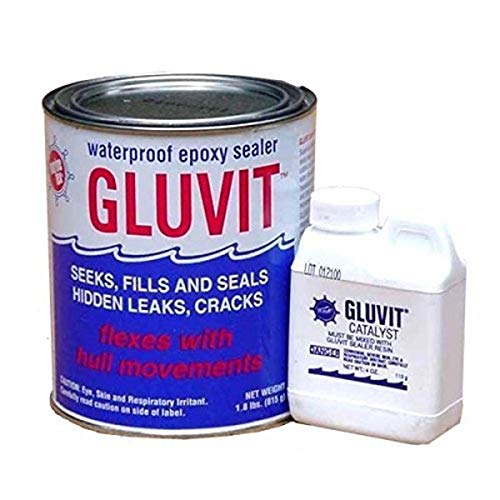
Gluvit barrier coat seals and protects hulls and decks, offering broad protection for fiberglass, wood, aluminum, and steel. It’s a solid option for sealing leaky seams and rivets on aluminum hulls and around fiberglass cabins or decks.
Why it’s selected: This product provides a barrier coat with versatile adhesion across common marine substrates, simplifying mixed-material repairs.
Who it’s best for: Boat owners with multiple material surfaces seeking a unified barrier coating for hulls and decks.
Limitation: May require compatible base coats for optimal adhesion on certain substrates; verify compatibility with existing finishes.
TotalBoat Aluminum Boat Barrier Coat (Quart, Gray)

This is a high-build, two-component epoxy primer and barrier coat that protects aluminum hulls and pontoon boats from corrosion. It can be overcoated with bottom paints or other 1- and 2-part paints, supporting long-term underwater metal protection.
Why it’s selected: Fast-drying with no sanding required between coats, enabling quicker project completion while delivering durable corrosion resistance.
Who it’s best for: Builders and restorers who want a robust barrier coat as part of a broader painting or coating plan.
Caution: It is a barrier coat, not a standalone sealant for active leaks; use in combination with leak-sealing products if leaks exist.
Berkland Marine Adhesive Sealant 5200 Fast Cure

Permanent, watertight above- and below-waterline sealant designed for through-hulls, transducers, and hull-to-deck joints. Its 24-hour handling strength and UV/weather resistance support durable marine bonding.
Why it’s selected: The fast cure and durable bond make this a practical choice when downtime needs to be minimized and a long-term seal is required.
Who it’s best for: Boat owners performing repairs that must stand up to wave impacts and sun exposure, with a need for rapid setting.
Limitation: As a high-performance sealant, users should ensure proper surface preparation in line with product guidelines for best results.
STAR BRITE Waterproof Epoxy Aluminum Putty Stick

Designed for emergency underwater repairs on aluminum boats and parts. The putty hardens rapidly to provide durable, quick fixes that can be used underwater.
Why it’s selected: Its aluminum-specific formula and underwater usability make it a strong option for quick, on-spot repairs when time is critical.
Who it’s best for: Divers and boaters who need a fast, reliable underwater repair solution on aluminum components.
Limitation: Not a long-term substitute for structural sealing where continuous leakage is present; use as a temporary or interim fix if necessary.
Buying Guide
What kind of sealant do I need for aluminum hulls?
Choose based on where the seal will be applied (above waterline, below waterline, or both). Sealants vary in cure time, adhesion, and hardness. For active leaks or rivets, a two-part epoxy like a leak sealer is often preferred. For general corrosion protection, a barrier coat can be paired with a topcoat.
Is cure time important?
Yes. Fast-curing formulas get you back on the water quickly, but may require precise timing and preparation. Slower-curing products offer more working time for complex sealing jobs. Consider your schedule and weather conditions when selecting.
Can I paint over these sealants?
Many products are paintable after curing, but verify each product’s compatibility with your intended paints. Barrier coats often accept topcoats, while some epoxies must cure fully before painting.
How do temperature and surface prep affect adhesion?
Low temperatures slow curing and can hinder adhesion. Surface preparation—cleaning, drying, and sometimes priming—improves bonding strength and long-term performance. Follow manufacturer instructions for best results.
What maintenance should I expect after sealing?
Inspect seams and rivets periodically, especially after heavy use or impact. Reapply or touch up sealants if you notice cracking, shrinkage, or new leaks. UV exposure may degrade some products over time; consider UV-resistant options for exposed surfaces.
Choosing a kit or combination approach
For many aluminum boats, a combination approach works best: use a leak-sealing epoxy on obvious leaks or rivets, a barrier coat for corrosion protection, and a fast-cure sealant for joints and critical seams. This multi-product strategy offers redundancy and longer-term durability.
Quick FAQ
- Q: Can I seal leaks with one product? A: In many cases, yes, but for best results, match the product to the leak type (rivet, seam, or hole) and consider a barrier coat for corrosion protection.
- Q: Do these sealants work underwater? A: Some do, such as putty sticks or fast-cure formulas, but always verify if the product is rated for underwater use before applying.
- Q: How long before I can paint over the sealant? A: Painting requirements vary; some products are paint-ready in 30 minutes, others require full curing. Check product guidelines.
- Q: Can I apply during colder weather? A: Some products specify operation down to 40°F or lower. If temperatures are below the recommended range, cure times may increase or bonding may be affected.
- Q: Is a barrier coat enough for hull protection? A: A barrier coat protects against corrosion, but if leaks exist, use a leak-sealing product in combination to ensure watertight performance.
- Q: How should I prepare aluminum surfaces? A: Clean, dry, and free of oils or contaminants. Some products require priming or specific surface prep; follow each product’s instructions.