Best Ethanol-Resistant Marine Fuel Lines for Boats and Engines
When selecting an ethanol-resistant marine fuel line, choose options designed for reliability under marine conditions and ethanol blends. This guide highlights five suitable hoses, explaining who benefits most from each and why they’re a good match for ethanol-containing fuels. Whether you’re a casual boater or a pro sailor, these selections help ensure safe fuel flow, durability, and easy installation on engines, hull systems, and generators.
Quick product overview
- 3/8 Marine Fuel Line Hose J1527 Type A1-15 Boat Fuel Line for Engine Use — Best for durable, flexible marine fuel routing.
- 3/8 Marine Fuel Line Hose J1527 Type A1-15 Diesel Line — Best for mixed gasoline/diesel applications on boats with ethanol blends.
- Outus 3/8 Inch ID 50ft NBR Rubber Fuel Line Hose — Best value and versatility for extended runs and general marine use.
- 3/8” Marine Fuel Hose Feed Line Rubber Type A1-15 — Best for universal boat fuel hose needs with standard SAE J1527 compatibility.
- 5/16 Inch ID Fuel Line Hose 10Ft — Best for compact engines and high-pressure marine fuel systems with good ethanol tolerance.
| Product | Size / Length | Working Pressure | Best For |
|---|---|---|---|
| 3/8 Marine Fuel Line Hose J1527 Type A1-15 Boat Fuel Line | 10 ft, ID 3/8″ (10 mm); OD 18 mm | 16 PSI | Durable marine routing, ethanol blends |
| 3/8 Marine Fuel Line Hose J1527 Type A1-15 Diesel Line | 10 ft, ID 3/8″ (10 mm); OD 16 mm | 300 PSI | Gasoline/Diesel/ethanol blends |
| Outus 3/8 Inch ID 50ft NBR Rubber Fuel Line Hose | 50 ft, ID 3/8″ (10 mm); OD 11/16″ (17 mm) | 142 PSI | General automotive and marine fuel systems |
| 3/8” Marine Fuel Hose Feed Line Rubber Type A1-15 | 10 ft, ID 3/8″ (9.5 mm); OD 17 mm | Not specified on data | Universal boat fuel hose needs |
| 5/16 Inch ID Fuel Line Hose 10Ft | 10 ft, ID 5/16″ (8 mm); OD 9/16″ (14 mm) | 300 PSI | High-pressure marine fuel systems |
3/8 Marine Fuel Line Hose J1527 Type A1-15 Boat Fuel Line

Best for durable, ethanol-blend-ready marine fuel routing on engine bays. ID 10 mm, OD 18 mm, length 10 ft. Working pressure listed at 16 PSI, with a burst of 50 PSI. Temperature tolerance from -40℃ to 100℃. This hose is suited for light to moderate ethanol-containing fuels and provides flexibility for tight bends with a minimum bending radius of 54 mm. Consider this when your installation requires robust marine-grade construction with moderate pressure tolerance.
Who it’s best for: boat owners needing a compact, flexible line for engine fuel feeds that must handle ethanol blends without quickly degrading.
Caution: Not designed for very high-pressure fuel systems or long high-temperature exposure beyond its rated range.
3/8 Marine Fuel Line Hose J1527 Type A1-15 3/8 Diesel Line

Best for mixed fuel environments on boats requiring compatibility with gasoline, diesel, and ethanol blends. ID 3/8″ (10 mm); OD 16 mm. Length 10 ft. Working pressure up to 300 PSI, burst 900 PSI. Temperature range -40°F to 212°F (-40°C to 100°C). The higher pressure rating makes it suitable for engines and fuel systems with more demanding flow conditions, especially when ethanol blends are involved.
Who it’s best for: boaters with higher pressure fuel lines or those running mixed fuel types where durability and pressure tolerance matter more than flexibility.
Caution: Higher pressure rating means it may be stiffer than lighter-duty hoses; ensure bend radii are respected.
Outus 3/8 Inch ID 50ft NBR Rubber Fuel Line Hose
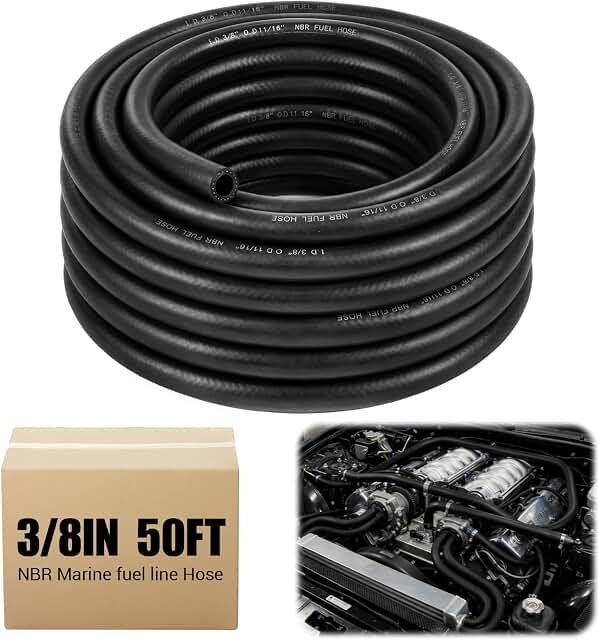
Best for versatile, long-run fuel line needs with marine and automotive applications. ID 3/8″ (10 mm); outer diameter about 11/16″ (17 mm). Length 50 feet. It has a 142 PSI working pressure, with a 284 PSI burst, and operates from -40°F to 230°F (-40°C to 110°C). Constructed from nitrile rubber (NBR) with fiber braiding, offering good oil resistance and heat tolerance for standard marine use.
Who it’s best for: budget-conscious buyers seeking a long, general-purpose fuel hose that performs reliably in moderate ethanol environments.
Caution: Not specifically marketed as ethanol-blend-specific; verify compatibility for exact fuel blends in your system.
3/8” Marine Fuel Hose Feed Line Rubber Type A1-15

Best for universal boat fuel hose needs with SAE J1527 compatibility. Inside diameter 3/8″ (9.5 mm), outside diameter 17 mm. Length 10 ft. It’s a Mitsubishi-style blend of NBR inner and NBR+PVC outer materials, offering solid function and lifespan. A one-year quality control promise adds a basic assurance for typical marine use.
Who it’s best for: boat owners needing a reliable, universally compatible feed line that fits standard marine hoses and provides consistent performance with ethanol-blended fuels.
Caution: The data does not specify a high-pressure rating; ensure your system’s pressure requirements align with this hose’s specs.
5/16 Inch ID Fuel Line Hose 10Ft

Best for compact engine bays and high-pressure marine fuel systems. ID 5/16″ (8 mm); OD 9/16″ (14 mm). Length 10 ft. Working pressure 300 PSI, with a burst pressure of 1160 PSI. Temperature tolerance from -40°F to 257°F. Made from premium NBR material with oil and heat resistance, suitable for ethanol blends where the environment is demanding on hoses.
Who it’s best for: boat setups requiring higher pressure capability in a compact line, especially engines with tighter routing constraints.
Caution: While high-pressure capable, ensure the hose’s bend radius and installed length meet the installation’s demands to avoid kinks.
Buying Guide: Ethanol-Resistant Marine Fuel Lines
- Material and compatibility: Look for NBR or nitrile rubber with ethanol-blend resistance. Ensure the hose is SAE J1527 compliant if your system expects a marine standard.
- Pressure rating: Match working and burst pressures to your engine and fuel system. Higher PSI ratings are better for high-performance or high-pressure applications, but ensure flexibility isn’t sacrificed more than necessary.
- Temperature range: Marine environments can swing from very cold to hot; choose hoses rated for the expected range to avoid cracking or hardening.
- Length and bend radius: Measure routing length and required bends. A smaller bending radius helps in tight engine bays but may increase wear if the hose is very stiff.
- Fuel compatibility: Confirm ethanol blend compatibility if using E10, E15, or higher blends. Some hoses are designed for universal fuels; others are more limited.
- Durability vs. cost: Premium hoses often last longer in harsh marine conditions. Balance budget with the expected lifespan and maintenance needs.
Frequently Asked Questions
- What does J1527 mean for marine fuel hoses? – It designates a standard for marine fuel hose construction, indicating compatibility with ethanol blends used in many boats.
- Can I use automotive fuel hose on a boat? – Yes, if the hose meets SAE J1527 or equivalent marine standards and is rated for ethanol blends, but verify saltwater exposure suitability.
- What is the importance of the bending radius? – A correct bending radius reduces kinking and wear, prolonging hose life in confined engine bays.
- Do higher PSI ratings always mean better performance? – Higher ratings offer more durability in high-pressure systems, but ensure the hose remains flexible enough for routing.
- How long should a marine fuel line last? – Lifespan depends on material, exposure, and ethanol content; inspect for cracks or swelling regularly and replace as needed.
- Is a longer hose always better? – Not necessarily; longer hoses can add fuel resistance and potential for leaks. Choose the shortest length that meets your installation needs.