Best Marine Battery Terminal Extenders for Reliable Power Connections
Answering the search for durable, plug‑and‑play marine battery terminal extenders, this guide highlights top options for boaters and RV users. The selections below are grouped by who benefits most—whether you need easy reach, corrosion resistance, or quick installation. Each product section compares suitability and limits to help you choose confidently for reliable power connections on the water or away from shore power.
| Product | Best For | Key Benefit |
|---|---|---|
| Otoolling 2 Pcs Battery Terminal Adapters | Budget-friendly maintainers | Two sizes fit many posts; color‑coded for quick color identification |
| T-H Marine Hydra Battery Cable Extender | Flexible routing and clean layouts | Extends cable length; includes positive/negative terminals |
| QWORK 2 Pairs Brass Terminal Connectors | All‑around marine and auto use | Brass construction; broad size compatibility |
| Schumacher Zinc‑Plated Marine Terminal Ends | Direct replacement on boats | Zinc‑plated for marine environments; includes positive/negative ends |
| Blue Sea Systems 2340 Busbars | Heavy-duty power management | Direct busbar add‑ons for posts; high current handling |
Otoolling 2 Pcs Battery Terminal Adapters
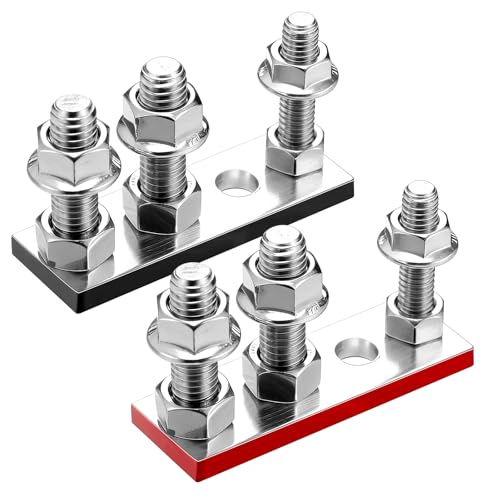
Best for: Budget-conscious boat owners and long‑term maintenance fans who want ready replacements. These adapters cover 3/8″ and 5/16″ posts with clear positive/negative color coding for quick, error‑free installation. They come in a small, cost‑effective pair, ideal for stocking spares.
Why selected: The dual‑size design increases adaptability across common marine battery posts, reducing the need to carry multiple parts. Color indicators support fast, accurate connections during routine upkeep or in-field repairs.
Caution: Confirm your battery post sizes before ordering; some setups may require different studs or terminals beyond these two sizes.
T-H Marine Hydra Battery Cable Extender

Best for: Reaching battery connections in tight engine rooms or where space is limited. This extender kit improves accessibility and helps reduce the need for single wire splices.
Why selected: It provides both positive and negative terminals, simplifying complete battery connection management. The extender design supports better placement of rigging accessories and cables on boats or RV installations.
Caution: Verify the wire gauge compatibility; the Hydra kit focuses on up to 2 gauge wire and may not suit heavier wiring needs.
QWORK Brass Terminal Connectors

Best for: Marine vessels, autos, and RVs that require reliable, corrosion‑resistant connections with straightforward installation. Brass offers strong conductivity and durability in marine environments.
Why selected: The set is designed to fit standard top‑post batteries with broad polarity sizing (positive and negative terminals), making it versatile for various systems. It’s also robust enough for frequent use in marine conditions.
Caution: While versatile, verify the exact post dimensions to ensure a precise fit for your battery model.
Blue Sea Systems 2340 Battery Terminal Busbars

Best for: Electronics enthusiasts and boat owners needing additional busbar capacity to manage multiple positive and negative connections. Ideal for expanding secure power distribution on larger systems.
Why selected: These tin‑plated copper busbars provide direct, high‑conductivity attachment options with four stainless screws, enabling tidy, reliable connections at up to 32V and 100A continuous capacity.
Caution: Installation requires appropriate threading into compatible post terminals; ensure your batt terminals can accept screw‑in busbars.
Buying Guide
What type of marine battery terminal extender do I need?
Consider whether you need simple adapters, full cable extenders, or a busbar upgrade. For quick replacements, adapters or small connectors work well. For reach and layout improvements, extenders or busbars offer more flexibility and organization.
How do I choose by post size and compatibility?
Check your battery post measurements: 3/8″ and 5/16″ are common. Some products list standard top/post compatibility; confirm both positive and negative sizing match your system to avoid loose connections or poor conductivity.
What materials matter for marine use?
Corrosion resistance is essential. Brass and zinc‑plated copper resist salt spray and humidity. Brass offers good conductivity; zinc plating provides a protective layer in marine environments. Stainless components help reduce corrosion risks in terminals and screws.
How important are color indicators and easy installation features?
Color‑coded terminals minimize miswiring. Ergonomic designs and simple, few‑bolt installations shorten maintenance time and reduce risk of mistakes during field repairs.
What about safety and maintenance?
Avoid extensions that require excessive force or complex splices. Ensure all connections are tight and clean; inspect for corrosion during routine boat inspections. Keep terminals dry and protected from spray when possible.
When should I consider a busbar system?
If you manage multiple circuits or want a neater power distribution, busbars can simplify wiring and improve heat management. They are best for larger electrical setups with several positive and negative branches.
Which option is best for a budget-conscious buyer?
Simple adapters or multi‑pack connectors provide solid value and coverage for common post sizes. They support routine maintenance without a large upfront cost.
FAQ
- Q: Are marine battery terminal extenders universal?
- A: Most fit standard post sizes like 3/8″ and 5/16″, but always verify post dimensions and thread compatibility.
- Q: Can I mix metals in their wiring connections?
- A: It is best to avoid a mix of dissimilar metals without proper anti‑corrosion measures to prevent galvanic corrosion.
- Q: Do busbars require professional installation?
- A: Basic busbars can be installed by a knowledgeable DIYer; more complex setups may benefit from professional assistance for optimal routing.
- Q: How can I extend the life of marine terminals?
- A: Regularly inspect for corrosion, clean terminals, and re-tighten connections after heavy activity or rough seas.