Best Audio Systems for Boats: Top Marine Audio Kits for 2026
The best marine audio systems for boats combine weatherproof design, straightforward setup, and reliable streaming. This guide highlights five top options ideal for a variety of boaters—from weekend sailors to all-season anglers. Each product section explains who it’s best for, why it was selected, and any practical caveat to consider on the water. A quick buyer’s table follows to help you compare at a glance.
| Product | Best For |
|---|---|
| BOSS ASK904B.64 Marine Amp & 6.5″ Speakers | Users needing a high-output amp with simple speaker hookup |
| BOSS MCKGB450B.6 Gauge Speaker System | All-in-one gauge-styled marine radio with Bluetooth |
| Pyle PLMRKT38W | In-dash marine stereo with Bluetooth & USB |
| JBL PRV-175 Bundle | Compact, feature-rich receiver with 2 pairs of 6.5″ speakers |
| BOSS MGR350B | Weatherproof gauge receiver with built-in amp |
BOSS ASK904B.64 Marine Amp And Speakers

Best for: Boat owners who want strong output without a separate head unit. This package combines a 500 Max x 4 channel amplifier with 6.5-inch marine speakers and a waterproof pouch. The setup is suitable for listeners who value simple, reliable amplification and Bluetooth control from a remote.
Why selected: The high-output amplifier supports multiple speakers and preserves power on the water. A USB charging port adds convenience for charging devices. The weather-resistant design helps it endure light spray or splashes typical on decks.
Limitations: This option assumes you already know how to wire an amplifier to speakers and a battery. No integrated head unit means you’ll stream via a separate device or phone.
BOSS MCKGB450B.6 Gauge Marine Stereo

Best for: Boaters who want a weatherproof dash receiver with Bluetooth and 6.5″ speakers. The MCKGB450B.6 pair includes the gauge-style receiver and two speakers, ready to install in a cockpit or cabin dash.
Why selected: It provides a full front-end experience with USB and auxiliary inputs, plus front/rear and subwoofer outputs. The IPX6 weatherproofing protects against splashes, making it a solid choice for open-water use.
Limitation: It does not include a CD/DVD drive, which isn’t a common feature on modern marine systems but may matter for legacy music collections.
Pyle PLMRKT38W Marine In-Dash System

Best for: Owners seeking an all-in-one in-dash receiver with Bluetooth and a mic, plus a simple wiring harness. The setup supports A2DP streaming and hands-free calling on the water.
- Best for: Hands-free calling and easy Bluetooth streaming from mobile devices.
- Why selected: The front-panel digital display and integrated USB/SD slots offer straightforward media access in a compact unit.
Caution: While feature-rich, ensure the included wiring harness and dash opening fit your boat’s dash space and tachometer cutout.
JBL PRV-175 Marine Bundle With 6.5″ Speakers

Best for: Boaters who want a compact, feature-rich digital stereo with a stereo pair of marine speakers. The bundle includes a 6.5″ speaker pair known for dependable performance in marine conditions.
Why selected: JBL’s PRV-175 provides AM/FM radio, Bluetooth streaming, USB/auxiliary inputs, and a robust receiver design in a standard tachometer opening. The Infinity 622M speakers deliver durable bass response in challenging environments.
Limitation: The bundle relies on bulk packaging for some shipments, which means shipping considerations could affect packaging condition when ordering in bulk.
BOSS MGR350B Marine Gauge Receiver
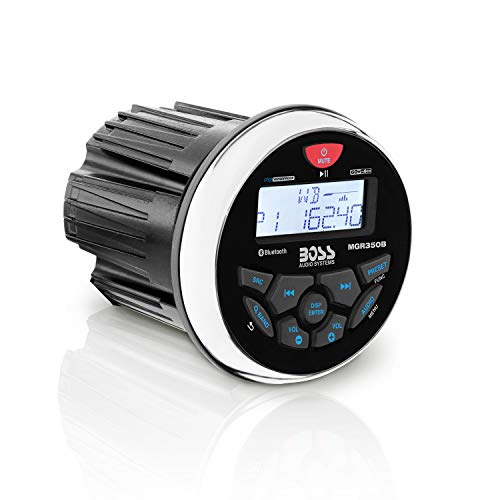
Best for: Boaters who want an integrated gauge receiver with built-in Bluetooth and USB for a compact dash setup. The MGR350B supports USB charging and provides weatherproof protection for coastal cruising.
Why selected: The built-in 4-channel amp consolidates space while offering reliable audio power. Firmware-ready design and IPX6 weather resistance help marine environments. The USB and auxiliary inputs expand media options.
Limitations: Some users may prefer a dedicated external amp for higher total system power or more complex subwoofer configurations.
Buying Guide: Key Considerations For Marine Audio On Boats
What should you look for when choosing a marine audio system for your boat?
- Weatherproofing and IP rating: Choose devices rated for splashes and humidity. IPX6 or higher provides better protection for exposed mounting areas.
- Power and compatibility: Decide between a receiver with a built-in amp and separate amplifiers. Ensure speaker impedance and amplifier power are compatible to avoid distortion or damage.
- Head unit features: Bluetooth, USB charging, AM/FM/NOAA weather bands, and AUX inputs affect daily use and access to music on open water.
- Speaker durability: Marine speakers with sealed enclosures and corrosion-resistant grilles perform longer in saltwater environments.
- Installation space: Gauge-style receivers and compact dash units fit in shallow or standard tachometer openings, saving space on cockpit dashboards.
- Cabling and mounting: Plan for waterproof wiring, moisture barriers, and secure mounting to withstand vibration and weather.
- System goals: Decide whether you prioritize simple streaming, multi-room sound, or robust bass for wakeboarding and watersports.
FAQs
- Do marine audio systems need a separate amplifier?
- What is IPX6, and is it enough for saltwater boats?
- Is Bluetooth the best way to play music on a boat?
- Should I buy a bundle with speakers or just a head unit?
- Are there any limitations to using USB charging on marine components?
- What maintenance is needed for marine audio equipment?
Not always. Some units include built-in amplifiers, which reduces wiring complexity. If you want louder sound or more speakers, a separate amplifier can offer more headroom.
IPX6 means protection against powerful water jets. It’s suitable for saltwater boats exposed to splashes; for aggressive spray or fully exposed mounting, look for higher ratings or additional protective housings.
Bluetooth is convenient for wireless streaming from phones and tablets. For more reliable streaming in bright sunlight or large cabins, consider devices with wired inputs or dedicated USB playback.
Bundles with speakers simplify installation and ensure compatibility. If you already own marine speakers, a head unit with suitable outputs may be more cost-efficient.
USB charging is convenient, but power output varies by device. Use it primarily to charge devices during playback rather than drawing large current for other accessories.
Regularly rinse with fresh water after exposure to salt spray, dry connections, and store remotes in protective pouches to extend life.