Best Boat Bottom Paint Remover Options for Hull Maintenance
If you need to remove stubborn bottom paints and coatings from a boat hull, this guide helps you pick effective, safer options. The top picks below are suited for DIYers and professionals who want thorough stripping without harsh chemicals. Each product targets multiple layers, works on common boat substrates, and avoids methylene chloride or NMP where noted. The buyer will find clear reasons why a given remover is best for specific surfaces, application conditions, and project scopes.
Overview of recommended products at a glance:
- TotalBoat TotalStrip Fast-Acting Heavy Duty Gel Paint and Varnish Remover
- Dumond Smart Strip Marine PRO Paint Remover
- Dumond Smart Strip Marine Paint Remover (Wood, Fiberglass, Metal)
- Dumond Smart Strip Advanced Paint Remover
- Smart ‘n Easy Paint & Varnish Remover Gel
TotalBoat TotalStrip Fast-Acting Gel Remover

Best for heavy, multi-layer stripping on various substrates, including wood, fiberglass, and gelcoat. The industrial-strength gel is designed to remove latex and oil-based paints, varnishes, lacquers, and coatings that resist standard removers. The formula claims fast action, with significant work completed in as little as 15 minutes and multiple layers stripped over 24 hours. It is noted for low odors and easy cleanup with water, eliminating the need for acid washes. Choose this if you need a high-strength remover that can handle tough, layered coatings in a shop or indoor setting.
Who it’s best for: DIYers tackling aged hulls or small yards needing rapid progress, and professionals who want a single product that covers many coating types. Limitation: for very delicate substrates or detailed areas, test first to prevent surface damage and ensure compatibility.
Dumond Smart Strip Marine PRO Paint Remover
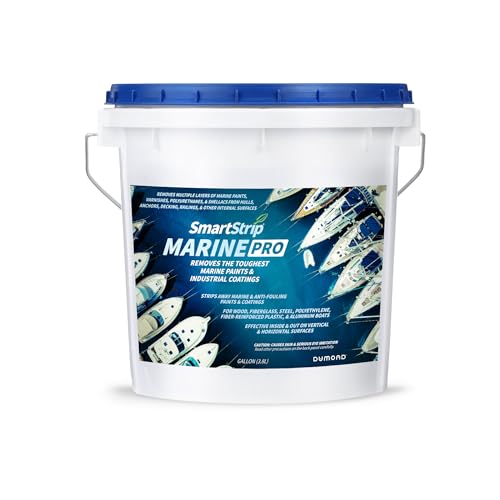
This marine-specific remover targets multiple coats and paints, including polyurethane and acrylic top and bottom paints. It clings to vertical surfaces like hulls and anchors, removing coatings without methylene chloride or NMP. The product emphasizes professional-grade performance while remaining DIY-friendly, recommending a small test prior to full use and a Laminated Paper wrap to aid removal. Choose this if you need a water-based formula that performs well on tough marine coatings with minimal hazard exposure.
Best for: hulls and vertical surfaces where safer chemistry is prioritized. Better for: users who want to strip several layers with less odor and without aggressive solvents. Caution: always perform a patch test to confirm coating compatibility.
Dumond Smart Strip Marine Paint Remover

This remover is designed for wood, fiberglass, metal, and aluminum boats, capable of stripping up to 15 layers of polyurethane and acrylic coatings. It uses a non-caustic, water-based gel that clings to vertical surfaces for effective coating removal. DIY-friendly and easy to use, it supports indoor and outdoor projects. Choose this if you need substantial coating removal while maintaining easier cleanup and surface protection. Limitation: follow testing steps to ensure compatibility with the gel coating and substrate.
Best for: large coating build-ups on various boat surfaces where a non-caustic, water-based gel is preferred. Choose this if you want a straightforward DIY workflow with strong stripping power. Avoid if you have extremely sensitive substrates not covered by the test guidance.
Dumond Smart Strip Advanced Paint Remover

Smart Strip Advanced is a water-based, non-caustic remover designed to strip multiple layers of acrylic, latex, oil, and water-based coatings. The product emphasizes testing before full use and maintaining a wet state during removal, with coverage for indoor or outdoor projects. It’s DIY-friendly and suitable for complex projects that require efficient removal without harsh chemicals. Choose this for projects where you anticipate a mix of coatings and want predictable dwell times with simple cleanup.
Best for: projects requiring multi-layer removal with a non-caustic approach. Better for: indoor use where odor and safety are paramount. Limitation: ensure ongoing moisture management and cover with Laminated Paper as directed to prevent premature drying.
Smart ‘n Easy Paint & Varnish Remover Gel

This is a user-friendly gel remover designed for DIY projects, removing multiple layers of acrylic, latex, oil, and water-based paints and varnishes. It highlights a no-caustic composition and a citrus-like scent. The product is positioned as ideal for wood furniture, decks, cabinets, and various surfaces where a gentler, odor-conscious remover is desirable. Choose this if you want a safe, citrus-scented option with straightforward application and cleanup. Limitation: ensure compatibility with particularly stubborn coatings or thick layers via a patch test.
Best for: small-to-medium DIY projects or areas where limited odor and safety are priorities. Choose this if you want a no-harsh-chemicals option with easy cleanup. Avoid if extreme coating thickness demands higher-strength removers.
Buying Guide: Key Considerations for Boat Bottom Paint Removers
What type of coatings are you removing? Marine coatings vary from boat to boat. Multi-layer removers are beneficial when stripping polyurethane, acrylics, varnishes, and traditional bottom paints. Consider whether you need a gel, water-based, or solvent-based formula based on surface type (wood, fiberglass, gelcoat, metal) and project location (indoor shop vs. open dock).
Is the formula safe for your substrate? Gel coatings, gel bases, wood, and fiberglass can respond differently to aggressive solvents. Non-caustic or water-based options reduce risk to substrates and workers but may require longer dwell times. Test patches before full application to confirm compatibility.
How important is ease of cleanup? Most listed products offer water rinse or simple wipe-off. If you want minimal hazard exposure and simple cleanup, prioritize non-caustic, water-based formulas with clinging gels designed for vertical surfaces.
What about safety and odor? Solvent-heavy products can produce strong fumes. Safer alternatives without methylene chloride or NMP reduce risk to indoor workers, pets, and nearby vegetation. Consider your workspace ventilation and PPE needs when selecting a remover.
What is the projected project scope? For commercial hulls with multiple layers, a product that claims 10 layers in 24 hours and several stages can save time. For smaller, detail-oriented areas, a DIY-friendly remover with clear dwell times and patch-testing steps may be preferable.
Buying Guide: Quick Comparison by Use Case
- Best overall for tough multi-layer removal: TotalBoat TotalStrip
- Best for safer chemistry on marine surfaces: Dumond Smart Strip Marine PRO
- Best for broad coating removal on multiple substrates: Dumond Smart Strip Marine Paint Remover
- Best for DIY-friendly, non-caustic performance: Dumond Smart Strip Advanced Paint Remover
- Best for beginners or odor-sensitive projects: Smart ‘n Easy Paint & Varnish Remover Gel
FAQ
- Do these removers work on all boat materials? Most listed products target wood, fiberglass, gelcoat, and metal. Always perform a small test patch on an inconspicuous area before full use.
- Are these removers safe for indoor use? Non-caustic, water-based formulas are generally better for indoor use due to lower fumes and easier cleanup.
- Can I strip multiple layers in one application? Many products are designed to strip several layers; follow the product’s dwell times and test patches to confirm performance and avoid damage.
- Is methylene chloride or NMP present in these removers? Some products advertise no methylene chloride or NMP; always check the ingredient list and safety data sheet for specifics.
- What is the best way to apply these removers? Apply with brush or roller on a thick layer, cover with plastic or Laminated Paper if specified, wait the recommended dwell time, then remove with scraping or rinsing as directed by the product instructions.