Best Marine Paint Below Waterline for a Strong Hull
Direct answer: this guide highlights top below-waterline marine paints that resist fouling, protect hulls, and suit different boat types. The best picks cover fiberglass, wood, and metal surfaces, and include both antifouling and protective barrier options. Choose based on your boat material, cruising conditions, and maintenance preferences. Below are five carefully selected products with clear pros, best-use cases, and practical cautions.
Buyer snapshot: the following table summarizes key choices to compare at a glance.
| Product | Best For | Surface | Coating Type |
|---|---|---|---|
| Rust-Oleum 396967 Marine Flat Boat Bottom Antifouling Paint | Fiberglass, Wood, or Steel boats needing fouling prevention | Below the waterline | Antifouling with copper release |
| Rust-Oleum 396959 Marine Coatings Topside Paint | Above-waterline cosmetic protection | Above waterline | Oil-based topcoat |
| TotalBoat TotalProtect Epoxy Barrier Coat System | Fiberglass, wood, and metals needing robust barrier protection | Above and below waterline | Two-part epoxy primer/barrier |
| Battleship Grey Marine Coatings Topside Paint | Above-waterline finishes with durable look | Above waterline | Oil-based topcoat |
| TotalBoat Underdog Marine Antifouling Bottom Paint | Boats in frequent saltwater use | Below waterline | Copper-based antifouling |
Rust-Oleum 396967 Marine Antifouling Paint (Quart, Black)

Best for boats made of fiberglass, wood, or steel that need fouling protection below the waterline. This antifouling paint slowly releases copper to deter organism growth and buildup on the hull. It can be recoated in about 4 hours, and a full launch can occur in roughly 16 hours. Coverage is up to 110 sq ft per quart, making it suitable for smaller to mid-sized vessels.
Who it’s best for: anglers, weekend sailors, and small to medium craft that operate in mixed waters where fouling risk is moderate. It’s a practical choice when quick return-to-water schedules are important. Caution: copper release requires careful, compliant use to minimize environmental impact and may require surface preparation for optimal adhesion.
Rust-Oleum Marine Coatings Topside Paint (Quart, White)

Best for above-waterline cosmetic protection on fiberglass, wood, or metal surfaces. The oil-based formula offers flexibility and easy leveling for a smooth finish. Dries to touch in 1–2 hours and covers up to 100 sq ft per quart. It’s a solid choice for boats that require a durable, clean white finish and minimal maintenance above the waterline.
Who it’s best for: owners prioritizing a glossy, dependable topcoat with straightforward application. Better for non-submerged areas where environmental exposure is less aggressive. Limitation: not designed for below-waterline use, and color options are limited to lighter hues in this line.
TotalBoat TotalProtect Epoxy Barrier Coat System
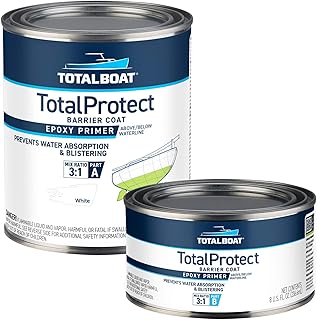
Best for hull protection with a high-build two-part epoxy barrier that can be used above and below the waterline. This system excels at preventing gelcoat blistering on fiberglass and provides robust protection for various underwater metals. It’s ideal for boats needing a strong, long-lasting barrier against moisture and salt exposure.
Who it’s best for: vessel owners seeking a professional-grade barrier coat to stop blistering and extend hull life. Choose this if your boat has known blister risk or requires a durable undercoating prior to finishing. Caution: application requires careful mixing and timing to achieve the intended barrier properties.
ShangTianFeng Battleship Grey Topside Paint

Best for above-waterline projects on metal, wood, or fiberglass that require a durable, erosion-resistant finish. This oil-based formulation is designed for good adhesion, easy leveling, and long wear in harsh maritime environments. Includes paint thinner for on-site adjustments, which helps if the job requires a custom mix.
Who it’s best for: boat owners needing a tough, long-lasting upper-surface coat, especially on metal or exposed fiberglass. Choose this if you want a uniform grey tone with strong UV resistance. Limitation: primarily for above-waterline use; not suitable for submerged hull areas without an appropriate antifouling layer.
TotalBoat Underdog Antifouling Bottom Paint

Best for boats used frequently in saltwater conditions. This economical antifouling bottom paint releases fresh biocide as water moves beneath the hull, helping prevent barnacles and mussels from attaching. It’s designed for fiberglass, wood, and steel bottoms and performs well under varied seasonal usage. Durable enough for trailering and occasional beaching, with easy reapplication next season.
Who it’s best for: skippers who routinely operate in demanding sea conditions and want protection that works with minimal maintenance. Better for frequent use and boats that are regularly moved through different water types. Caution: as an ablative style, wear removes some coating over a season, so you’ll resurface annually to maintain protection.
Buying Guide
What surface and location matter?
Below-waterline paints are formulated to resist fouling and corrosion. Choose antifouling options for submerged surfaces in saltwater or brackish water, and barrier or topside options for above-waterline finishes or transitional areas near the waterline.
What boat material affects choice?
Fiberglass boats often benefit from antifouling bottoms and epoxy barriers. Wood hulls may require compatible primers or barrier coats to prevent soaking. Steel boats need coatings that handle corrosion resistance and provide a solid bond to metal.
How important is application speed and cure time?
Some products cure quickly for quick water time, while others require longer to fully cure. Consider your launch schedule and weather window when selecting a paint.
What about environmental and safety considerations?
Copper-based antifouling paints release biocides into water. Follow local regulations and use containment and cleanup practices to minimize environmental impact. Always wear appropriate PPE and follow label directions for safe use and disposal.
Choosing by use case
- Frequent saltwater usage and rapid fouling: TotalBoat Underdog Antifouling Bottom Paint.
- Need a robust barrier for fiberglass or metal hulls: TotalBoat TotalProtect Epoxy Barrier Coat System.
- Above-waterline durability with easy application: Rust-Oleum Topside Paint (White).
- Lightweight, quick-recoat antifouling option: Rust-Oleum 396967 Marine Antifouling.
- Cosmetic white topside with smooth leveling: Rust-Oleum Topside Paint (White).
Maintenance and reapplication
Antifouling coatings typically require reapplication after a season or two, depending on water type and usage. Barrier coats can extend the life of the hull by protecting gelcoat and underlying materials. Always prepare the surface properly before applying any coating for best adhesion and performance.
FAQ
- How do I choose between antifouling and barrier coats?
– Choose antifouling when you need ongoing fouling prevention below the waterline. Choose barrier coats to protect against moisture intrusion and blistering on fiberglass or metal hulls, especially in high-humidity or saltwater environments. - Can I use topside paint below the waterline?
– No. Topsides are designed for above-waterline conditions and weather exposure, while antifouling paints are formulated for submerged surfaces. - Is copper-based antifouling safe for the environment?
– Copper-based paints release biocides into water, so follow local regulations and use containment strategies during application and cleanup. - How long does it take to launch after applying antifouling paint?
– Typical timelines range from a few hours for recoating to about a day or more before launching, depending on the product and environmental conditions. - Do I need a primer before applying epoxy barrier coats?
– Yes, most epoxy barrier systems require surface prep and primer steps outlined by the manufacturer to ensure proper adhesion and performance. - How should I store leftover paint?
– Store per label directions, typically in a cool, dry place with the lid tightly sealed to preserve the coating for future touch-ups.