Best Automatic Fire Extinguisher Options for Boat Engine Compartments
Answer: Quick-activating, maintenance-free aerosol extinguishers are ideal for boat engine compartments. They require no power or wiring and activate automatically at high temperatures, protecting confined spaces where engines and electrical gear reside. This guide highlights five top products suited for boat engine bays, engine rooms, and adjacent electrical gear, with clear reasons for each choice.
Intended buyers:
– Small boats or DIY enthusiasts needing easy installation in cramped engine bays.
– Commercial or larger vessels seeking compact, low-maintenance protection.
– Boat owners prioritizing non-toxic, maintenance-free options for enclosed spaces.
Below is a quick buying table to compare the five selections.
| Product | Best For | Protected Volume | Activation | |
|---|---|---|---|---|
| FEROSTICKER F03 (2 Pack) | Small confined engine compartments | 0.3 m³ (10.6 ft³) | 170°C | Peel-and-stick |
| FEROSTICKER F01 (1 Pack) | Small electric boxes and lithium storage | 0.1 m³ (3.5 ft³) | 170°C | Peel-and-stick |
| FEROSTICKER F09 (2 Pack) | Ships, large panels, high-risk spaces | 0.9 m³ (31.8 ft³) | 170°C | Peel-and-stick |
| ibasenice Automatic Aerosol Fire Extinguisher | Engines, garages, compact spaces | Compact space saver | Automatic aerosol activation | Portable, self-contained |
| Kidde Boats Fire Extinguisher 5BC | Boats, electrical equipment fires | Marine class B/C coverage | Manual pull and discharge | Portable, boat-ready |
FEROSTICKER F03 2 Pack

Activation occurs at 170°C ±10°C (356°F), releasing an aerosol that suppresses fire by disrupting combustion in enclosed spaces up to 0.3 m³ (10.6 ft³). No electricity, pressure, or wiring is required, and no maintenance is needed. The F03 is designed for small confined spaces such as electric panels, lithium battery storage, fuse boxes, solar generators, and ship cabins.
- Best for: Very small engine compartments or battery closets within a boat’s layout.
- Why selected: Fast, automatic protection with a compact footprint; simple peel-and-stick installation.
- Caution: Suitable for small volumes; not a substitute for larger engine spaces or complete boat fire systems.
FEROSTICKER F01 1 Pack

Activation at 170°C ±10°C (356°F) provides instant aerosol-based suppression for small, confined spaces up to 0.1 m³ (3.5 ft³). Requires no power, pressure, or wiring, delivering maintenance-free protection. A versatile option for electric boxes, lithium battery storage, or tight engine compartments in boats.
- Best for: Tiny engine bays or compact electrical enclosures in boats.
- Why selected: Minimal footprint; straightforward install without tools.
- Caution: Limited volume coverage compared with larger units—use where space is very tight.
FEROSTICKER F09 2 Pack
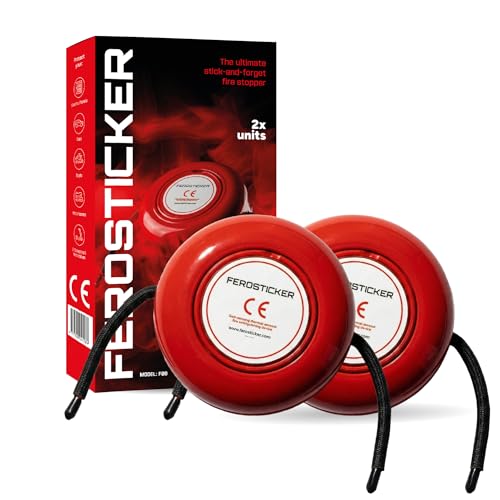
This pair activates at 170°C ±10°C (356°F) and protects enclosed spaces up to 0.9 m³ (31.8 ft³). It requires no power, pressure, or wiring and is quickly installed with no tools. The F09 is suitable for ships, large electric panels, tractors, harvesters, RVs, lithium battery areas, and industrial machinery in engines or compartments.
- Best for: Medium-to-large engine compartments or high-risk spaces on boats.
- Why selected: Higher volume protection with a quick-stick installation.
- Caution: For very small spaces, F01 or F03 may be more cost-effective.
FEROSTICKER F03 1 Pack

Activation is automatic at 170°C ±10°C (356°F) for small, enclosed spaces up to 0.3 m³ (10.6 ft³). It requires no electricity or wiring and installs in seconds by simply sticking it in place. Designed for electric panels, lithium battery storage, fuse boxes, solar generators, and ship cabins.
- Best for: Boat battery compartments or small electrical closets.
- Why selected: Consistent automatic response in tight spaces with easy installation.
- Caution: Ensure space is within its protected volume for reliable performance.
ibasenice Automatic Aerosol Fire Extinguisher

The ibasenice unit activates automatically to suppress electrical, chemical, and common automotive fires. Its compact, portable form fits engine compartments or garages where space is at a premium. It offers quick, hands-off protection without manual intervention, making it practical for boats with tight engine bays or electrical cabinets.
- Best for: Vehicles, small engine compartments, and garages on boats.
- Why selected: Reliable automatic suppression in a compact package; versatile for various fire types.
- Caution: Check compatibility with boat materials and ensure compliance with local maritime regulations.
Kidde Boats Fire Extinguisher 5BC
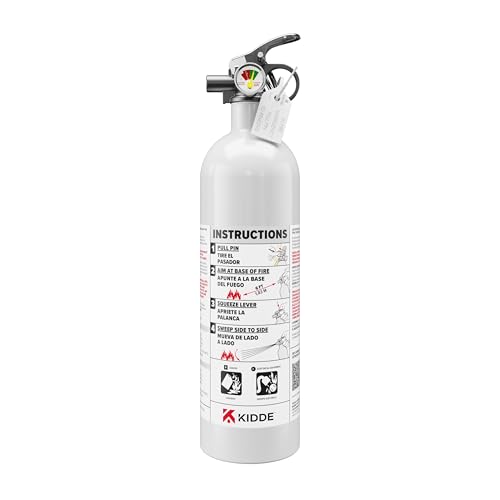
Designed for marine environments, the Kidde 5BC extinguisher combats basic boat fires, including flammable liquids and electrical equipment. The all-metal construction includes a corrosion-resistant diaphragm and a robust lever for easy use. This is a manual extinguisher option suitable for boats requiring a readily accessible, durable fire solution in engine rooms or cabins.
- Best for: Boats needing a marine-grade, manual extinguisher with reliable construction.
- Why selected: Strong corrosion resistance and a traditional, proven approach for boat safety.
- Caution: Manual discharge; not an automatic solution—pair with automatic units for broader protection.
Onaweno Household Auto Fire Extinguisher

The Onaweno automatic fire extinguisher covers multiple small spaces such as engine compartments, battery cabinets, and portable power cabinets. It focuses on automatic response, aiding in areas where fires may start in small electrical or electronic setups aboard a boat.
- Best for: Small power distribution cabinets and engine compartments on boats.
- Why selected: Broad applicability to household and light commercial setups on vessels.
- Caution: As a household-style unit, verify suitability for marine use and space size.
Buying Guide: Key Purchase Considerations for Boat Engine Compartments
What capacity is right for your boat? Choose units that match the size of your engine bay or electrical enclosure. For very small spaces, select F01 or F03; for larger compartments or ships, consider F09 or ibasenice as supplemental protection.
Automatic vs manual: Boats benefit from both. Automatic aerosol units provide quick containment in concealed spaces, while manual options can serve as a backup or additional layer of protection near exits or common areas.
Installation and maintenance: Peel-and-stick installations save time and avoid tools. Maintenance-free operation reduces ongoing labor, but ensure regular checks for tamper resistance and proper placement away from heat sources or interference with equipment.
Safety and compatibility: Confirm that the extinguisher’s chemistry is suitable for electric panels, lithium batteries, and marine materials in your vessel. Non-toxic formulations are preferred for enclosed spaces with crew access.
Placement strategy: Install detectors and extinguishers in engine rooms, battery storage areas, fuse boxes, and other high-risk zones. Avoid direct exposure to exhaust vents or moving machinery to reduce accidental activation risk.
FAQ: Quick Answers for Boat Engine Compartment Fire Safety
- Are automatic fire extinguishers safe for boats? Yes, when properly installed in designated spaces, automatic extinguishers provide rapid fire suppression without needing crew intervention.
- Can I mix automatic and manual extinguishers on my boat? Yes. Use automatic units in enclosed or hard-to-reach spaces and keep a manual extinguisher accessible for quick action if needed.
- What spaces should I prioritize for installation? Engine compartments, electric panels, lithium battery storage, fuse boxes, and solar generator enclosures are high-priority areas.
- Do these devices require maintenance? Most automatic aerosol units are maintenance-free, but periodic inspection for corrosion, tamps, and placement is advised.
- Will automatic extinguishers harm people aboard? Most modern aerosol extinguishers are designed to be low-toxicity for occupied spaces; follow manufacturer guidance and ensure proper ventilation after activation if needed.
- What about marine compliance? Check local regulations and vessel certification requirements for approved fire suppression solutions on boats.