Best CO2 Detectors for Boats: Safe, Portable Solutions for Onboard Air Quality
Need a reliable CO2 detector for boating life? This guide compares top portable CO2/CO detectors that are well-suited for boats, RVs, and other marine scenarios. They help you monitor carbon dioxide levels, temperature, and humidity to keep passengers safe aboard. The selections below are best for boaters who want compact, battery-powered or USB-powered devices you can move between cabin, cockpit, and bunk areas. The table summarizes key features to aid quick comparisons.
| Product | Best For | Power | Key Feature |
|---|---|---|---|
| LSENLTY USB Carbon Monoxide Detector for Boat Aircraft RV | Travelers needing USB-powered CO detector | USB | 0–1000 ppm range; bright alarm; portable size |
| ASIEIT 4-in-1 Portable CO & CO2 Detector | Multifunction monitoring on the go | Rechargeable | CO/CO2/Temp/Humidity with 3-color indicators |
| Dienmern 5-in-1 CO2 Detector | Indoor/outdoor air quality with CO2 and comfort data | Battery | CO2 400–5000 ppm; Swiss sensor; temp/humidity |
| GasDoc DS-100PRO Portable CO & CO2 Detector | All-in-one for travel and tent camping | Battery | CO 0–1000 ppm; CO2 400–5000 ppm; 72-hour runtime |
| LogiCO2 MK90 CO2 Detector | Budget-friendly CO2 alert in confined spaces | Standalone | Integrates alarm with high-visibility LEDs |
LSENLTY USB Carbon Monoxide Detector for Boat
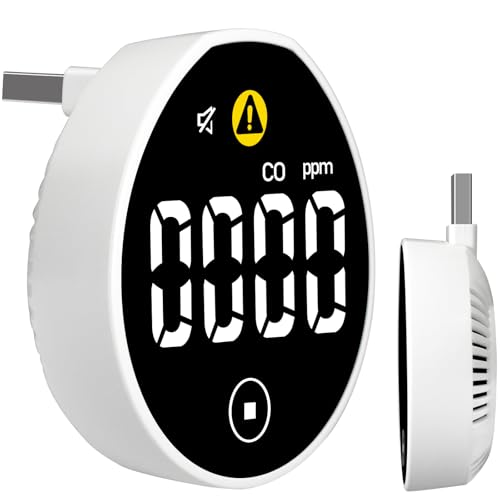
This portable USB CO detector is designed for outdoor use and travel. It is compact (approximately 2.1 x 2.8 inches) and can run on portable power banks or other USB sources, making it suitable for boats where a compact, rechargeable monitor is preferred. It covers 0–1000 ppm with ±5% accuracy and triggers an 85 dB alarm when CO exceeds 50 ppm. The high-definition display changes color from blue (0–49 ppm) to orange (50–99 ppm) to red (100–1000 ppm) to indicate danger levels. Best for boat crews needing a marine-friendly, USB-powered monitor on deck or in cabins. Caution: reliance on USB power means ensure a stable power source or backup battery for long trips.
2 Pack Travel CO Detector With Battery

These battery-operated portable CO detectors are designed for travel, hotels, and RVs. They function independently of mains power, which is advantageous aboard boats with limited power access. The detectors provide continuous monitoring and feature a low battery warning, helping to ensure continuous protection when docked or underway. Best for boaters who want a self-contained CO alarm with easy placement on different levels or cabins. Limitation: battery life varies with usage and sensor age, so replacement planning is important.
Dienmern 5-in-1 CO2 Monitor
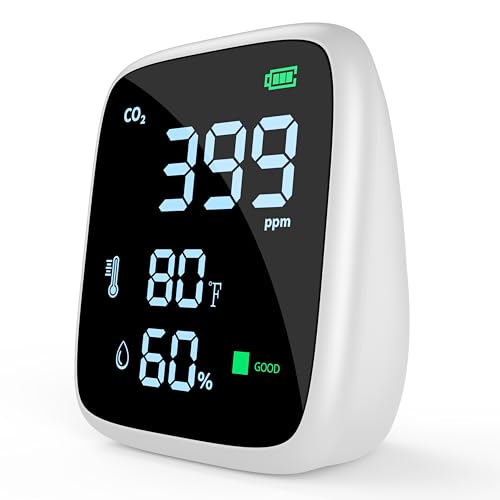
This 5-in-1 monitor tracks CO2, temperature, humidity, and provides a real-time AQI perspective. It uses a Swiss-made CO2 sensor for accurate readings in a wide 400–5000 ppm range with ±50 ppm accuracy. The device is designed for travel, office, home, and grow tents, making it practical for boats where a compact indoor air quality readout is useful. Best for boaters who want accurate CO2 data alongside temperature and humidity in one device. Caution: higher CO2 readings require ventilation; ensure the device is placed away from direct airflow sources for best readings.
ASIEIT 4-in-1 Portable Detector
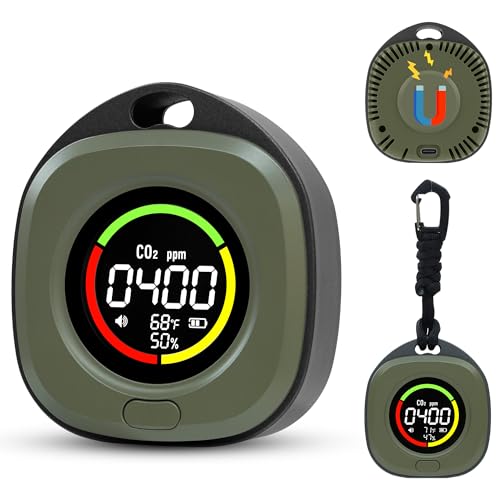
The ASIEIT unit provides CO, CO2, temperature, and humidity readings with a rechargeable battery and a three-color light system for quick status checks. It can attractively indicate safe, warning, and dangerous levels with color cues, aiding quick decisions aboard when space is limited. Best for boaters who prefer a single device that covers multiple gases and environmental parameters. Choose this if you want clear visual indicators and a rechargeable option; avoid if you need a separate CO2-only device for budget reasons.
GasDoc DS-100PRO Portable CO & CO2 Detector
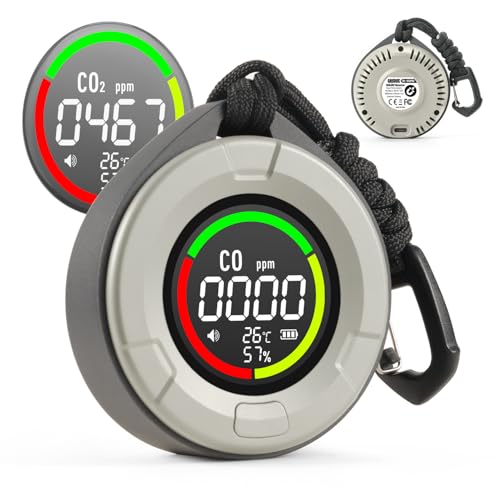
The DS-100PRO is an all-in-one device that detects CO, CO2, temperature, and humidity. It offers audible and visual alarms with a 3-color indicator system and supports up to 72 hours of continuous operation on battery. It’s portable with a magnet and lanyard for easy attachment to metal surfaces, backpacks, or tent walls. Best for travelers and campers who want a rugged, all-in-one detector. Caution: battery life and sensor calibration may vary; plan for periodic checks during extended trips.
LogiCO2 CO2 Detector MK90

The MK90 is a stand-alone CO2 detector with integrated alarm indicators designed for confined spaces. It provides a straightforward CO2 readout with a high-visibility red alarm when levels become unhealthy. Best for boat compartments where a simple, cost-effective CO2 alert is sufficient. Limitation: primarily CO2-focused; may require a separate CO or humidity monitor for full air quality management on larger vessels.
Buying Guide: Practical Considerations For Boat Use
- Power source: Decide between USB-powered, battery-powered, or rechargeable units. Boats with solar or backup power benefit from USB or battery operability.
- Measurement range: CO detectors typically show 0–1000 ppm. CO2 detectors commonly cover 400–5000 ppm. Choose ranges that fit typical boat cabin and storage spaces.
- Alert system: Look for audible alarms plus visual indicators (LED color codes) to catch attention in noisy engine rooms or cabins.
- Portability and mounting: Compact devices with lanyard grips or magnets are easiest to move between decks or to secure in berth areas safely.
- Multi-parameter capability: If you want temperature and humidity alongside CO/CO2, consider 4-in-1 or 5-in-1 models for comprehensive onboard air quality monitoring.
- Maintenance: Some devices include manual calibration options. Regular calibration helps maintain accuracy in varying marine environments.
- Placement: Avoid vents that could skew readings. Place detectors where air exchange is representative of occupied spaces.
FAQ
- Q: Do I really need a CO detector on a boat? A: CO exposure can occur from heaters, generators, or engines; a detector helps alert to potentially dangerous concentrations before symptoms appear.
- Q: Should I use one device or multiple detectors on a boat? A: For larger boats, multiple detectors at different levels (galley, cabins, engine room) improve coverage; consider multi-parameter units for convenience.
- Q: Are USB-powered detectors suitable for boats? A: Yes, they are portable and can run off power banks or USB sources; ensure reliable power for longer trips.
- Q: How often should CO2 detectors be calibrated? A: Follow the manufacturer’s calibration guidance; some models offer automatic calibration, while others require manual steps with a standard 400 ppm reference.
- Q: What’s the difference between CO and CO2 detectors for boats? A: CO detectors monitor carbon monoxide produced by engines and appliances; CO2 detectors monitor carbon dioxide levels from cabin occupants and ventilation effectiveness.
- Q: Can these detectors be used inside tents or RVs on a boat? A: Yes, many are designed for travel and camping scenarios, including tents and RVs, which share similar air-quality risks with cabins.