Best Marine Fuel Tank Vents for Safe Boat Fueling
Answering the question: which marine fuel tank vent is best for reliability, corrosion resistance, and easy installation? This guide profiles five top options, suitable for different boat types and fuel systems. The Keehui 90° and Flush Mount vents are ideal for tight engine bays; Chrome Seachoice models suit cruisers needing corrosion resistance and flame arresting features; EEYAD provides robust stainless steel construction for rugged environments; Attwood’s straight vent offers simple replacement and splash resistance. The buyer’s choice depends on hose size, mounting space, and whether thru-hull installation is feasible.
Summary table of chosen products:
| Product | Best For | Key Benefit | Hose Size |
|---|---|---|---|
| Universal 90° Fuel Vent (Keehui) | Limited space installs | 316 stainless steel; durable 90° design | 5/8 inch |
| Seachoice Fuel Tank Vent Chrome 5/8 in. | General use, corrosion resistance | Chrome plated; flame arresting screen | 5/8 inch |
| Seachoice Thru Hull Fuel Tank Vent | Thru-hull installations | Durable chrome-plated brass; two vent holes | 5/8 inch |
| EEYAD 316 Stainless Steel Vent | Rugged environments | Corrosion-resistant stainless steel | 5/8 inch |
| Attwood Straight Marine Fuel Tank Vent | Replacement or easy install | Splash-resistant polypropylene | 5/8 inch |
Keehui Universal 90° Fuel Vent

- Material: 316 Stainless Steel; solid, durable construction.
- Design: 90° orientation for tight mounting spaces; connects to 5/8-inch interior diameter hose.
- Installation: Requires approximately a 1 3/8-inch hole; compatible with standard marine vent hoses.
Who this is best for: boaters with restricted engine compartments or limited mounting depth who still need a strong, corrosion-resistant vent. Why selected: 316 stainless steel offers long-term resistance to saltwater and humidity; the 90° design improves fit in cramped locations. Caution: ensure hole size and hose fitment align with your tank’s vent routing to avoid kinks or leaks.
Seachoice Chrome 5/8 in. Fuel Tank Vent

- Feature: Chrome-plated zinc for corrosion resistance; includes a stainless-steel flame arresting screen to block contaminants.
- Purpose: Maintains fuel flow during fueling and prevents backflow or vapor issues.
Who this is best for: boats needing a polished chrome look with corrosion resistance and a flame arresting element. Why selected: chrome plating adds corrosion resistance in salt air; the flame arresting screen helps reduce contamination risks. Caution: chrome plating may require periodic inspection for wear in extreme marine environments.
Seachoice Thru Hull Fuel Tank Vent

- Application: Thru-hull venting via a hose (not included) from the tank.
- Material: Durable, polished chrome-plated brass; corrosion resistance.
- Vent design: Two vent holes support reliable airflow.
Who this is best for: boats with a through-hull venting setup and external mounting space. Why selected: robust brass construction and dual vent holes facilitate steady venting. Caution: ensure proper hull penetration sealing and hose compatibility to prevent leaks.
Keehui Universal 90° Flush Mount Vent

- Material: 316 Stainless Steel; solid metal slab; durable for marine use.
- Design: Flush-mount style to minimize protrusion in tight spaces; connects to 5/8-inch ID hose.
- Installation: Requires ~1 3/8-inch hole; left-side picture provides tank size reference.
Who this is best for: boaters needing a flush-mount solution with strong stainless steel construction. Why selected: flush mount reduces snag hazards and water exposure; 316 stainless steel offers long-term corrosion resistance. Caution: ensure precise hole placement to guarantee a watertight fit.
EEYAD 316 Stainless Steel Fuel Tank Vent
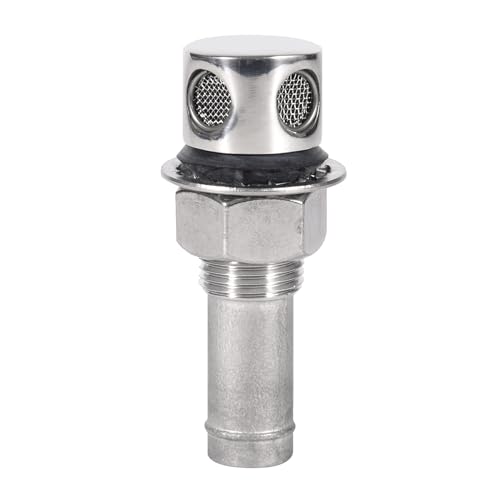
- Material: 316 corrosion-resistant stainless steel for marine durability.
- Ventilation: Designed to provide reliable airflow and prevent pressure buildup inside tanks.
- Hose fitment: Compatible with standard 5/8″ hoses for easy installation.
Who this is best for: boats needing robust stainless steel Venting with dependable airflow. Why selected: 316 stainless steel ensures durability in saltwater environments. Caution: verify whether a through-hull route is feasible for your installation to avoid leaks.
Buying Guide
What to consider when choosing a marine fuel tank vent
- Material and corrosion resistance: Choose 316 stainless steel for longevity in salt air; chrome-plated brass provides good corrosion resistance with a different finish.
- Installation type: Consider straight, 90-degree, or flush-mount designs based on available space and mounting depth.
- Hose compatibility: Most vents use 5/8 inch I.D. hoses; confirm hose diameter and length to ensure proper fit and ventilation.
- Through-hull vs. deck-mount: Thru-hull vents require proper sealing and hull penetration; deck-mounted vents avoid hull work but must mount securely.
- Vent protection: Flame arresting screens and splash resistance can reduce contamination and water ingress during rough seas.
Practical selection questions
- Do you need a compact, space-saving mount or a visible premium chrome finish?
- Is a thru-hull installation possible on your vessel’s design?
- How important is corrosion resistance given your typical sailing conditions?
- Will you replace existing vents or install a vent in a new system?
Quick installation tips
- Follow manufacturer hole size recommendations; many vents require a ~1 3/8-inch hole.
- Use appropriate gaskets and sealants to prevent leaks around fittings.
- Route hoses to minimize kinks and ensure clear airflow path from tank to vent.
- Regularly inspect vents for corrosion, clogging, or damage from salt spray.
FAQ
- What size hose do most marine vents use? Most vents accommodate 5/8-inch inner diameter hoses.
- Do all vents require through-hull installation? No; some models are deck or flush-mount designs for easier installation.
- Why use a flame arresting screen? It helps block contaminants from entering the vent and reduces ignition risk from fuel vapors.
- Are chrome-plated vents as durable as stainless steel? Chrome plating offers good corrosion resistance, but stainless steel generally provides superior long-term durability in marine environments.
- Can I replace a vent without professional help? Many vents are simple replacements, but ensure proper sealing and hose compatibility to prevent leaks.