Best Thru-Hull Depth Finder for Boats: Clear Readings and Easy Install
If you’re shopping for a thru-hull depth finder, this guide helps you pick models that deliver reliable depth readings, simple installation, and clear alarms. Ideal buyers include anglers seeking consistent depth data, coastal cruiser skippers needing dependable safety alarms, and DIY installers who want through-hull compatibility and easy mounting. Below is a quick snapshot of five relevant options, highlighting what each is best for and who should avoid them.
| Product | Best For | Key Benefit | Limitations |
|---|---|---|---|
| DepthTrax 2B Boat Mount in Dash Digital Depth Finder | In-dash display fans; high-visibility readouts | Largest display and strong alarm system | Special transducer setup required |
| HawkEye DT2BX-TH In-Dash Depth Sounder | Through hull temp readings; compact install | Includes air and water temperature; quick updates | Requires drilling a 2″ hole |
| Faria 13751 Chesapeake Black Depth Sounder | Classic in-hull style; simple gauge fit | Solid depth range; fits standard gauge hole | In-hull option; fewer modern features |
| Faria 13795 Chesapeake Depth Sounder Thru-Hull | Bright display; alarms | Oversized display; audible/visual alarms | Black SS look; installation varies by hull |
| HawkEye DT2BX-TM In-Dash Depth Sounder | Transom transducer mixed installs | Wide depth range; built-in alarm system | Transom transducer setup; drilling considerations |
DepthTrax 2B Boat Mount In-Dash Depth Finder

The DepthTrax 2B delivers continuous depth readings from 2.5 to 600 feet on the largest in-dash display among comparable units. This model emphasizes a high-visibility interface and an audible alarm complemented by an ultra-bright LED warning light and LCD indicators. Best for boaters who prefer a prominent display and a clear, multi-channel alert system. The dual-transducer option supports through-hull and transom transducer setups, including shoot-through fiberglass, which is advantageous for solid fiberglass hulls up to 1/8 inch aluminum. A limitation to note is the need for correct mounting and compatibility with the transducer configuration to ensure accurate readings at higher speeds. This unit is well-suited for performance enthusiasts who want immediate depth data and a reliable warning system during fast passages or deep-water fishing.
Who it’s best for: Sailors or powerboat operators who value a large, easy-to-read display and strong alarm cues at a glance.
One caution: Ensure your hull material and mounting location support the dual transducer setup for best readings.
HawkEye DT2BX-TH In-Dash Depth Sounder With Temperature
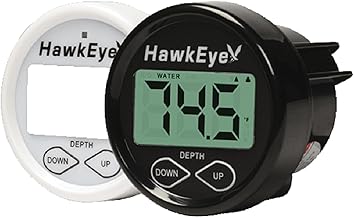
This model streamlines depth data with integrated air and water temperature readings, making it a practical choice for mixed-weather boating. It includes a thru-hull transducer, and instant depth updates help skippers track bottom depth and water conditions in real time. Best for anglers and inland or coastal boaters who want temperature data alongside depth. A notable limitation is the required 2-inch hole in the hull to install the transducer, which is a factor for boats with careful hull integrity plans.
Who it’s best for: Boat owners who want both depth and temperature data in one instrument and are comfortable with a thru-hull install.
One caution: Hole drilling is necessary; verify structure and deck clearance before installation.
Faria 13751 Chesapeake Black Depth Sounder In-Hull Transducer

The 13751 Chesapeake model uses an in-hull transducer and fits a standard gauge hole, offering a straightforward installation for vessels with compatible gauges. It provides a depth capability up to 199 feet, making it suitable for shallow to moderate depth boating. Best for traditional setups or vessels where through-hull drilling is undesired. A potential limitation is the fixed in-hull installation, which can cap mounting flexibility compared to through-hull options.
Who it’s best for: Boat owners upgrading a gauge-based system who want a simple, reliable depth readout without penetrating the hull deeply.
One caution: May be less ideal for extremely deep-water or dynamic depth environments compared to deeper through-hull models.
Faria Beede Chesapeake Depth Sounder Thru-Hull

This through-hull option emphasizes an oversized, back-lit display designed for clear readability in bright sun or low-light conditions. It also features audible and visual alarms for depth changes, contributing to safer navigation. Best for boats where visibility from the helm is a priority and there is space for a larger instrument. The prominent display and alarm features are advantageous, but installation may require careful hull preparation and considerations for the chosen mounting location.
Who it’s best for: Helmsmen who need a conspicuous, easy-to-read depth readout with reliable alarm cues.
One caution: The larger display may require a bit more helm space and a deliberate mounting plan.
HawkEye DT2BX-TM In-Dash Depth Sounder With Temperature
This version combines depth readings with a temperature transducer, including a transom mount transducer and a 30-foot cable. It maintains uninterrupted depth performance up to 600 feet and includes a 3-stage Advanced Warning System with audible alarms and LCD indicators, along with one-touch alarm muting. It’s well-suited for cruisers and anglers who want resilience at depth and quick access to temperature data. A potential limitation is the need to ensure transom mounting compatibility with hull design and available stern area.
Who it’s best for: Boats that require robust depth monitoring with temperature data and flexible transom mounting.
Buying Guide: Choosing a Thru-Hull or In-Dash Depth Finder
- Depth range and display: Compare maximum depth capability and how readable the display is in bright sunlight or at night. A larger, back-lit screen helps quick depth confirmation during navigation.
- Transducer type: Thru-hull provides deeper coverage but requires hull drilling; in-hull or transom transducers offer alternatives but may limit depth in some hulls. Consider hull material and plan to install accordingly.
- Alarm system: Look for multi-channel alarms (audible, visual, and muting options) to alert you to shallow or deep changes. This feature supports safer operation in busy waters.
- Temperature readouts: If water conditions or climate influence your activities, models with air and water temperature readings add value for decision-making on site.
- Installation considerations: Check hole size requirements, gauge compatibility, and mounting room on the helm. Some units require dash space, while others need transom or hull access.
- Maintenance and reliability: Prefer units with straightforward wiring and durable housings designed for marine environments to minimize repairs and downtime.
FAQ
- What is a thru-hull depth finder? It is a depth-sensing instrument installed through the hull, typically using a dedicated transducer to measure water depth from below the hull to the display at the helm.
- Do I need specialized tools to install a thru-hull transducer? Yes, installation often requires drilling a hole in the hull and may involve sealant and mounting hardware to ensure watertight integrity.
- Can I use an in-dash depth finder without altering the hull? In-dash units usually rely on transducers mounted to the hull surface or through-hull options; installation may still require some hull penetration depending on the model.
- Which features improve safety at sea? Depth alarms, large readable displays, and temperature readings help maintain safe depths and provide additional environmental context.
- Is deeper depth always better? Not always. Choose a depth range appropriate for your typical waters and vessel draft to avoid unnecessary data complexity.
- How do I choose between transom and thru-hull transducers? Transom transducers are easier to install for some boats but may have performance trade-offs versus through-hull options, depending on hull design and speed.