Best Small Motors for Canoes: Quiet, Efficient Trolling Options
Answering the need for compact, reliable canoe propulsion, these small motors and mounting accessories are designed for lightweight boats, ease of use, and steady performance. This guide helps buyers choose the right setup for fishing, exploration, or casual cruising. The top picks cover freshwater and saltwater use, with considerations for thrust, shaft length, and control features. The best fits include options for kayaks and canoes seeking quiet operation and simple mounting. The table below compares five strong contenders to help you decide quickly.
| Product | Thrust / Power | Shaft Length | Best For |
|---|---|---|---|
| Minn Kota Endura C2 Transom-Mount Electric Trolling Motor | 30 lb thrust | 30 in | Lightweight canoes and freshwater fishing |
| Newport NV-Series 36lb Thrust Trolling Motor | 36 lb thrust | 30 in | Smaller boats needing efficiency and saltwater readiness |
| 45lb Thrust Saltwater Transom Mounted Motor | 45 lb thrust | Unknown | Medium boats in saltwater with higher torque needs |
| Newport NV-Series 55lb Thrust Saltwater Trolling Motor | 55 lb thrust | 30 in | Heavier loads and longer trolling sessions |
| FEIMIRE Canoe Trolling Motor Mount Bracket | Mount bracket accessory | — | Universal mounting for versatile canoe setups |
Minn Kota Endura C2 Transom-Mount Motor
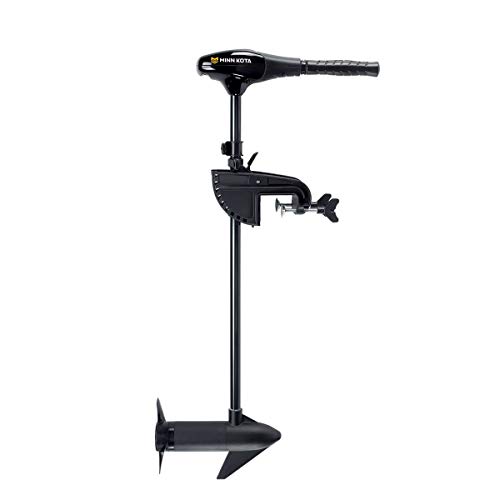
This 30 lb thrust Transom-Mount electric trolling motor is optimized for freshwater use and smaller craft. The 30-inch shaft length helps position the propeller to maintain clear water flow while paddling, and a 6-inch telescoping tiller provides adjustable control for comfortable long days on the water. It includes a push-to-test battery meter to monitor power. The motor’s reinforced composite construction resists UV damage and warping, making it a practical choice for durable, low-maintenance use. Best for anglers who value simple setup and reliable performance in calm to moderately windy freshwater environments.
- Best for: lightweight canoes and small boats focused on reliability and ease of use.
- Why selected: classic, proven design with durable materials and practical controls.
- Caution: best performance with moderate vegetation; consider a heavier-duty prop for thick cover.
Newport NV-Series 36lb Thrust Trolling Motor

Designed for smaller craft like kayaks and canoes, this 36 lb thrust, 12V or 24V trolling motor emphasizes lightweight efficiency. It is built to perform in both salt and freshwater, using a corrosion-resistant construction to withstand real-world conditions. The 30-inch shaft and a two-bladed propeller balance power with battery life, making it suitable for routine trolling and gentle maneuvering in calmer waters. Best for: paddlers who need dependable, quiet propulsion without excessive weight.
- Better for: lightweight setups where battery life and portability matter most.
- Why selected: flexible voltage options and saltwater capability expand use across locations.
- Caution: not the strongest option for thick vegetation or high-speed trolling.
45lb Thrust Saltwater Transom Mounted Motor

This electric outboard motor offers 45 lb of thrust with five forward and two reverse gears, giving precise speed control for a variety of fishing scenarios. The propeller design aims to optimize propulsion efficiency, while the copper motor construction promises longer-term durability in saltwater environments. Best for: canoeists needing more torque for larger boats or challenging currents. Limitation: data notes a robust build but does not specify shaft length, which can affect draft and mounting compatibility.
- Better for: boats that require stronger propulsion in saltwater conditions.
- Why selected: higher thrust helps in tougher water and heavier loads.
- Caution: verify shaft length and mounting compatibility with your canoe before purchasing.
Newport NV-Series 55lb Saltwater Trolling Motor
The 55 lb thrust model delivers substantial power for heavier canoes and saltwater trolling, featuring an adjustable mount with a 30-inch shaft and a five-battery meter system. It supports eight speeds (five forward, three reverse) and a three-blade propeller for improved low-end torque. Best for: larger or heavier craft and saltwater environments where sustained, quiet propulsion is essential. Limitation: higher thrust means more energy consumption; ensure battery capacity aligns with expected trips.
- Choose this if: you need maximum thrust for challenging conditions or heavier boats.
- Why selected: robust power with long use potential in saltwater settings.
- Caution: requires larger power reserves and careful handling to avoid spooking fish in shallow areas.
FEIMIRE Canoe Trolling Motor Mount Bracket

This mount bracket supports most standard canoes and 2–5 HP trolling motors, with thick aluminum crossbars and nylon components for durability. The sliding slots allow flexible mounting and easy adjustment to fit different canoe widths. Best for: canoe owners who want a versatile mounting solution that adapts to multiple motor setups. Limitation: as a bracket, it requires an appropriate motor to pair with; ensure the motor’s weight and dimensions are compatible with the crossbar.
- Better for: flexible configurations and multiple motor options.
- Why selected: increases mounting versatility beyond a single motor model.
- Caution: installation may require additional hardware and careful alignment for best performance.
Buying Guide
Key considerations when choosing a small canoe motor or mounting setup include thrust needs, shaft length, and water type. For calm freshwater lakes, 30–36 lb thrust is often sufficient, paired with a 30-inch shaft for optimal propeller performance. For saltwater or larger canoes, higher thrust (45–55 lb) may be preferable to maintain control and speed in currents. Shaft length should align with hull design to prevent cavitation or prop strike in shallow water.
Other important factors include control style (tiller vs. remote), compatibility with 12V or 24V systems, and the reliability of corrosion-resistant materials for saltwater use. Mounting solutions like FEIMIRE extend versatility, enabling different motors across trips. When evaluating, consider battery life, motor noise, and how quickly you can adjust tilt and steering in varied fishing scenarios.
Practical questions to guide your choice:
- What canoe size and weight will the motor reliably push?
- Will you fish in saltwater, freshwater, or both?
- Is a short or long shaft better for your hull depth and mounting height?
- Do you need a flexible mounting system to swap motors later?
FAQ
- What is a typical suitable thrust for a small canoe?
- How does shaft length affect performance in a canoe?
- Are saltwater motors compatible with freshwater use?
- Should I prioritize a two- or three-blade propeller for efficiency?
- Is a motor mount bracket necessary for all canoes?
- What maintenance is required for small trolling motors?