Best Marine Grade Fuse Block Solutions for Boat and RV Electrical Systems
When selecting a marine grade fuse block, the goal is reliable circuit protection, organized wiring, and durable construction for harsh environments. This guide highlights five top-performing fuse blocks that suit boat, RV, and other DC installations. Each option balances capacity, ease of labeling, and practical features like negative buses and clear covers. The buyer types best served—do-it-yourself boaters, frequent travelers, and professional installers—will find clear, comparable choices here. Below is a quick summary to compare core specs at a glance.
| Product | Sockets / Circuits | Max Capacity | Line Type |
|---|---|---|---|
| Blue Sea Systems ST Blade Fuse Block 12 Circuit | 12 | 100 A | ATQ/ATC Blade Fuses |
| Blue Sea Systems ST Blade Fuse Block 6 Way | 6 | 100 A | ATQ/ATC Blade Fuses |
| WUPP 12 Volt Fuse Block | 6 | 100 A | Blade Fuses |
| Tigwin 12V Fuse Box 6 Way | 6 | 100 A | ATC/ATO Fuses |
| DaierTek 12 Way Fuse Block | 12 | 100 A | ATC/ATO Fuses |
Blue Sea Systems ST Blade Fuse Block 12 Circuit with Ground

The 12-circuit block offers an integrated negative bus and a 100-amp total capacity, with each circuit able to handle up to 30 amps when using standard ATO/ATC fuses. This setup is best for larger DC systems on boats or vehicles needing multiple protected circuits with straightforward labeling. The insulating cover provides a secure push-button latch, extra fuse storage, and recessed areas for circuit IDs. This block is ideal for serious maritime power distribution where space and organization matter.
Best for: larger boats or RVs that require many protected circuits with easy access and ground integration. Better for: installations where a clear, lockable cover and spare fuse storage simplify maintenance. Avoid: environments where space is extremely tight, as the 12-circuit footprint is larger than 6-circuit blocks.
Caution: Ensure fuses chosen per circuit do not exceed 30 A. The unit is rated 100 A max, which guides total load planning and wire sizing.
Blue Sea Systems ST Blade Fuse Block 6 Way Circuits
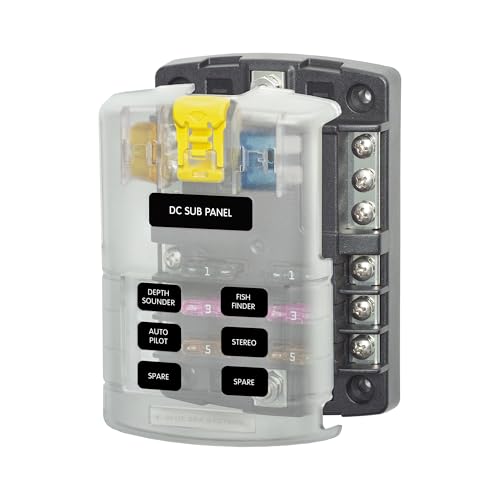
This six-circuit block pairs a negative bus with a robust 100-amp rating, supporting up to 30 amps per circuit with standard ATO/ATC fuses. The translucent insulating cover includes a latch and storage for spare fuses, plus recessed labeling areas for quick circuit identification. A compact choice for mid-sized systems that still need reliable protection and clean wiring.
Best for: smaller vessels or cabins needing six protected circuits with a built‑in negative bus. Better for: setups where label readability and quick access are priorities. Choose this if: you don’t require a dozen circuits but still want quality ground integration. Caution: ensure wiring runs maintain adequate clearance to avoid cover interference during maintenance.
WUPP 12 Volt Fuse Block with LED Warning
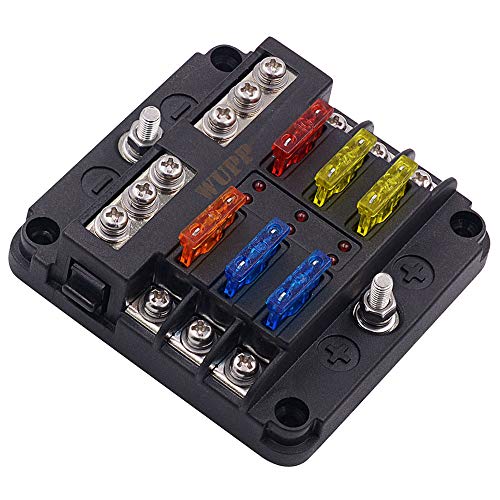
This 12-volt block provides six circuits with a negative bus, a damp-proof cover, and an LED indicator per circuit to show blown fuses. It is designed for easy organization and corrosion resistance with nickel-plated copper bus bars. The input rating is 32V and 100A total, with up to 30A per circuit. It suits boats and vehicles needing visible fault indicators and tidy wiring.
Best for: boaters who want immediate fuse fault visibility and a compact six-circuit layout. Better for: installations where splash resistance and corrosion resistance are key. Avoid this if: you need more than six circuits in a single block. Caution: LED indicators can be mistaken for general power presence; confirm fuse status before troubleshooting.
12V Fuse Box 6 Way with LED Indicator (Tigwin)
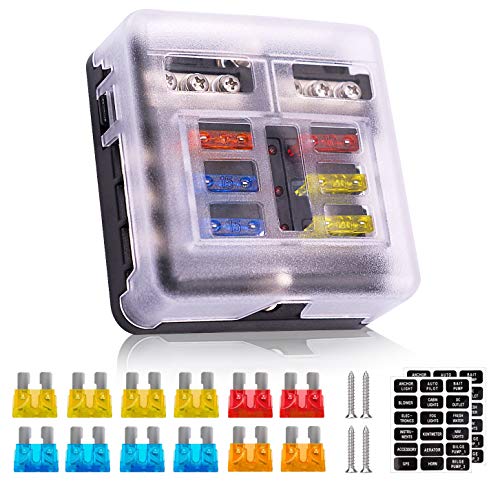
The Tigwin 6-way fuse block is designed for 12V to 24V systems with LED warning light on each circuit, helping quickly identify faults. It supports up to 100A total and 30A per circuit when using ATC/ATO fuses. The housing emphasizes safety with PBT material known for heat resistance and flame retardance, and the 6‑circuit design aids neat wiring. This block suits mid‑size boats or vehicles prioritizing clear fault indication and robust insulation.
Best for: users needing built-in LED fault indication and reliable insulation. Better for: installation where space is adequate and labeled circuits matter. Choose this if: you don’t require 12 circuits at once. Caution: ensure fuse types and values match device requirements to avoid overloads.
DaierTek 12 Way Fuse Block with LED Indicator

The DaierTek 12-way block provides a high-density option with 12 circuits, a positive and negative side layout, and a protective cover. LED indicators display fuse status, and the device supports up to 100A total and 30A per circuit with standard ATC/ATO fuses. It’s designed for boats, cars, and RVs, offering organized wiring and robust protection. This is a solid pick when you need multiple circuits in a compact footprint.
Best for: comprehensive protection on mid‑ to large‑sized installations without sacrificing wiring neatness. Better for: setups where a full 12-circuit layout is beneficial. Avoid this if: you only need a handful of circuits and want a smaller block. Caution: verify that the included or compatible fuses match your device’s current requirements to avoid mismatched protection.
Buying Guide: Key Considerations for Marine Fuse Blocks
- Circuit count vs. space: Choose a unit that fits your available panel space while providing enough circuits for future expansion.
- Total capacity and per-circuit rating: Match a fuse block’s 100 A total with your boat’s power needs; ensure per-circuit ratings (typically 30 A) align with device currents.
- Grounding and negative bus: A integrated negative bus simplifies wiring and improves fault tracing in marine environments.
- Water and salt exposure: Look for damp- or splash-proof housings and corrosion-resistant bus bars (nickel-plated copper is common).
- LED indicators and labeling: LED fault indicators speed troubleshooting; recessed label areas or included stickers help long‑term maintenance.
- Cover design and security: A locking or latchable cover protects circuits from contact and accidental changes in rough waters.
- Wiring organization: Blocks with built-in grounding points and neat wiring layouts reduce clutter and error during installation.
- Compatibility: Verify blade fuse type (ATO/ATC) and voltage range (commonly 12V systems; some panels support up to 24V).
Frequently Asked Questions
- What is a marine fuse block and why is it important? A marine fuse block distributes power to multiple circuits while protecting wiring with fuses, essential for boat electrical safety and reliability.
- Do I need a negative bus on my fuse block? A negative bus helps consolidate grounding for multiple circuits, improving fault isolation and simplifying wiring.
- Can I use standard car fuses in a marine fuse block? Most blocks use ATC/ATO blade fuses; ensure the fuses match the block’s design and the circuit’s current draw.
- How many amps should my per-circuit fuse be? This depends on each device’s current draw; common practice is up to 30 A per circuit for many marine blocks, but always follow device ratings.
- Is LED fault indication necessary? While not mandatory, LED indicators speed troubleshooting by showing which circuit has blown fuses.
- What maintenance steps are recommended? Regularly inspect fuse condition, clean corrosion-prone areas, and confirm labeling remains legible after vibration or splashes.