Best Small Trolling Motor Battery Guide for Lightweight Boats
If you’re shopping for a compact, reliable power source for a trolling motor, you want a small battery that delivers steady performance without weighing you down. The following five options are among the best for small boats, kayaks, and compact watercraft. They balance weight, capacity, and durability to fit light-duty to moderate trolling motor needs. This guide highlights who each product is best for and why it stands out, along with practical cautions where relevant.
| Product | Approx. Capacity | Best For | Why It Stands Out |
|---|---|---|---|
| Lampword LiFePO4 12V 15Ah | 15Ah | Ultralight setups | Lightweight LiFePO4 with long cycle life and robust safety features. |
| ERYY LiFePO4 12V 25Ah | 25Ah | Mid-range power needs | High cycle life, built-in BMS, expandable via parallel/series options. |
| Renogy 12V 20Ah LiFePO4 | 20Ah | Compact balancing performance | Drop-in 50% lighter than lead-acid, strong BMS protection. |
| ECO-WORTHY 12V 20Ah LiFePO4 | 20Ah | Balanced weight and durability | Long life with practical BMS protection and reliable depth of discharge. |
| DC HOUSE 12V 12Ah LiFePO4 | 12Ah | Very light, small craft | Extremely lightweight, compact form factor; suitable for small trolling setups. |
Lampword LiFePO4 12V 15Ah Battery

Brand: Lampword
Features: 12V LiFePO4 chemistry with high energy density. Noted for lightweight design and long cycle life. Suitable for trolling motors in moderate applications when paired with additional capacity or parallel connections.
Best for: Small to mid-size trolling motors on lightweight boats or kayaks where weight savings are critical. Choose this if you prioritize portability and a long service life over raw daily capacity.
Caution: For high-power applications, consider multiple units in parallel to achieve the desired voltage/current. Verify compatibility with your trolling motor’s voltage and current requirements.
ERYY LiFePO4 12V 25Ah Battery

Brand: ERYY
Features: 12V 25Ah LiFePO4 with a 30A BMS, 5,000+ cycles at 100% DOD, and strong temperature tolerance. Can be expanded via series/parallel connections with identical units for higher voltage or capacity.
Best for: Boat setups needing more run time without sacrificing weight, especially when vertical or extended trolling motor runs are common. Choose this if you want longer life and scalable capacity.
Caution: Follow the recommended expansion guidance and ensure identical battery models and charging practices to avoid imbalance or safety triggers.
Renogy 12V 20Ah LiFePO4 Battery
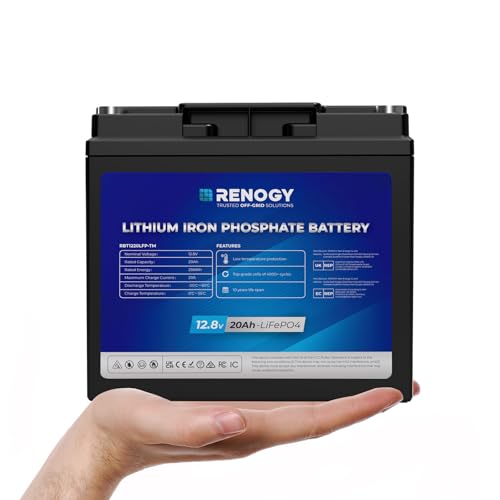
Brand: Renogy
Features: 50% lighter drop-in replacement for 20Ah lead-acid, with low-temp protection and 20+ built‑in BMS protections. Suitable for fish finders, scooters, and other marine electronics.
Best for: Boats requiring a balance of weight savings and reliable runtime for moderate trolling motor use. Choose this if you want a ready-to-install LiFePO4 option with solid safety features.
Caution: Ensure compatibility with your trolling motor’s voltage and your vessel’s battery box or compartment dimensions.
ECO-WORTHY 12V 20Ah LiFePO4 Battery

Brand: ECO-WORTHY
Features: 20Ah LiFePO4 with a built-in BMS for overcharge, over-discharge, and short-circuit protection. Long cycle life and lightweight design.
Best for: Budget-conscious boaters who want a reliable 20Ah LiFePO4 option with practical protection features. Choose this if you want a good balance of protection and weight.
Caution: Verify that your charger is lithium-compatible to avoid compromising BMS protections and battery health.
Buying Guide
Key factors to consider when choosing a small trolling motor battery:
- Weight vs. capacity: LiFePO4 options are lighter and offer longer cycle life than lead-acid. Choose based on how much weight your craft can safely carry and how long you need run time.
- Voltage and series/parallel options: Most trolling motors run on 12V. If you need higher voltage, ensure you select cells designed to be expanded in series or parallel with identical packs.
- BMS protection: A robust Battery Management System protects against overcharge, deep discharge, short circuits, and temperature extremes. Look for units with integrated BMS and clear protection specs.
- Charger compatibility: Use lithium-specific chargers for LiFePO4 batteries. Incompatible chargers can trigger BMS protection or reduce battery life.
- Physical fit: Check dimensions, weight distribution, and compatibility with your battery box or mounting setup to avoid fit issues on small boats.
- Best use case: For ultralight setups, prioritize 12V, 12–20Ah packs. For longer trips or higher power needs, consider 20–25Ah options with expandability.
FAQ
- What is the advantage of LiFePO4 over lead-acid for trolling motors?
LiFePO4 offers higher energy density, longer life, lighter weight, and faster charging, which translates to longer, more reliable runs with less weight onboard.
- Can I use multiple small batteries to increase capacity?
Yes. In most cases, you can connect identical LiFePO4 batteries in parallel for more capacity or in series for higher voltage. Follow manufacturer guidance for safe connections.
- Do I need a special charger for LiFePO4 batteries?
Yes. Use a charger designed for LiFePO4 chemistry. Using a lead-acid charger can cause improper charging and damage the battery’s BMS.
- Is a larger Ah rating always better for trolling motors?
Not always. It depends on run time needs and weight limits. A higher Ah improves endurance but adds weight; balance with your craft’s capacity and use pattern.
- What should I consider about the battery’s size and fit?
Measure your battery box or mounting area and compare with the battery’s dimensions. A tight fit can cause mounting and venting issues on rough water.
- Are these batteries safe for marine environments?
Most LiFePO4 options are designed with environmental tolerance in mind, including wide operating temperatures and sealed enclosures. Always follow manufacturer safety guidelines.