Best Gas Gauges for Boats: Top Fuel Level Meters for Marine Use
When buying a gas gauge for a boat, choose a fuel level gauge that is reliable, easy to read, and durable in marine conditions. This guide highlights five top options that suit different boats and dashboards. Best for small fishing boats, personal watercraft, and mid‑size yachts are covered, with clear reasoning for each pick and practical cautions to consider when selecting a gauge.
Summary table of chosen products:
| Product | Best For | Key Benefit | Notable Limitation |
|---|---|---|---|
| Sierra 57902P Fuel Gauge | Classic, reliable dashboards | Clear dial with vivid contrast | Traditional look; may require 12 VDC system alignment |
| Tuxihapp 2″ 52mm Gauge | Dash upgrades and replacements | Universal 240-33 ohm compatibility | Some installations may need precise mounting |
| 100TECH Boat Fuel Gauge | Rugged, vibration-prone environments | Stable readings with anti-vibration tech | Installation details rely on standard sender compatibility |
| HEETHYCOOL 2″ Gauge | Simple, white-backlit dashboards | Auto signal matching for easy setup | Self-match is convenient but verify signal compatibility first |
| RUPSE 2″ Gauge with Backlight | Customizable dashboard lighting | Eight backlight colors for visibility | Backlight options may affect power usage on small boats |
Sierra 57902P Fuel Gauge

The Sierra 57902P features a black dial with red graduations, white numerals, and a vivid white pointer staff. It uses glass, scratch‑resistant curved lenses, and a near‑flush bezel, with a 12 VDC operating voltage. Best for boats needing a classic, legible gauge that integrates with standard 12 V systems. A limitation is the traditional dial style, which may be less legible at certain angles compared with backlit or digital gauges.
Who this is best for: boaters seeking a time‑tested, easy‑read gauge for standard dash layouts. Why selected: reliability and classic visibility in bright sun and overcast conditions. Caution: verify compatibility with your sender and mounting depth before purchase.
Tuxihapp 2″ Fuel Level Gauge Kit
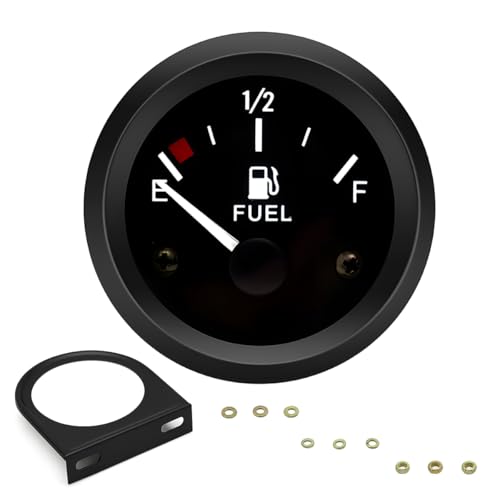
This 2″ 57mm gauge is compatible with 240‑33 ohm senders and 12V systems, designed for cars, RVs, yachts, and more. It offers quick, real‑time fuel readings with a smooth needle and clear E‑1/2‑F scale for fast recognition. Best for dashboard upgrades and cross‑vehicle use. A caution is that universal fitment may still require minor electrical tuning on older configurations.
Who this is best for: owners upgrading multi‑vehicle dashboards or repurposing gauges across boats and vehicles. Why selected: universal compatibility and clear readability. Caution: ensure the sender’s resistance matches your installation to avoid inaccurate readings.
100TECH Boat Fuel Gauge

The 100TECH gauge emphasizes precision with a vibration‑resistant needle and an 8‑level fine scale for improved accuracy. It supports multiple 240‑33/0‑190/240‑30/0‑180/10‑180 ohm ranges, suitable for most American standard senders. Best for boats subject to rough seas and high vibration. A potential limitation is the need to confirm exact sender compatibility before installation.
Who this is best for: boats that experience motion and engine vibration. Why selected: stable readings under rough conditions. Caution: verify the sensor match to avoid misreadings.
HEETHYCOOL 2″ Gauge with Auto Signal Matching
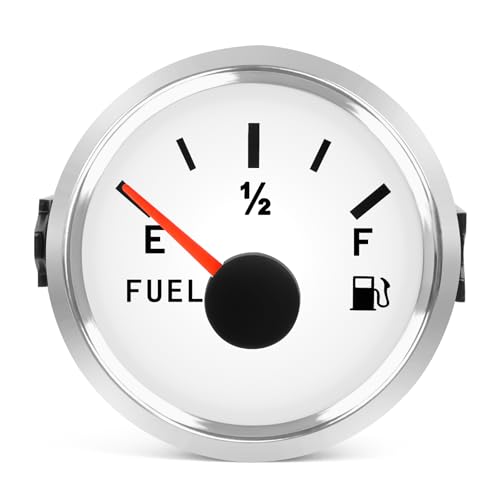
The HEETHYCOOL gauge uses automatic signal matching, supporting five common resistances. This plug‑and‑play solution fits boats, cars, trucks, RVs, and motorcycles. Best for users who want quick setup with minimal manual configuration. A limitation is the note: setting the ohm value with the purple wire may require care to avoid reading errors if the wiring is not isolated correctly.
Who this is best for: dashboard installers seeking a simple, adaptable gauge. Why selected: fast compatibility with minimal setup. Caution: test the system in a controlled environment before full deployment.
Rupse 6″ Stainless Steel Fuel Sender Unit and Gauge

This stainless steel fuel sender unit and gauge offers a robust 6″ (150mm) option for larger boats. It features corrosion resistance and a clear display with an internal reed switch mechanism. Best for solid, durable installations on bigger dashboards. Limitation: installation requires a larger mounting hole and space, which may not fit compact panels.
Who this is best for: boats with roomy dashboards or needing a high‑visibility gauge. Why selected: strong build and clear readability in a marine environment. Caution: ensure compatible mounting dimensions and wiring access before purchase.
RUPSE 2″ Fuel Level Gauge Kit

This RUPSE kit offers eight color backlights and five signal options, making it adaptable for boats, cars, RVs, and motorcycles. It supports 0-190, 0-180, 10-180, 240-33, and 240-30 ohm signals. Best for dashboards needing customizable lighting and broad compatibility. A caution is that the backlight color choice should align with your dashboard’s power budget and visibility under sunlight.
Who this is best for: owners who want a colorful, adjustable display. Why selected: vivid backlight options improve legibility in various lighting conditions. Caution: confirm the exact signal range you will be using to avoid misreading.
Buying Guide
Key considerations when choosing a gas gauge for a boat include compatibility with your fuel sender, readability in sunlight, and weather resistance. Consider the gauge’s electrical requirements, mounting space, and whether you prefer a traditional dial or a backlit, digital‑style readout. For multi‑use boats, universal compatibilities like 240‑33 ohm and 0‑190 ohm ranges help simplify upgrades.
- What dashboard space is available? Measure the mounting hole diameter and depth to avoid fit issues.
- Which sender resistance does your system use? Compatibility with 240‑33 ohm, 0‑190 ohm, or other ranges is crucial for accuracy.
- Do you need backlighting for night operation? White or multi‑color backlights improve readability in dark cabins.
- Is the gauge designed for marine use? Look for IP ratings, corrosion resistance, and anti‑fog lenses.
- Is installation starter wiring included, and are mounting hardware and gaskets provided? This affects installation time and seal integrity.
Frequently Asked Questions
- What is the most common fuel gauge resistance range for boats? The most common are 240‑33 ohm and 0‑190 ohm sensors, but verify your specific sender.
- Do gauges require special tools to install? Basic hand tools are usually sufficient, but ensure you have proper gaskets and wiring connectors.
- Can a gauge be used across multiple vessels? Yes, if the sender and gauge resistance match and the mounting is compatible.
- Is backlighting necessary on sunny days? Backlighting improves visibility; choose colors that contrast with your dashboard.
- Are digital gauges better than analog for boats? Digital gauges can be clearer at a glance, but analog dials are often simpler to repair and read quickly in rough conditions.
- What should I do if readings seem inconsistent? Check sender wiring, ground connections, and ensure there are no air leaks in the fuel line that could affect readings.