Best Aluminum Boat Epoxy Sealer Options for Leaks and Repairs
When you need to seal leaks, patch holes, or reinforce rivets on an aluminum boat, choosing the right epoxy sealer matters. This guide highlights five reliable options and clarifies who each product is best for. Whether you’re a weekend DIYer repairing a dingy or a professional restoring a pontoon, you’ll find clear guidance to match your project needs.
| Product | Best For |
|---|---|
| TotalBoat Aluminum Boat Leak Sealer | Leaky rivets and seams; patches small holes |
| Travaco RM330K Gluvit Waterproof Epoxy Sealer | Hull and deck seams; leaks around aluminum and fiberglass areas |
| Amazing GOOP Coat-It Epoxy Sealer Kit | Quick, easy builds; debris protection and general sealing |
| TotalBoat Aluminum Boat Barrier Coat (Gray) | Corrosion protection; barrier coat before bottom painting |
| STAR BRITE Waterproof Epoxy Aluminum Putty Stick | Underwater quick repairs; emergency fixes |
TotalBoat Aluminum Boat Leak Sealer

Overview: A two-part, flexible epoxy sealer designed to repair leaking rivets, seams, and small holes on aluminum boats. It offers a long working time to improve penetration and seal quality, making it suitable for buyers who want thorough application without rushing.
Best for: DIY enthusiasts and light repair crews dealing with rivet leaks or small seam seepage on aluminum boats. The product’s extended working time helps ensure a watertight seal on irregular surfaces.
Limitations: Requires proper surface prep and temperature conditions; performance can vary with suboptimal climate control.
Travaco RM330K Gluvit Waterproof Epoxy Sealer
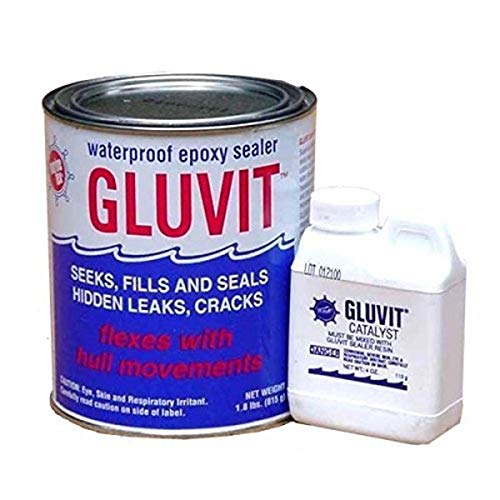
Overview: Gluvit barrier coat designed to seal and protect hulls and decks. It provides robust protection for multiple materials, including aluminum, and is commonly used to seal leaks in aluminum hulls and areas around fiberglass cabins or decks.
Best for: Projects requiring a durable barrier coat that protects against corrosion and water intrusion on aluminum and mixed-material hulls. Suitable for sealing leaks around rivets and seams in composite areas.
Limitations: Not a standalone quick-set repair; works best as part of a broader hull protection system.
Amazing GOOP Coat-It Epoxy Sealer Kit

Overview: An epoxy sealer kit designed for easy use with a pour, stir, and apply process. It is reinforced with Kevlar fibers for enhanced strength and resistance to impact and abrasion, which can benefit boats that navigate debris or rough water.
Best for: Operators seeking a straightforward, user-friendly epoxy sealant that delivers a strong bond on varied surfaces and helps boats glide over rough patches.
Limitations: The kit’s performance depends on precise mixing and substrate preparation; may require additional coatings for full hull protection in aggressive environments.
TotalBoat Aluminum Boat Barrier Coat

Overview: A fast-drying, two-component epoxy primer and barrier coat for aluminum hulls. It provides corrosion protection and can be top-coated with bottom paints or other 1- or 2-part paints. No sanding needed between coats.
Best for: Builders and restorers who want a robust corrosion barrier before adding final bottom coatings. Particularly suitable for aluminum hulls and pontoons requiring lasting protection against saltwater and weathering.
Limitations: As a barrier coat, it’s part of a multi-step system; ensure compatibility with the final paint you plan to apply.
STAR BRITE Waterproof Epoxy Aluminum Putty Stick

Overview: A quick underwater repair putty designed for aluminum boats and underwater aluminum parts. It hardens rapidly to deliver durable repairs in challenging conditions, including submersion.
Best for: Emergency fixes and underwater scenarios where a fast, temporary-to-semi-permanent fix is needed. It’s particularly useful for late-season repairs or situations with limited access to surface prep.
Limitations: Putty stick repairs are typically not a long-term substitute for structural sealing; plan for a more permanent repair when possible.
J-B Weld MarineWeld Syringe

Overview: A specialized two-part epoxy for marine and watercraft repairs. It provides a strong, waterproof, flexible bond with resistance to chemical and UV exposure, delivered in a syringe for easy 1:1 mixing.
Best for: Repairs requiring a durable bond on metal, plastic, or composite components, especially where a flexible seal is needed and UV exposure is a concern.
Limitations: Curing time should be planned around project deadlines; temperature and humidity can affect work life and cure times.
Brampton Marine Epoxy

Overview: A fast-working marine epoxy with a 5-minute work life and 1-hour full cure at 72°F. It cures underwater and adheres to fiberglass, wood, plastics, ceramics, and metal, making it versatile for wet environments.
Best for: Quick-turn repairs on boats exposed to moisture, where a reliable underwater cure is advantageous. Useful for sealing and bonding in wet conditions.
Limitations: Performance will depend on environmental conditions; ensure the surface is adequately prepared for best bonding results.
J-B Weld 8272 MarineWeld Marine Epoxy
Overview: A two-part epoxy system that cures to a strong, water-resistant bond suitable for marine applications. It is designed to work on multiple surfaces and withstands water exposure after curing.
Best for: General-purpose marine repairs where bonding strength and water resistance are critical. Suitable for boats, decks, and hull components that require reliable adhesion.
Limitations: Following recommended cure times and temperature guidelines is essential to achieve optimal strength.
Buying Guide
What type of epoxy sealer fits your boat? Consider the following questions to choose the right product:
- What is the primary repair need? Leaks and rivet leaks benefit from products designed specifically for sealing, while barrier coats protect against corrosion before painting.
- Is underwater curing important? Putty sticks and underwater-friendly epoxies enable repairs below the surface, but may not be ideal for high-traffic areas.
- Do you need a fast cure or long work time? If you must complete a repair quickly, fast-curing products are advantageous; for complex cracks, a longer work time helps achieve a thorough seal.
- What substrates are involved? Aluminum, fiberglass, wood, and plastics react differently to epoxies. Look for compatibility notes and surface prep requirements.
- What climate or operating conditions apply? Temperature and humidity influence pot life, cure times, and adhesion strength.
Key considerations for selection:
- Surface preparation: Proper sanding, cleaning, and drying are often essential for optimal adhesion.
- Mixing ratio and application: Many products require precise 1:1 mixing and proper tooling to apply evenly.
- Bond strength and flexibility: For moving parts and vibration, choose a flexible epoxy that tolerates stresses without cracking.
- Compatibility with paint systems: If the boat will be painted, verify that the epoxy barrier coat or sealer is compatible with the final coating.
- Safety and handling: Work in well-ventilated areas and follow manufacturer safety guidelines for resin and hardener.
FAQ
- What is the difference between a sealer and a barrier coat? A sealer repairs and seals leaks or holes, while a barrier coat provides long-term corrosion protection and prepares the surface for repainting.
- Can these products be used on aluminum boats only? Many are suitable for aluminum, but some also suit fiberglass or mixed-material hulls. Check substrate compatibility before use.
- Do I need to sand between coats? Some barrier coats require no sanding between coats, while others may call for light sanding for adhesion. Follow the product’s instructions.
- How long does curing take? Cure times vary by product and temperature; plan repairs around recommended cure windows to ensure full strength.
- Is underwater repair permanent? Underwater cures can be strong, but for critical hull integrity, plan for a surface repair and full inspection when possible.
- Are these products epoxy-based? The listed items include epoxy sealers, barrier coats, and putty sticks, all designed for marine use and aluminum surfaces.