Best Water Depth Gauge for Boat: Top Picks for Safe, Accurate Readings
Answering the common buyer question, these water depth gauges help boaters monitor depth accurately to avoid shallow water hazards and plan navigation. The best options are designed for in-dash displays, transom mounting, or portable use, depending on your vessel type and mounting preferences. This guide highlights five reliable models, detailing who they’re best for, and why they stand out. A quick comparison table is provided to help you choose at a glance.
| Product | Depth Range | Mounting Style | Best For | Key Benefit |
|---|---|---|---|---|
| DepthTrax 2B Boat Mount In Dash Digital Depth Finder | 2.5–600 ft | In-dash | Tighter cockpit spaces; integrated alarm | Largest display; robust warning system |
| HawkEye DT2BX-TM In-Dash Depth Sounder | 2.5–600 ft | Transom/In-dash (TM) | Rugged installations; temp data | One-touch alarm muting; temp transducer |
| Hawkeye DT2BX-TH In-Dash Depth Sounder | 2.5–600 ft | Thru-hull/transom | Smaller boats; through-hull option | Dual temperature readings |
| Srum Digital Depth Sounder 0–100 m | 0–328 ft | In-dash | Budget-friendly; 12V system | Low power, high accuracy |
| LUCKY Kayak Portable Fish Depth Finder | 3–328 ft | Portable handheld | Kayaks and smaller boats | Backlit display; portable and easy to carry |
DepthTrax 2B Boat Mount In Dash Digital Depth Finder

The DepthTrax 2B provides uninterrupted depth readings from 2.5 to 600 feet on a large in-dash display that fits boats up to 60 mph. It uses a 200 kHz transducer and supports dual transom or glue-in transducer installation, including through solid fiberglass hulls and up to 1/8-inch aluminum hulls. The 3-stage Advanced Warning System emits an audible alarm, a bright LED warning light, and LCD indicators to clearly signal depth or alarm conditions. Best for boaters needing a high-contrast, in-dash depth readout with strong alert capabilities. Consider this for larger craft or performance boats where a prominent display aids quick readings.
Best for: anglers and captains who require precise, fast depth updates with audible and visual alarms for navigation in variable depths. Better for: boats with a robust cockpit environment where a clear, high-contrast display improves readability in sun glare or rough seas. Caution: installation may require professional mounting depending on hull material and dash layout.
HawkEye DT2BX-TM In-Dash Depth Sounder With Air And Water Temperature

This Hawkeye model delivers continuous depth readings from 2.5 to 600 feet on a large in-dash display, supporting speeds up to 60 mph. It includes a 3-stage Advanced Warning System with audible alarms, LED indicator, and LCD readouts, plus a transom mount temperature transducer with 30 feet of cable. Best for anglers and tournament skippers who want immediate depth data alongside air and water temperature for environmental awareness. Choose this if you monitor temperature trends while depth changes. Limitation: the installer should ensure dash space accommodates the device’s size for optimal visibility.
Hawkeye Boat Depth Sounder Display Gauge DT2B
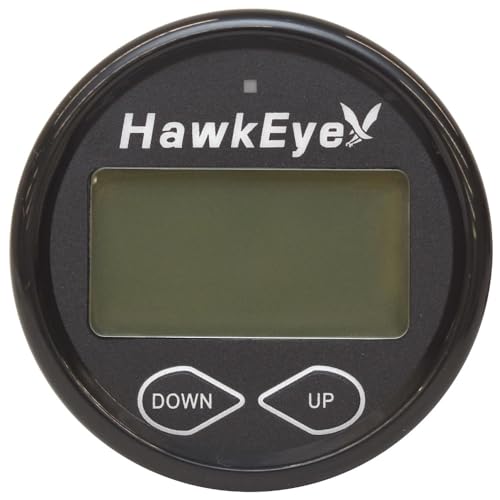
The DT2B offers a compact 2-inch black display depth gauge, designed for smaller dashboards or retrofit installations on lighter crafts. It features a Hawkeye reference model footprint with a straightforward interface. Best for boaters who need a simple, minimal display and a compact integration footprint. Better for: retrofits where space is at a premium. Limitation: the unit’s compact size may reduce readability in bright sun or at a distance; pairing with a larger display could improve visibility in active conditions.
HawkEye DT2BX-TH In-Dash Depth Sounder With Temperature
The DT2BX-TH adds an additional temperature reading option (air and water) with a thru-hull transducer in a compact 2-inch enclosure. It updates depth instantly and shows both air and water temperatures, making it useful for skippers who need environmental context. Best for small to mid-sized boats where temperature data enhances situational awareness. Choose this if you regularly monitor water temperature alongside depth. Caution: the thru-hull transducer requires a 2-inch hull hole, which is a more permanent installation than transom options.
Srum Digital Depth Sounder 2″ In-Dash Depth Finder

The Srum depth sounder targets a cost-conscious buyer without sacrificing essential depth data. It supports a 0–100 m (0–328 ft) range and operates on a 9–32V DC system, with low power consumption and a quick start-up time. Best for budget-minded boaters or smaller runabouts that need reliable depth information. Better for: users seeking a straightforward depth readout with minimal frills. Limitation: the feature set may be more basic compared to larger, multi-sensor options, and installation may rely on compatible dash space.
LUCKY Kayak Portable Fish Depth Finder
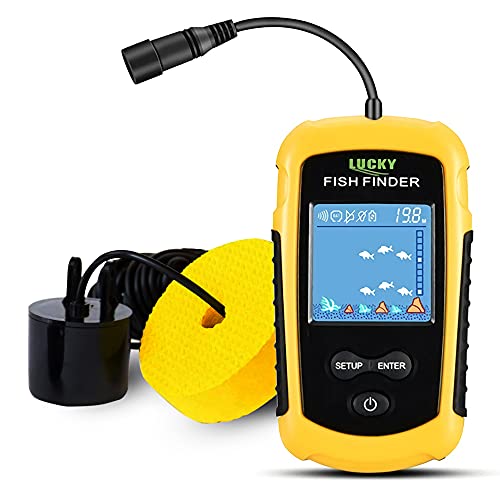
This portable handheld depth finder is designed for kayaks and small boats. It displays water depth and approximate fish location, with a sonar transducer that can be attached to the hull as you move. It provides a depth range from 3 ft (1 m) to 328 ft (100 m) when fully immersed, with backlit display for sun or night use. Best for paddlers and lightweight craft where a portable, simple depth and fish-finding solution is ideal. Choose this if you need a flexible, carry-anywhere device. Limitation: handheld devices may require steady operation to obtain consistent depth readings during motion.
Buying Guide: Key Considerations For Your Depth Gauge
- Mounting style: Do you prefer in-dash reliability, a transom-mounted transducer, or a portable handheld unit? In-dash models offer a larger display and integrated alarms, while thru-hull transducers can deliver accurate readings across more hull types.
- Depth range: Ensure the device covers the typical water depths in your boating environment. Many models handle 2.5–600 ft, while smaller craft may only need 0–100 m (328 ft).
- Display clarity: For sunny days on the water, a high-contrast, bright display improves readability. Look for backlit options on handheld units for night fishing or dawn launches.
- Alarm features: Alarms help prevent grounding. Consider models with audible alarms, LED indicators, and LCD readouts, and whether muting is available.
- Temperature data: Some anglers find air and water temperature readings valuable for understanding current conditions. If this matters to you, prioritize models with temperature sensors.
- Installation considerations: Thru-hull transducers require a drilled hole and a sturdier install, while transom-mounted or in-dash options may be easier to retrofit. Confirm hull material compatibility and required mounting space.
- Power and durability: Check voltage requirements and weather resistance. Marine devices typically operate on 12V systems and are designed to withstand salt, spray, and vibration.
Frequently Asked Questions
- What depth gauge is best for a small boat?
For small boats, a compact or portable unit with a transom or handheld mount can be simplest to install and use, such as a 2-inch display or a handheld depth finder.
- Do depth finders measure current depth accurately in shallow water?
Yes, depth finders with appropriate range sensors provide real-time depth, but ensure the transducer is properly positioned to avoid surface interference near the bow.
- Is a thru-hull transducer necessary?
Thru-hull transducers offer reliable readings in certain hulls and conditions, but they require more permanent installation. Transom-mounted options are easier to install on many boats.
- Can a depth gauge alert me if I’m approaching shallow water?
Many models feature audible alarms and LED indicators to alert you when depth approaches preset thresholds.
- Are temperature readings important for depth gauges?
Temperature data can help monitor environmental conditions that influence water density and depth perception, but is not essential for all users.
- How do I choose between in-dash versus portable depth finders?
In-dash devices are ideal for steady, permanent installations with large displays; portable units suit kayaks, small boats, or quick setups without permanent mounting.