Best Weather Radar for Boats: Reliable Signals Across Calm and Rough Seas
Choosing the right weather radar for a boat involves balancing range, update speed, and compatibility with your chartplotter or radar display. The following selections highlight popular, well-supported marine radars and related accessories that help skippers monitor storms, track weather patterns, and avoid hazards. Each option is chosen for clear display, robust performance, and strong after-sales support across the American market.
| Product | Brand | Key Strength | Link |
|---|---|---|---|
| Furuno 1815 8.4 Color Lcd Ra Radar 19 4kw Dome | Furuno | Clear display, solid coverage, high power | Amazon |
| Garmin GMR Fantom™ 18x, Dome Radar | Garmin | Solid-state reliability, adjustable target resolution | Amazon |
| Simrad HALO20 Compact 20″ Radar Dome | Simrad | Fast refresh, 10-target tracking, dual-mode operation | Amazon |
| Simrad HALO20+ 36 NM 20-inch Radar | Simrad | 60 RPM near-range visibility, VelocityTrack Doppler | Amazon |
| Raymarine Quantum 2 w/Doppler | Raymarine | Doppler radar for velocity tracking | Amazon |
Note: The list emphasizes weather radar units and related performance features suitable for American buyers. Availability and exact configurations can vary by retailer and region. Always verify compatibility with your vessel’s electronics suite and power budget before purchase.
Furuno 1815 8.4″ Color LCD Radar Dome

The Furuno 1815 integrates an 8.4-inch color LCD for radar imagery with a 19-inch dome antenna and a 4 kW transmitter. The combination supports clear situational awareness in various seas and weather conditions. Its compact display aids navigation panels while offering reliable radar performance at typical coastal and offshore ranges. The 19-inch dome contributes to broad coverage, while the 4 kW output helps maintain target detection in challenging visibility or sea states.
Garmin GMR Fantom 18x Dome Radar

The Garmin GMR Fantom 18x uses solid-state technology in a compact dome with an 18-inch footprint. It delivers a long-range view and enhanced target detection on compatible chartplotters. The unit offers on-screen target resolution adjustments to suit the observer’s surroundings and up to 60 RPM rotation speed, providing a quick refresh rate to help detect movement at high speeds. This radar line is designed for reliability and smooth integration with Garmin displays and ecosystems.
APT-F-150-01 Aluminum Radar Mount

This aluminum radar mount is designed to fit multiple major brands, allowing radar units to be positioned for optimal horizon visibility on a cabin roof, radar arch, or flybridge. The 150 mm (6″) high mount helps stabilize the radar during high-speed regimes and rough seas. It features pre-drilled mounting holes and straightforward installation, avoiding the need to modify radar connectors during setup. It expands mounting options for vessels with flexible radar placement needs.
Simrad HALO20 Compact 20″ Radar Dome

The HALO20 offers an almost real-time view with a rapid 60 RPM at close range and advanced signal processing to improve target visibility. It supports tracking up to 10 targets and provides explicit modes for harbor or offshore use. The ready state on wake from low-power standby ensures fast readiness when needed, making it suitable for vessels requiring quick weather and collision awareness in busy harbor channels or offshore transit routes.
Simrad HALO20+ 36 NM Radar Dome
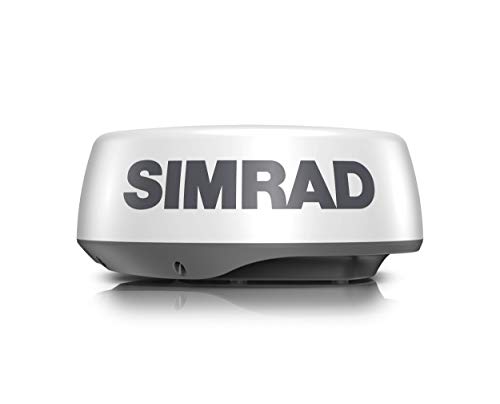
The HALO20+ combines extended range with VelocityTrack Doppler technology and Pulse Compression for sharper beams. It provides simultaneous short and long-range coverage up to 36 nautical miles from a compact 20-inch dome. This model emphasizes powerful detection and clear target separation, supporting safer navigation in variable weather and at higher speeds. It also offers Dual Range Doppler capabilities for reviewing both near and far targets at once.
Raymarine Quantum 2 Radar with Doppler

Raymarine Quantum 2 with Doppler enhances detection through Doppler processing and integrates with Raymarine displays. Doppler capabilities help distinguish moving weather patterns and vessels from stationary clutter, which is useful for tracking gust fronts and squalls. The system is designed to work with a variety of Raymarine control headers and user interfaces, enabling a cohesive bridge environment for weather and collision avoidance tasks.
Buying Guide: Key Considerations For Weather Radar On Boats
- Radar Type And Range: Decide between solid-state versus traditional magnetron radar, and pick a range that matches typical voyage needs (coastal vs offshore). Longer range is beneficial for tracking distant weather cells, while high refresh rates improve speed of hazard detection.
- Update Rate And Target Resolution: Higher RPM and Doppler processing yield more current weather information and better target separation, especially in cluttered waters or during squalls. Ensure compatibility with your chartplotter or display for best visualization.
- Dome Size, Power, And Installation: Dome diameter affects coverage and installation options. Higher power (kW) can improve detection in rain or fog. Consider mounting options (hardtop, arch, flybridge) and ensure power supply meets vessel specifications.
- Integration And Compatibility: Verify that the radar integrates smoothly with your existing displays, chartplotters, and data networks. Some brands offer optimized performance when paired within their own ecosystem, while others provide broader cross-brand support.
- Target Tracking And Collision Avoidance: Look for features like VelocityTrack Doppler, multi-target tracking, and easy-to-interpret overlays. These features help distinguish weather cells from other vessels and reduce navigation risk in poor visibility.
- Power Consumption And Wiring: Check the vessel’s electrical system capacity and allocating power for radar, displays, and other electronics. Efficient models help preserve battery life during extended trips.
- Installation Complexity And Support: Some units require professional installation or specific mounting hardware. Consider warranty terms, readily available spare parts, and accessible customer support in the United States.
- Future-Proofing: Consider models with software update paths, compatibility with new weather overlays, and expanding display ecosystems to future upgrades.
These considerations help balance performance, reliability, and cost when selecting a weather radar system for a boat. Users should evaluate the specific voyage plans, sea conditions, and existing electronics setup to determine which combination of range, speed, and integration will deliver the best long-term value.