Best Jump Box for Boat: Top Marine Battery Jump Starters for 12V Trolling Motors and More
When you’re on the water, a dead battery can ruin a day on the lake or out at sea. The right jump box provides rapid starts, power for USB devices, and essential safety protections, all in a compact, boat-friendly package. The following selections are among the best jump starters for boats, offering high peak amps, safe clamps, and practical features like built-in LEDs and USB charging. This guide compares performance, ease of use, and multi-vehicle versatility to help you choose the right marine jump starter for your needs.
| Product | Brand | Key Strength | Ideal For |
|---|---|---|---|
| NOCO Boost GB40 | NOCO | 1000A peak lithium power, ultrasafe protection | Small boats, outboards, 6.0L gas/3.0L diesel |
| Clore Automotive JNC660 | Clore Automotive | Proven reliability, strong clamps | Versatile marine use, small to mid engines |
| NOCO Boost GB150 | NOCO | 3000A peak, high engine compatibility | Mid to large boats, multi-engine needs |
| OXILAM Jump Starter | OXILAM | 6000A peak, multi‑security protections | All gas engines up to 12L diesel, boats of all sizes |
| Povasee Jump Starter A30 | Povasee | 5000A peak, dual USB outputs, LED light | Power bank + emergency light for boats |
The products listed here are selected for their marine versatility, reliability, and multisurface performance. Each section below provides a concise breakdown, a direct link to the product page, and essential features drawn from the manufacturer’s description.
NOCO Boost GB40: 1000A UltraSafe Jump Starter
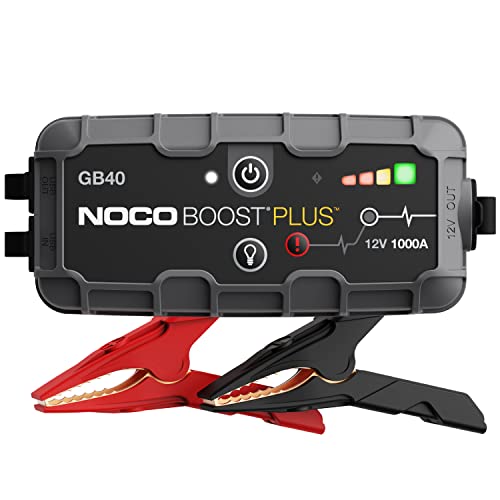
Powerful 1000-amp peak lithium battery jump starter designed to start engines up to 6.0L gas and 3.0L diesel. It supports up to 20 starts per charge, making it practical for boats with smaller outboards and auxiliary engines. Built with Ultrasafe technology, it features spark-proof and reverse polarity protection to prevent incorrect connections, a critical safety feature when working on a moving boat or a crowded dock. It also doubles as a portable power bank, recharging smartphones and tablets in about three hours, a useful feature for long days on the water.
On a boat, the compact design and light weight make it easy to store in a glove box, cabinet, or dedicated tackle box. The GB40’s combination of reliability and safety makes it a solid choice for anglers and recreational boaters who need a fast, dependable jump start with the added convenience of USB charging.
Clore Automotive Jump-N-Carry JNC660
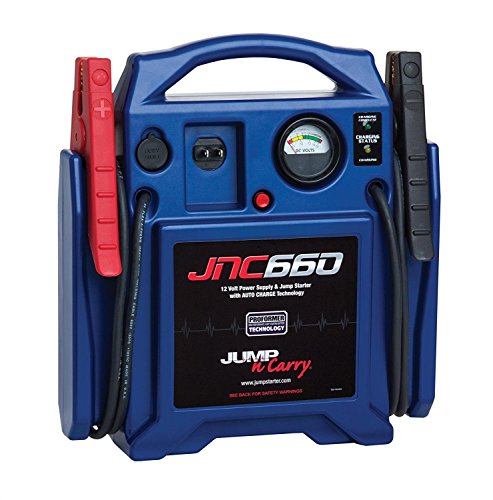
The JNC660 delivers 1,700 peak amps and 425 cranking amps, paired with a 22Ah Clore PROFORMER battery. Its robust 46-inch #2 AWG cables are designed for heavy-duty use, which can be advantageous for larger boats or engines. Although bulkier than ultra-compact models, the JNC660’s proven performance and sturdy build are well-suited for marine environments where starting reliability matters. Its heavy wires help ensure good conductivity, even in chilly conditions or when the battery is deeply discharged.
NOCO Boost GB150: 3000A UltraSafe Jump Starter

With a peak of 3000 amps, the GB150 is designed for larger engines and busy marina days. It can start engines up to 9.0L gas and 7.0L diesel, offering up to 80 starts per charge. The advanced protection in NOCO’s Ultrasafe technology minimizes the risk of sparks or reverse polarity, a valuable safety feature when working near water or on wet docks. It also includes a built-in power bank for charging devices, ensuring you stay connected without needing an external charger—handy for long trips or remote escapes.
OXILAM Jump Starter 6000A

The OXILAM jump starter offers a massive 6000A peak current, capable of reviving dead batteries in seconds for gas engines and up to 12L diesel engines. It’s designed with ten safety protections to guard against short circuits, reverse polarity, and overheating—beneficial for boats that experience engine turndown or high electrical demand. It doubles as a power bank with USB outputs and a Type-C port, plus three LED light modes for night operations, making it a versatile all-in-one tool for mariners and RV enthusiasts alike.
Powrun P-ONE Jump Starter

The P-ONE provides 2000A peak current, capable of starting engines up to 8.0L gas and 6.5L diesel. It supports 25 starts per charge and features eight safety protections for added reliability in marine conditions. It also functions as a 74Wh power bank with dual USB outputs and a quick-charge 3.0 USB port, alongside an upgraded Type-C input for faster recharging. Its built-in LED light has multiple modes, including SOS, making it a practical kit for nighttime dockside operations or emergencies on the water.
Buying Guide: Key Purchase Considerations For Jump Starters On The Boat
- Peak amperage and engine size: Choose a model with enough peak amps to reliably start your largest engine. Boats with bigger outboards or inboard motors benefit from higher amp models (2000A–6000A range).
- Safety protections: Look for ultrasafe features like spark-proof design and reverse polarity protection. These reduce the risk of damaging circuits or creating hazardous sparks near fuel and moisture.
- Durability and marine suitability: Corrosion resistance, rugged cables, and protective housings improve performance in saltwater environments. Consider models with long cables and heavy-duty clamps for easy reach around a boat engine bay.
- Battery type and durability: Lithium-based jump starters are lighter and offer multiple recharges, but ensure they have adequate storage and protection for marine use. Compare run-time per charge and acceptable environmental temperatures.
- Multifunction features: Built-in USB ports, Type-C charging, and LED flashlights add value for offshore trips, camping, or emergencies. A device that also serves as a power bank reduces the number of gadgets you carry.
- Portability and storage: Boating space is limited. Small, compact units that fit in a glove box or tackle box maximize readiness without crowding the deck or cabin.
- Charging speed: Some models recharge in as little as 1–3 hours, while others take longer. Consider how quickly you need the unit ready after a heavy use day on the water.
- Maintenance: Check for features like low self-discharge and indicators that show the unit’s status. Proper storage and occasional calibration (per manufacturer) help ensure long-term reliability.
- Warranty and service: A solid warranty and accessible customer support are valuable when dependability matters on a boat. Consider brands with established marine reputations.
- Compatibility with other devices: If you rely on multiple 12V devices, a jump starter with USB-C PD, quick-charge ports, and multiple outputs can simplify your electrical setup on board.
These considerations help balance power, safety, and practical use in marine environments. For boaters who want a single, all-purpose tool, the options above offer a spectrum from compact, lightweight units to high-amp models that can handle larger engines and prolonged offshore use. Always verify compatibility with your specific boat model, engine size, and typical operating conditions before purchase.