Best Marine Solar Panel Systems for Boats, RVs and Off-Grid Adventures
Answering the demand for reliable, weather-ready solar power on the water or away from shore, these marine-focused solar panel systems deliver steady 12V charging for boats, RVs, trailers, and other off-grid setups. Each option is suited to different kinds of users—from casual trailer travelers to full-time liveaboards—based on panel size, controller type, and mounting versatility. Below is a curated set of five top choices with practical pros, targeted use cases, and clear trade-offs.
| Product | Best For | Why It Stands Out |
|---|---|---|
| Voltset 12V Solar Battery Charger Kit | Small vehicles and lightweight setups | 20W, MPPT, universal 12V compatibility, compact and waterproof |
| ECO-WORTHY 200W Kit | Off-grid RVs and larger needs | 200W panel, durable frame, high efficiency, wide application |
| Renogy 200W Monocrystalline Kit | RVs, boats and cabins needing reliable 200W | High efficiency, sturdy frame, convenient LCD controller |
| Callsun 200W N-Type Dual-Module | Maximized power and shading resilience | N-type cells, bifacial tech, anti-shade design |
| Renogy 200W N-Type For Vans | Compact, space-saving setups | 25% efficiency, lighter and smaller footprint |
Voltset 12V Solar Battery Charger Kit

Best for: Small boats, cars, trailers, and light-duty RVs needing a compact trickle charger with smart protection. This kit uses an advanced MPPT charger for faster charging and broader battery compatibility, including LiFePO4 and AGM types. The 20W panel delivers steady output for maintaining batteries during daily use or extended stays away from shore.
Why chosen: The integration of a smart MPPT controller helps harvest more sun than a basic PWM setup, reducing charge time and maximizing efficiency in variable conditions. It also guards against overcharge, over-discharge, short circuits, and polarity issues, which is ideal for portable or seasonal setups.
Limitations: The 20W rating suits smaller batteries or backup charging; larger off-grid systems will need more panel wattage for higher daily energy needs.
ECO-WORTHY 200 Watts Solar Panel Kit
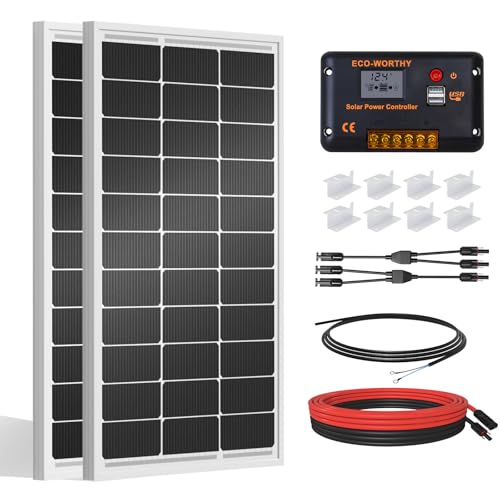
Best for: Off-grid RVs, campers, and marine projects needing substantial daily power. The 200W monocrystalline panel with a 30A PWM controller provides robust charging for larger batteries and longer days of use.
Why chosen: The kit’s high-efficiency panel and durable frame are designed to withstand wind and snow loads, while an IP65-rated junction box adds weather protection for marine and outdoor installations. Wide applications make it flexible for many off-grid needs.
Limitations: PWM controllers are typically less efficient than MPPT in fluctuating light, so in variable conditions, total daily yield may be lower than higher-end MPPT setups.
Renogy 200W Monocrystalline RV Kit
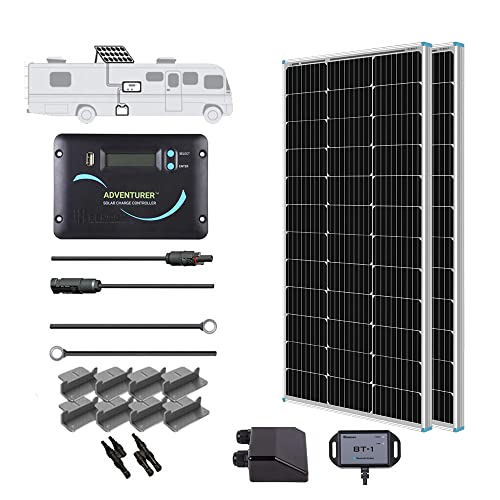
Best for: RVs, boats, and cabins where reliable power with a clean installation is valued. This 200W kit uses high-efficiency cells and a corrosion-resistant frame for enduring outdoor use.
Why chosen: The Adventurer-Li 30A PWM controller complements RV or camper walls with a tidy, flush-mount look. It offers solid protection against overcharging, overload, short circuits, and reverse polarity, simplifying long-term maintenance.
Limitations: Being PWM, it may be less efficient than PWM in certain conditions; installation may require mounting space and a compatible battery bank.
Callsun N-Type 400W Dual-Module Kit

Best for: High-demand installations on RVs, vans or marine roofs where maximum output is required and space allows two modules in parallel. The N-type technology and bifacial capability add resilience and extra energy capture.
Why chosen: N-type cells deliver high efficiency and reduced degradation, while bifacial design captures additional light from the rear, increasing usable power by up to around 30% in the right conditions. TwinCell Anti-Shade helps maintain output when partially shaded.
Limitations: Dual-module setups require adequate mounting space and careful wiring to maximize the bifacial gain; more advanced electrical planning may be needed for optimal performance.
Renogy 200W N-Type Panel Kit For Vans

Best for: Space-constrained vans and campers needing a compact yet capable solar setup. This N-Type panel is lighter and smaller but delivers strong energy production for 12V and 24V systems.
Why chosen: With a 25% efficiency target and a compact form, this panel is well-suited for Class B vans and tight roof spaces. It offers flexible compatibility with different battery configurations for diverse mobile needs.
Limitations: Smaller footprint means saving space may still require careful layout; ensure mounting strength and shade-free paths for optimum performance.
Buying Guide
How to choose the right marine solar panel system for your needs:
- Power requirements: Estimate daily energy use and select a panel wattage that comfortably covers consumption during peak sun. Larger vessels or off-grid homes may need 200W or more per array.
- Controller type: MPPT controllers maximize energy harvest in variable light and temperatures; PWM controllers are simpler and lower-cost but typically less efficient in variable conditions.
- Battery compatibility: Look for 12V compatibility and note whether LiFePO4, AGM, Gel, or Flooded batteries are supported. Some controllers support multiple chemistries; others are limited.
- Mounting and durability: Marine environments demand weatherproof hardware, corrosion resistance, and secure mounting options. Consider IP ratings and frame materials (aluminum, tempered glass).
- Space and layout: For compact vehicles or boats, prioritize compact panels (like 200W N-Type in Vans) and consider bifacial or anti-shade designs if space is limited or shading is a concern.
- Protection features: Overcharge, over-discharge, short-circuit, and reverse polarity protections reduce risks to battery banks and equipment.
- Expansion potential: If you plan to upgrade, choose panels and controllers that allow additional modules or higher wattage later.
Frequently Asked Questions
- What size solar panel should I choose for a boat?
A: It depends on your daily energy use and available space. Start with a 100–200W setup for basic maintenance and expand with additional panels if needed. - Is MPPT worth it for marine use?
A: Yes, MPPT controllers maximize energy harvest, especially under variable sun and temperatures common on water and outdoors. - Can I use any 12V battery with these panels?
A: Most listed kits support common 12V chemistries (LiFePO4, AGM, Gel, Flooded). Verify compatibility with your particular battery type. - Do solar panels work in cloudy conditions?
A: They generate less power, but modern panels still produce usable energy in diffuse light; higher wattage panels help compensate. - What maintenance do marine solar systems require?
A: Periodic cleaning, inspection of wiring and connections, and checking mounting integrity are typical care steps for longevity. - Can I mix panels of different brands?
A: Mixing panels is possible if voltage and current ratings are compatible and wiring is designed to balance the bank; otherwise, use matched sets.